

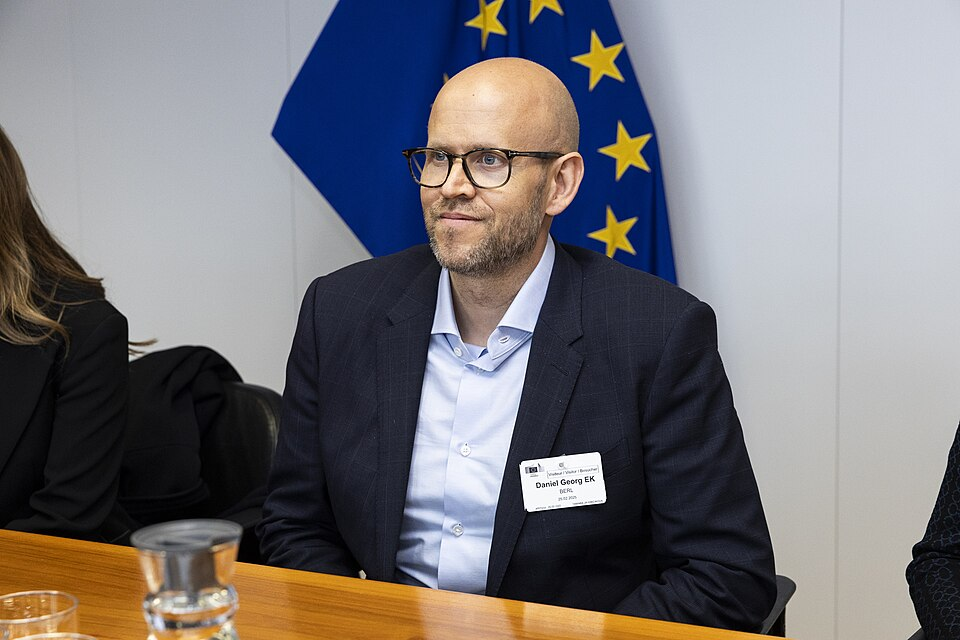
Spotify founder Daniel Ek is backing Europa Fusion, a UK-based fusion energy startup founded by former Google DeepMind researcher Nantas Nardelli. The company, established in February 2026, is developing a simulation-focused approach to fusion power that places greater emphasis on artificial intelligence and data analysis than extensive physical hardware testing.
Ek’s involvement was first reported by Bloomberg on November 18. Although Europa Fusion has maintained a limited public presence, sources familiar with the startup told TechCrunch that Nardelli had been developing the underlying concept before formally establishing the business.
Europa Fusion Focuses on AI and Simulation
Nardelli previously held research positions at Google DeepMind, Facebook AI Research, and Microsoft Research Cambridge. Most recently, he served as head of machine learning at Pacific Fusion, a California-based company developing fusion technology.
His experience at Pacific Fusion influenced his approach to establishing Europa Fusion. According to a source familiar with his thinking, Nardelli believes fusion developers should invest more heavily in simulations and data-driven research rather than relying primarily on expensive physical experiments.
Pacific Fusion has taken a hardware-intensive approach, using experimental equipment to test scientific theories and improve computational models. The company began constructing a demonstration facility in New Mexico in August 2026 as part of its efforts to advance fusion technology.
Europa Fusion intends to pursue a similar underlying fusion method while adopting a different development process. Both companies are working with pulsed-power technology, which uses precisely timed bursts of electrical current to compress fuel until atomic nuclei fuse and release energy.
Pulsed-Power Technology Targets Commercial Fusion
Pulsed-power fusion requires electrical systems capable of delivering extremely large amounts of energy over short periods. These electrical pulses compress fusion fuel to the temperatures and pressures necessary for nuclear fusion reactions.
Although fusion has the potential to generate electricity without the carbon emissions associated with fossil fuels, no commercial fusion power plant currently supplies electricity to the grid. Developers continue working to demonstrate systems that can generate sufficient energy reliably and economically.
Europa Fusion’s proposed reliance on computational modeling differs from the hardware-focused development programs used by many established fusion startups. However, the company has not publicly disclosed detailed technical milestones, funding amounts, or a timeline for demonstrating its technology.
Nardelli Shifts From AI Research to Clean Energy
Nardelli’s transition into fusion energy reflects his interest in using technology to address climate change. On his personal website, he described his background in electronics, control engineering, and robotics before explaining his decision to concentrate on clean energy.
Fusion developers are also attracting attention as technology companies seek electricity sources capable of supporting growing AI infrastructure requirements. Successful commercial fusion systems could provide carbon-free electricity for data centers and other energy-intensive industries.
Featured image credits: Wikimedia Commons
For more stories like it, click the +Follow button at the top of this page to follow us.