

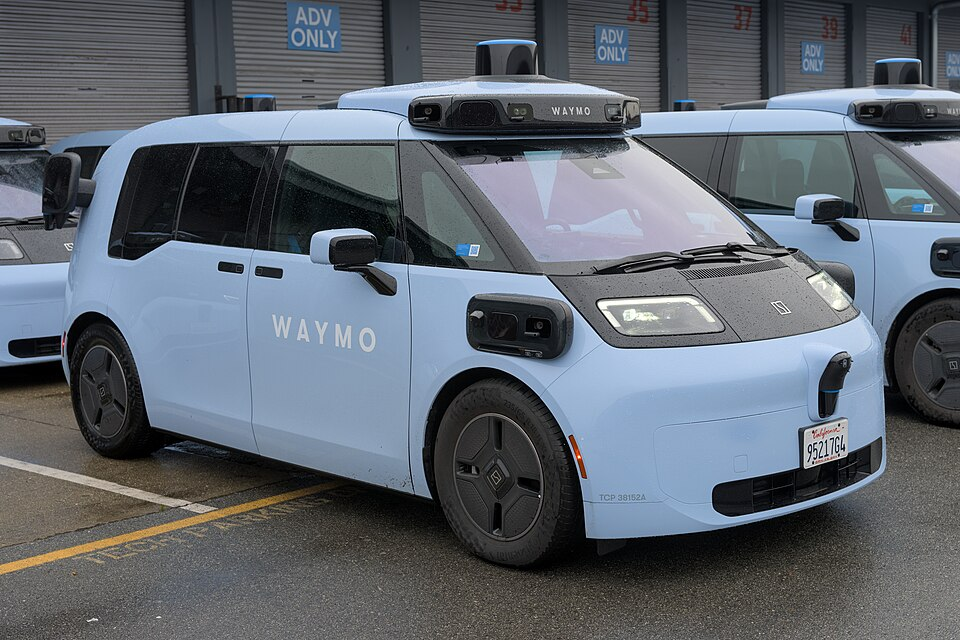
Waymo says fully autonomous vehicles require multiple sensor types and argues that camera-only, end-to-end AI systems are not sufficient for safe deployment at scale. The Alphabet-owned company made the case after logging more than 200 million fully autonomous miles, days before Tesla is expected to formally introduce its Cybercab into its robotaxi fleet.
Waymo published its position in an official blog post outlining 10 lessons from operating autonomous vehicles. The company said cameras, lidar, and radar provide different types of information and create redundancy that a single sensor cannot match.
Waymo Defends Its Multi-Sensor Approach
Srikanth Thirumalai, Waymo’s vice president overseeing driving software, wrote that cameras alone are not enough for fully autonomous driving. He said lidar provides detailed 3D geometry, cameras identify visual information such as traffic lights and signs, and radar can track velocity and operate through conditions such as heavy rain, fog, and dust.
Waymo also rejected a pure end-to-end neural architecture that takes raw camera input and directly produces steering commands. Thirumalai said such systems risk failures that can be difficult to interpret, pointing to the continued tendency of large AI models to produce incorrect outputs.
The comments contrast with Tesla’s approach, which relies primarily on cameras and AI rather than lidar. Elon Musk has repeatedly criticized lidar, while Tesla has spent years developing the Cybercab, a two-seat autonomous vehicle without a steering wheel or pedals.
Tesla Prepares Cybercab as Waymo Expands
Tesla is expected to formally introduce the Cybercab on September 3 after testing its robotaxi service with modified Model Y vehicles in parts of Texas and Florida. A recent company filing showed Tesla is targeting annual Cybercab production of more than 125,000 vehicles.
Waymo, meanwhile, has expanded its commercial service to 14 U.S. cities and says its fleet provides around 500,000 paid trips each week. On September 1, the company began welcoming public riders in Denver, San Diego, and Tampa, bringing its fully autonomous ride service to three additional markets.
Waymo’s system uses vehicles made by outside manufacturers and adds cameras, radar, lidar, computing hardware, and other autonomous-driving equipment. Tesla manufactures its own vehicles and is betting that fewer sensors and an AI-heavy software approach can reduce costs.
Tesla still has to demonstrate that its Cybercab can operate without human supervision at large scale. Waymo has already accumulated operational experience with problems including weather, emergency situations, school zones, and other conditions that autonomous fleets encounter during daily service.
The two companies are therefore testing different technical and economic approaches to robotaxis. Waymo is relying on multiple sensors and redundancy, while Tesla is attempting to achieve full autonomy with a simpler sensor setup and vertically integrated vehicle production.
Featured image credits: Wikimedia Commons
For more stories like it, click the +Follow button at the top of this page to follow us.