

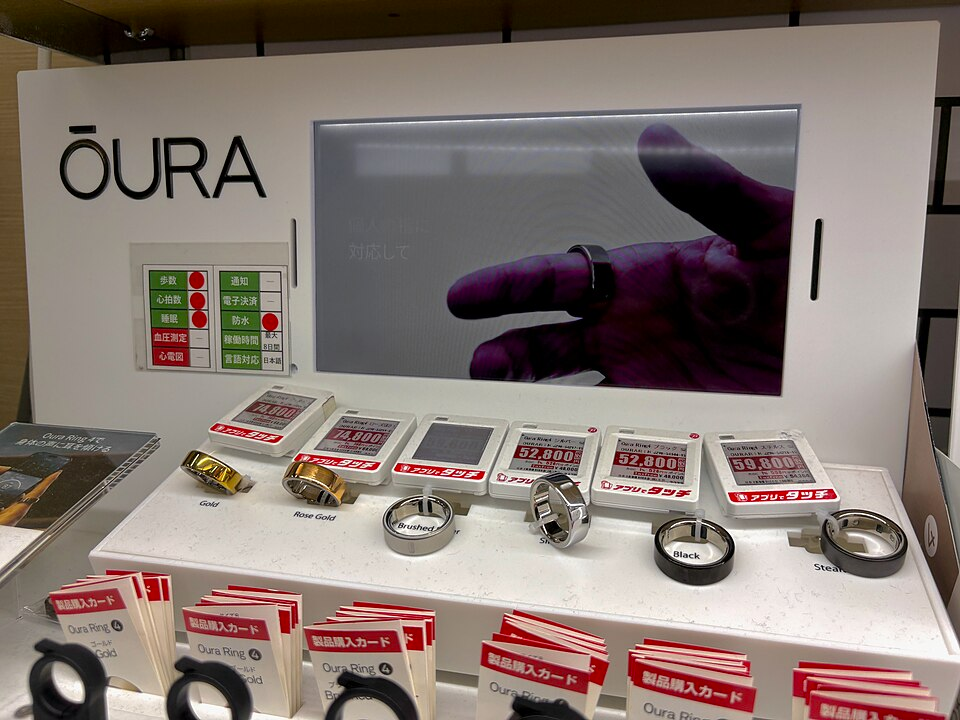
Oura filed to go public on September 3 as competition in the smart ring market expands beyond health and sleep tracking. The Finnish company reported $1.21 billion in revenue for the nine months ended June 30, up 74% from a year earlier, while reaching about 5 million paid members.
Oura said it sold 3.6 million rings over the past year. The filing follows the launch of the Oura Ring 5, its thinnest and lightest model yet, and comes after the company had announced a confidential IPO filing in May.
Its public S-1 filing also shows how quickly the business has expanded. At the same time, competitors are adding features such as payments, vibration alerts, on-device processing and touch controls.
Rivals Push Beyond Health and Sleep Tracking
Ultrahuman is preparing to ship its $479 Ring Pro in the U.S. in mid-September. The third-generation ring uses a redesigned heart-rate sensing system and dual-core processor for improved data collection and more on-device processing.
The company returned to the U.S. after a 2025 International Trade Commission ruling in Oura’s favor disrupted imports of its earlier rings. Ultrahuman also raised $70 million this week with backing from Qualcomm’s venture arm and plans to develop future rings that can run software directly on the device, including AI applications and games.
French company Circular plans to launch its Ring 3 Pro and Ring 3 Slim early next year. Both are expected to include NFC contactless payments and vibration alerts for alarms, reminders and health notifications, while the Pro adds ECG for A-fib detection, blood pressure trends, glucose tracking and sleep analysis.
RingConn Gen 3, launched in May for $349, adds vascular health insights and vibration alerts. It also tracks heart rate, blood oxygen, sleep, activity and stress.
More Smart Ring Features Reach the Finger
Samsung remains another major competitor with its $399 Galaxy Ring, launched in 2024. The device connects closely with Samsung’s existing ecosystem but lacks some features available elsewhere, including sleep apnea detection and A-fib detection.
Dreame has taken a different approach with a smart ring that includes haptic notifications and a small touchpad. The controls can be used for actions such as skipping music or taking a photo on a connected phone, although pricing and availability remain unannounced.
Other designs are adding displays. The Pebble Halo, currently available only in India, includes a screen, while companies such as Circular and Dreame are adding functions that previously required interaction with a phone or smartwatch.
The expanding feature sets represent a shift from the simpler role that helped establish smart rings as low-profile health trackers. Oura’s IPO filing now arrives as competitors test how much additional functionality can fit into the same compact form.
Featured image credits: Wikimedia Commons
For more stories like it, click the +Follow button at the top of this page to follow us.