

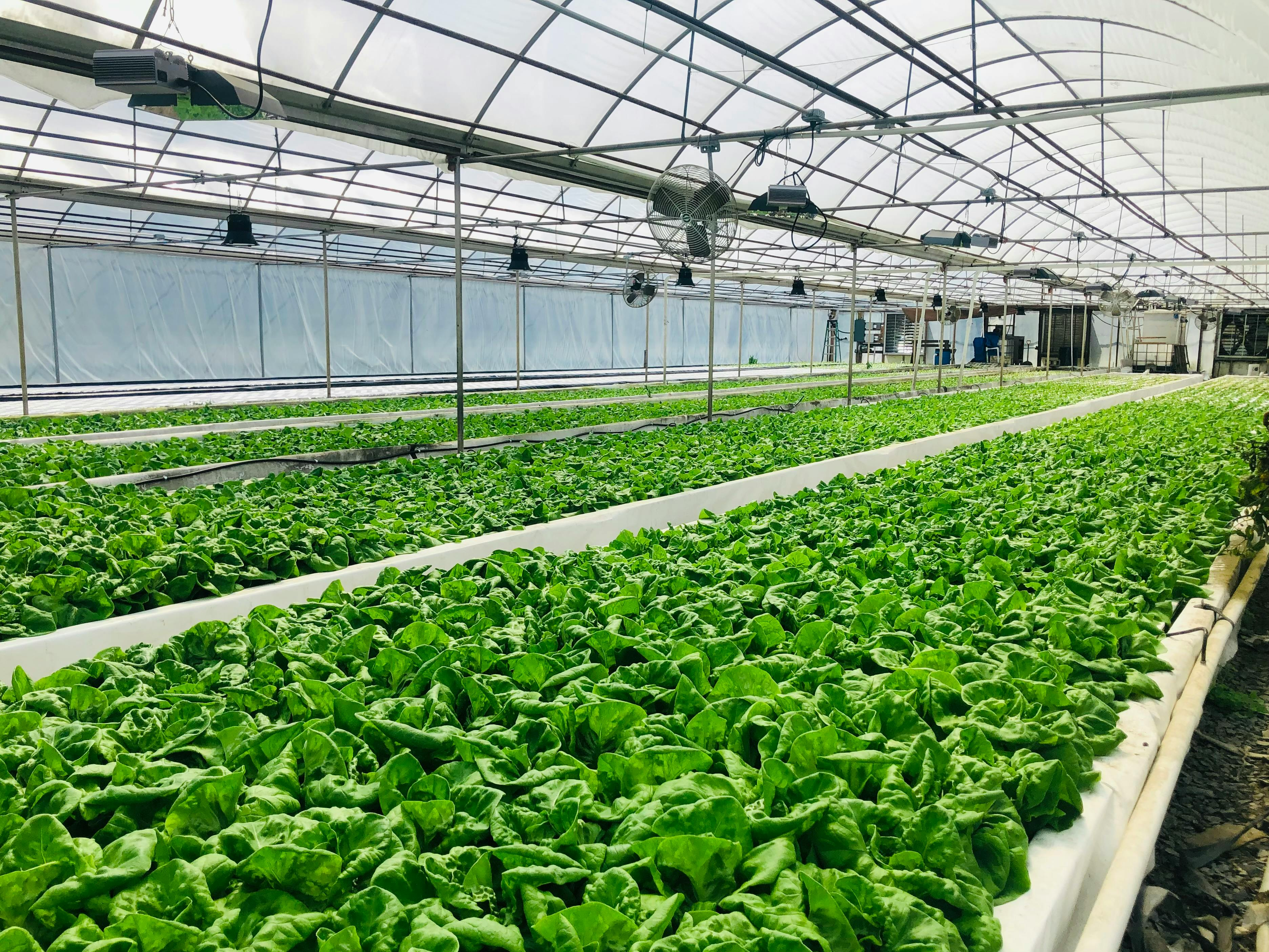
Canopii has developed an autonomous greenhouse system designed to grow crops from seeding to harvest without human intervention. The Portland-based company says its robotic farms can produce up to 40,000 pounds of herbs and specialty greens annually while using limited water and occupying a footprint similar to a basketball court.
The company is currently preparing to build its first commercial farm in downtown Portland after completing a fully automated prototype.
Origins Of The Startup
Canopii was founded by David Ashton, who grew up near Sacramento and attended college in San Luis Obispo during the severe drought that affected California in the late 2000s.
During that period Ashton frequently traveled the roughly 300-mile route between Sacramento and San Luis Obispo. Along the journey he observed extensive fields of lettuce growing despite the region’s water shortages.
The contrast between large-scale agriculture and drought conditions led him to consider ways to produce food closer to where it is consumed.
Ashton later began developing the concept for Canopii after an agricultural technology company he planned to join in Portland declared bankruptcy while he was driving north along the coast to relocate.
He continued developing the idea while his wife was attending medical school, working on the plans during evenings.
Autonomous Greenhouse Technology
Canopii’s robotic greenhouse system is designed to manage the entire crop production process.
The greenhouse automatically handles seeding, plant growth management, and harvesting operations without direct human labor.
Each unit can produce up to 40,000 pounds of produce per year while requiring only a single water connection.
The greenhouses occupy roughly the same space as a basketball court and operate using standard household electrical supply.
The systems are manufactured by GK Designs.
Current crop varieties include herbs and specialty greens such as baby bok choy and Gai lan.
Development Supported By Grants
Ashton spent three years developing early plans before applying for funding from the National Science Foundation.
The company first received a $250,000 grant to build a prototype of the robotic farm. After demonstrating the concept, Canopii secured a second grant worth $1 million to develop a full-scale version.
“Now, five years later, we have hit a major milestone for the farm,” Ashton said. “We have an autonomous farm that grows everything from seed to harvest without any human intervention.”
He added that the system was developed with a small team and relatively limited capital compared with other indoor farming companies.
Funding Strategy And Industry Context
Canopii has raised about $3.6 million in funding so far. Approximately $2.3 million came from grants, while the remaining funding came from strategic investors.
The indoor farming sector previously attracted significant venture investment, with companies such as Bowery Farming and Plenty raising hundreds of millions of dollars before encountering financial difficulties.
Ashton said Canopii’s approach differs from large-scale vertical farming operations. The company has avoided early venture capital investment and focused on gradually refining a single system.
“The capital stack has to be diversified beyond VC,” Ashton said. “We’re five now, and we’re still just iterating on one farm, which has allowed us to learn so much.”
He added that attempting rapid scaling early in development would have been difficult for infrastructure focused on food production.
Plans For Commercial Deployment
The company has received inquiries from potential customers including schools, restaurants, and casinos.
With the autonomous prototype completed, Canopii plans to construct its first commercial farm in Portland.
In the future, the company intends to franchise the greenhouse systems and potentially raise venture capital to support expansion.
Ashton said the systems are designed for scalable production.
“We can mass produce it like a car,” he said.
He also noted that the farm operates using standard residential power — 100 amps and 240 volts — allowing it to function in locations ranging from urban sites to residential properties.
Featured image credits: Pexels
For more stories like it, click the +Follow button at the top of this page to follow us.