

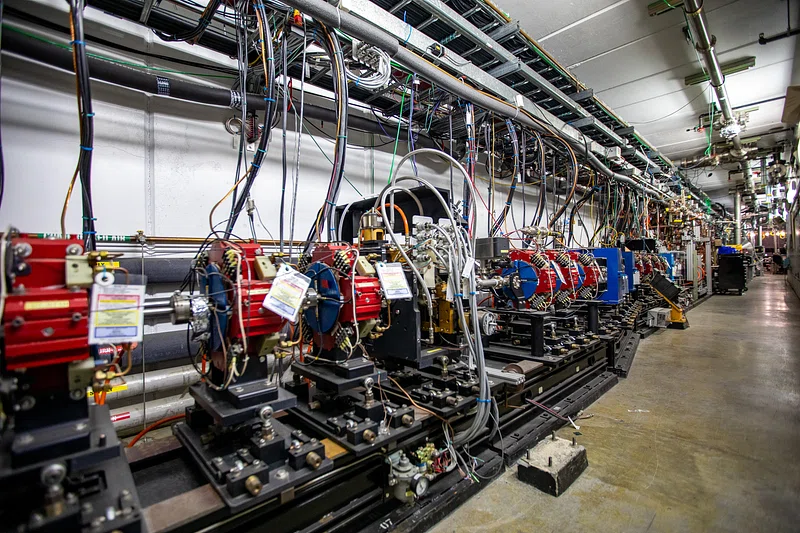
Fusion startup Xcimer Energy switched on its Phoenix laser system on Wednesday. The company says Phoenix is the largest privately owned laser system in the world. Xcimer’s approach to fusion power is modeled after the National Ignition Facility (NIF), which proved in December 2022 that a controlled fusion reaction could release more power than required to ignite it.
How NIF And Xcimer’s Laser Systems Work
The NIF trained 192 laser beams on a fuel target smaller than a pencil eraser. The energy from the lasers hits a gold target. As the lasers obliterate the gold target, their energy converts into X-rays. Those X-rays focus on the fuel pellet inside, compressing it until atoms in the fuel fuse and release energy. Xcimer is betting that more powerful, less complex lasers will turn NIF’s concept into something more profitable.
Phoenix Uses Excimer Amplification But Remains Below Commercial Scale
Xcimer’s plans for a fusion power plant call for two lasers capable of firing in microsecond-long pulses. Light from those pulses feeds through a compression system, which delivers the lasers’ energy to the fuel target in nanoseconds. The quicker the fuel compresses, the more likely it is to generate usable fusion reactions.
Phoenix uses excimer amplification similar to those used in semiconductor manufacturing but significantly more powerful. At full strength, the krypton-fluoride laser generates over 1 kilojoule of energy, Xcimer told TechCrunch. The laser’s core is 38 meters long. That output remains a fraction of what the company says it will need for a commercial power plant, which could exceed 12 megajoules.
Xcimer Aims For Prototype In 2028 And Commercial Plant In Mid-2030s
Xcimer hopes to complete a prototype in 2028 before working on a larger system. That larger system is expected to produce at least as much power as it consumes. Sometime in the mid-2030s, the company plans to build its first commercial-scale power plant. Xcimer Energy’s website provides additional details on its fusion technology.
Featured image credits: rawpixel.com / U.S. Department of Energy (Source)
For more stories like it, click the +Follow button at the top of this page to follow us.