

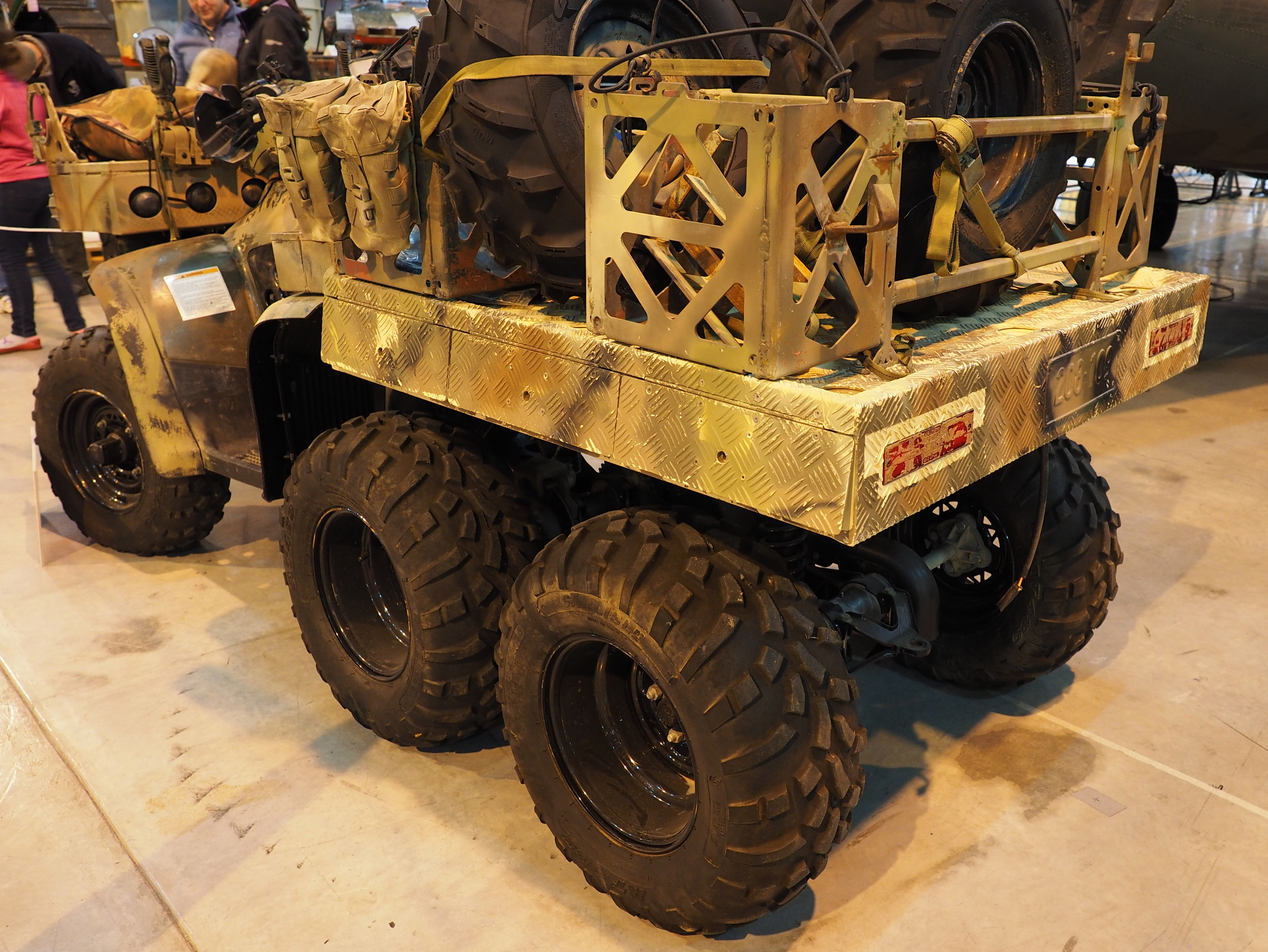
Forterra has deployed more than 100 autonomous ground vehicles in Ukraine over the past nine months, marking what the company believes is the largest combat deployment of autonomous ground vehicles by a U.S. defense technology company. The vehicles are being used in conflict zones to move supplies, carry munitions and evacuate wounded soldiers.
The U.S. autonomous vehicle company said it rapidly manufactured and delivered the Lancer vehicles under a U.S. government-backed programme. The deployment comes as Ukraine and its allies look beyond aerial drones and invest more heavily in ground-based autonomy for battlefield logistics.
Forterra chief growth officer Scott Sanders told TechCrunch that defense technology cannot be fully understood until it is tested in combat. He said Ukraine has provided real battlefield lessons on how autonomous vehicles perform under electronic warfare, difficult terrain and enemy fire.
Lancer Vehicles Support Frontline Logistics
Forterra’s Lancer is based on a Polaris all-terrain vehicle and equipped with the company’s sensor and compute systems. The gas-powered vehicle can carry up to 750 kilograms, giving it more payload capacity than many battery-powered Ukrainian ground robots.
Since arriving in Ukraine last October, the vehicles have driven more than 2,500 miles across more than 1,100 missions. They have carried 777,440 pounds of total weight and completed 52 casualty evacuations, according to the company.
Some vehicles have been lost in combat, especially when they became stuck in mud or difficult terrain and could be targeted by Russian forces. Ukrainian soldiers have also modified the vehicles for battlefield use, including adding Starlink satellite internet antennas.
A Ukrainian soldier familiar with the vehicles told TechCrunch that Lancer has become one of the most important ground robots for logistics and defensive support. The soldier said Ukrainian forces want more of the vehicles, but also need them to become cheaper because attrition is a constant part of the battlefield.
Autonomy Still Has Limits in Combat
Forterra’s vehicles can navigate across varied terrain, but Ukrainian soldiers have mostly teleoperated them in combat zones. The machines are still too valuable to risk freely, and current autonomy systems cannot reliably identify and respond to unexpected enemy threats in real time.
The company is working to combine traditional robotics algorithms with newer AI systems that can better interpret changing environments. Sanders said military autonomy requires capabilities that are not available in general open-source models, including navigation through minefields and operation around weapon systems.
Forterra has raised more than $500 million from investors including XYZ Venture Capital and Moore Strategic Partners. Its experience in Ukraine could help it compete for future U.S. national security contracts as the military increases investment in autonomous ground systems.
Other companies are working on similar technology. Scout AI, Field AI and Overland AI are among the startups developing autonomous platforms or testing ground robots with the U.S. military.
Ukraine is also expanding its own uncrewed ground vehicle programme. Defense News reported in April that the country planned to contract 25,000 ground robots in the first half of 2026 as it tries to move more frontline logistics away from human soldiers.
For Forterra, the Ukraine deployment has shown both the promise and the limits of ground autonomy. The vehicles can reduce risk for soldiers, but the battlefield still demands cheaper systems, better threat response and closer integration with human operators.
Featured image credits: Wikimedia Commons
For more stories like it, click the +Follow button at the top of this page to follow us.