

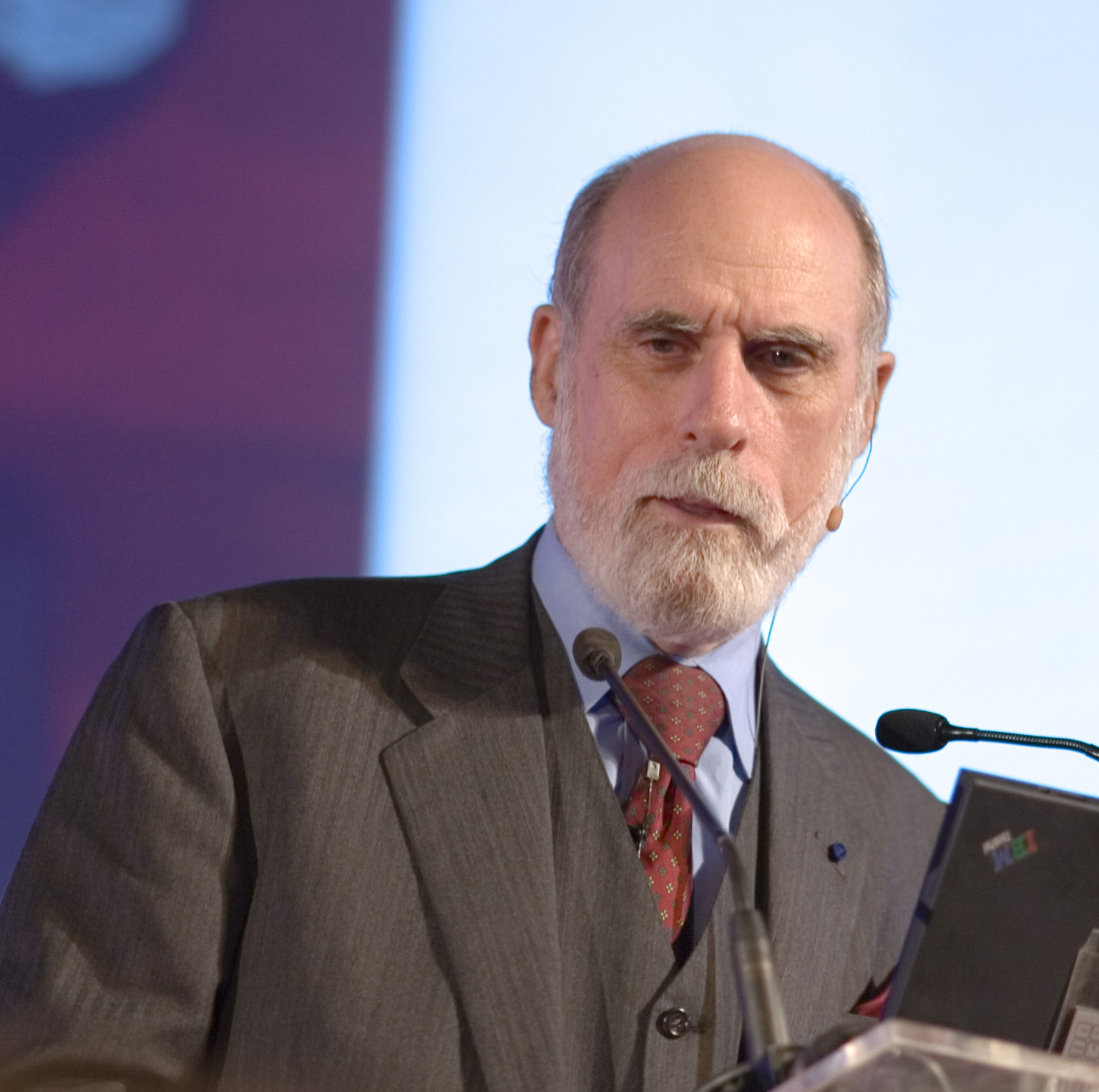
Vint Cerf, one of the computer scientists who helped develop the foundations of the internet, will retire from Google next week. The 83-year-old has served as the company’s vice president and chief internet evangelist since 2005.
UC Berkeley professor Dave Patterson announced Cerf’s departure during the Laude Institute’s Open Frontier conference. Cerf joined the event by video for a discussion about building open-source systems that can remain useful over long periods.
“Vint has been at Google more than 20 years, and he is retiring a week from today,” Patterson said before the audience applauded.
Cerf Helped Develop the Internet’s Main Protocols
Cerf and fellow computer scientist Robert Kahn began developing TCP/IP during the 1970s. The protocols allow separate computer networks to exchange information and became the technical foundation of the modern internet.
Their work earned both researchers the 2004 ACM A.M. Turing Award, the Presidential Medal of Freedom and several other international honours. Cerf later joined Google, where he worked on internet policy, accessibility, infrastructure and the continued expansion of online connectivity.
Google marked 50 years of Cerf’s internet work in 2023, noting that he had spent decades addressing technical and policy questions surrounding the network. His work has also included research into interplanetary communications and systems that could carry information between Earth and spacecraft.
AI Agents May Require Formal Communication Standards
During the conference, Cerf said the growth of autonomous AI agents could increase the need for interoperability and standardised protocols. These agents may come from different companies and systems but will still need to communicate, coordinate tasks and understand shared instructions.
Cerf questioned whether natural language would provide enough precision for those interactions. While English offers flexibility, he said its ambiguity could cause problems when one agent needs to confirm exactly what another has agreed to do.
He compared the risk to the telephone game, where a message changes as it passes between several people. A similar problem involving multiple AI agents could produce incorrect actions or agreements, making formal communication standards necessary.
The panel also included Patterson, Keras creator François Chollet, Stanford computer scientist John Ousterhout and Databricks co-founder Matei Zaharia. Their discussion covered the durability of open infrastructure and the concentration of advanced AI models within a small number of well-funded companies.
Featured image credits: Wikimedia Commons
For more stories like it, click the +Follow button at the top of this page to follow us.