

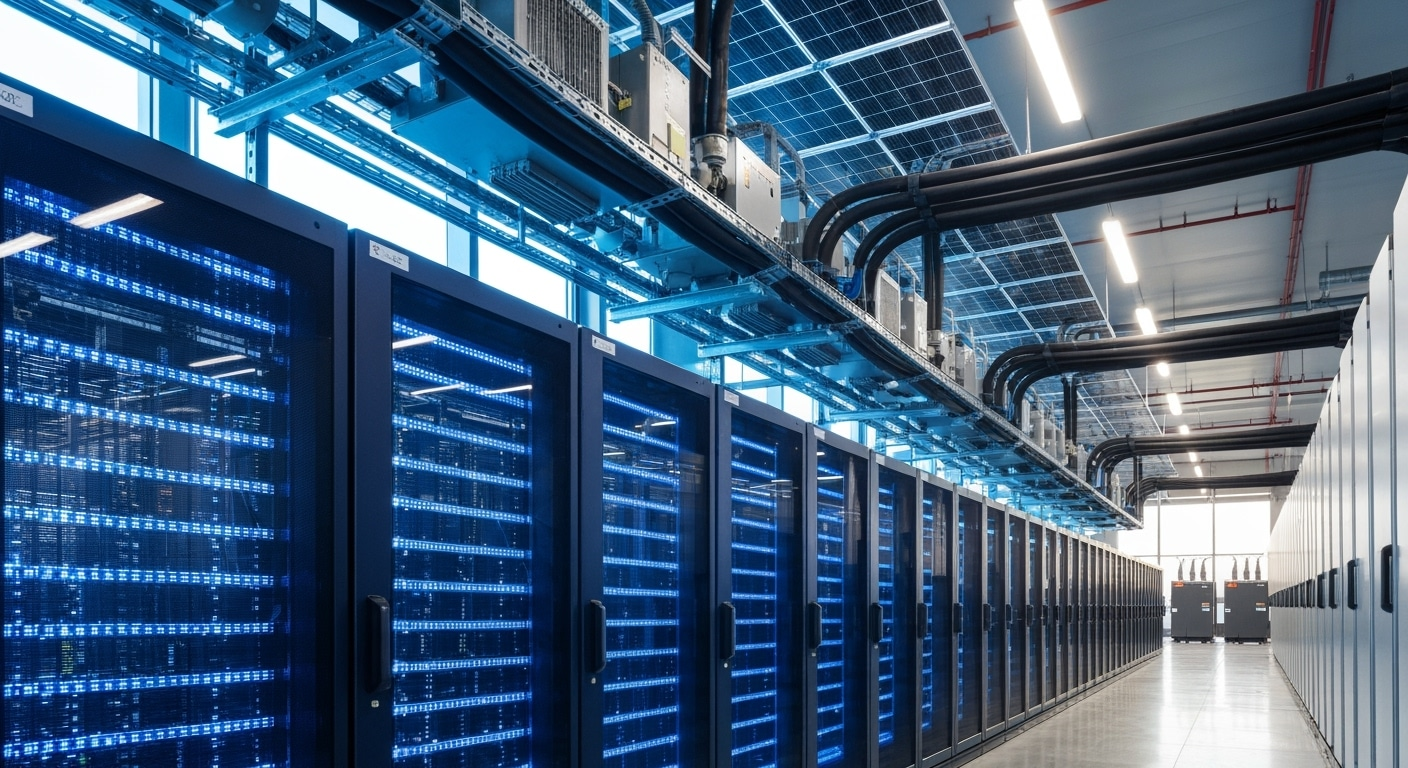
Runware has introduced the Sonic Inference Pod, a transportable data centre designed to add AI computing capacity faster than conventional facilities. Each 20-foot unit provides one megawatt of power, contains up to 1,200 graphics processors and uses closed-loop liquid cooling without consuming water.
The company said the modular design allows operators to install additional pods wherever suitable power is available. Runware currently has 10 units being deployed across the United States, Europe and the Asia-Pacific region, with 160 potential sites available.
Pods Can Be Installed in Weeks
Traditional data centres can take months or years to plan and construct, particularly when they require new grid connections and cooling infrastructure. Runware said its pods can be assembled in days and deployed within weeks, allowing it to respond more quickly when customers need additional inference capacity.
Each unit operates as part of Runware’s wider computing network. Requests can be routed to pods with available capacity near the user, while traffic can move to another site if one unit goes offline.
Customers can use shared infrastructure or reserve an entire pod for dedicated workloads. Runware says the pods can provide GPU computing at 30% to 80% less per hour than conventional cloud infrastructure, although actual savings will depend on hardware, location and workload.
Runware Targets Growing Inference Demand
AI inference refers to the process of running a trained model to produce an answer, image, video or other output. Demand is increasing as more companies add generative AI features to their products and serve larger numbers of users.
Runware provides inference services to companies including Higgsfield AI and Wix. Its platform supports image, video, audio, 3D and language models through a single application programming interface.
The company argues that placing pods closer to users can lower latency and reduce the energy lost when electricity or data travels over long distances. However, chief executive Flaviu Radulescu acknowledged that AI’s overall electricity use will continue increasing as inference demand grows.
Closed-Loop Cooling Avoids Water Consumption
The Sonic Inference Pod uses a sealed cooling system that recirculates liquid instead of drawing water continuously from local supplies. Runware said this design could reduce the pressure that large data centres place on communities where water and grid capacity are limited.
The company explained the hardware and deployment model in its official launch announcement. Runware said it can also replace hardware inside individual pods as newer processors become available, rather than upgrading an entire fixed facility.
Runware raised a $50 million Series A in December 2025, led by Dawn Capital with participation from Comcast Ventures, DST Global, Speedinvest and existing investors. The financing supports its computing infrastructure, model catalogue and international expansion.
Featured image credits: Hanwha Data Centre
For more stories like it, click the +Follow button at the top of this page to follow us.