

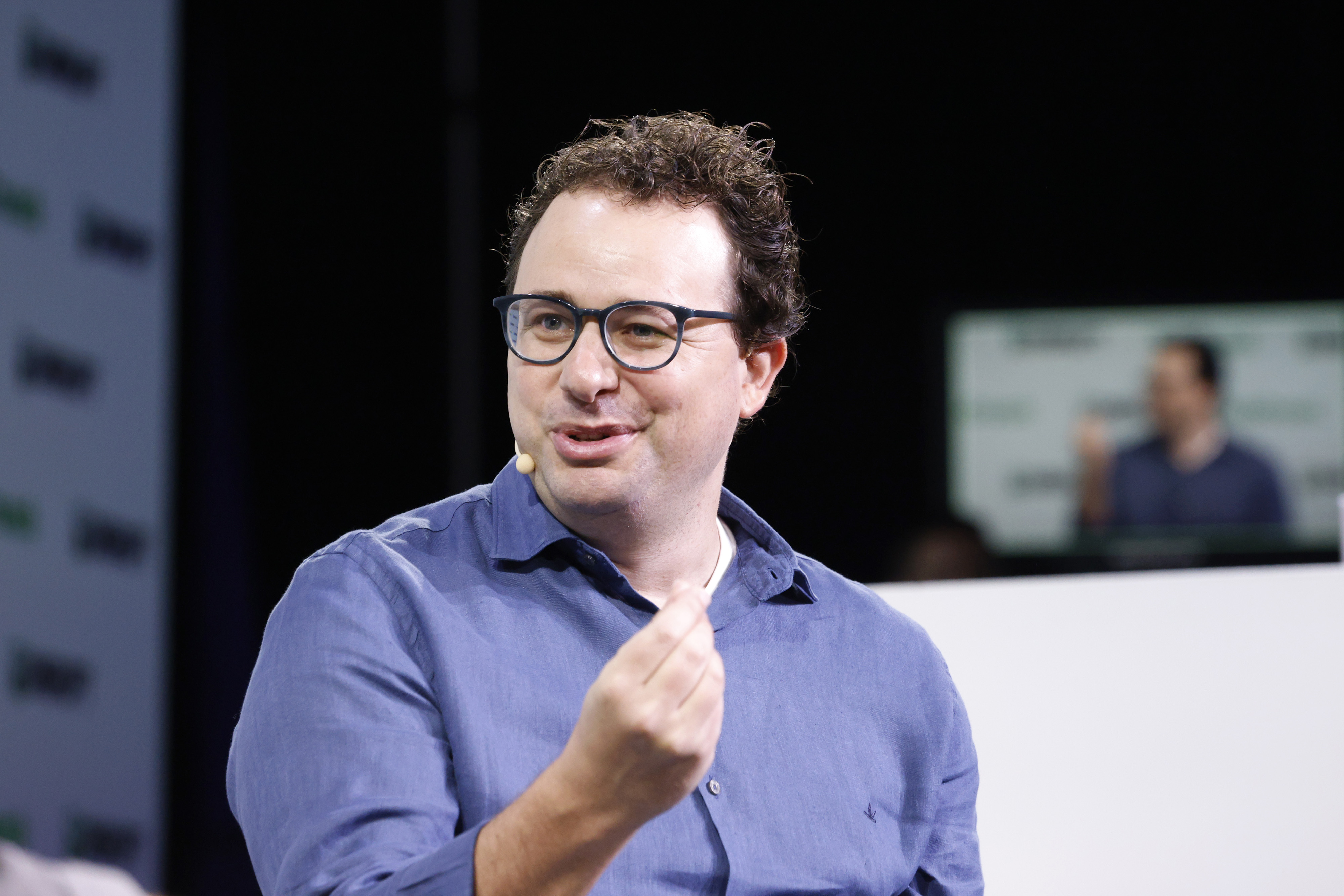
Anthropic chief executive Dario Amodei said the question of whether the artificial intelligence industry is in a bubble cannot be answered with a simple yes or no, while warning that some competitors are taking risks he described as unwise as they race to build capacity and capture future economic value.
Comments made at DealBook Summit
Amodei spoke at The New York Times DealBook Summit on Wednesday, where he was asked directly whether the AI sector is experiencing a bubble. He declined to give a definitive answer, describing the situation as complex, and instead outlined the economic uncertainties facing the industry.
He said he remains bullish on the long-term potential of AI but warned that some companies could make significant “timing errors” when it comes to investment and returns.
“There’s an inherent risk when the timing of the economic value is uncertain,” Amodei said. He added that companies must take risks to compete with rivals and with what he described as authoritarian competitors, referring to China, but said some firms were not managing that risk effectively.
Data center investment and timing risks
Amodei said one of the core challenges is the uncertainty around how quickly the economic value of AI will materialize compared with the long lead times required to build new data centers.
“There’s a genuine dilemma, which we as a company try to manage as responsibly as we can,” he said. He added that some players were “YOLO-ing,” a slang term for high-risk behavior, and said he was concerned that those companies had pushed their risk tolerance too far.
AI companies must decide how much computing capacity to secure years in advance. Amodei said underestimating future demand could leave companies unable to serve customers, while overestimating it could create severe financial strain or, in extreme cases, lead to bankruptcy.
AI chip value and depreciation concerns
Amodei also addressed the issue of AI chip depreciation, another factor affecting the economics of the industry. He said the main risk is not that chips stop functioning, but that newer generations become faster and cheaper, reducing the relative value of older hardware.
“The issue isn’t the lifetime of the chips — chips keep working for a long time. The issue is new chips come out that are faster and cheaper…and so the value of old chips can go down somewhat,” he said.
He said Anthropic makes conservative assumptions about chip lifecycles and other cost factors as it plans for an uncertain future.
Revenue growth and planning uncertainty
Amodei said Anthropic’s revenue has grown tenfold each year for the past three years. He said the company went from zero revenue to $100 million in 2023, then from $100 million to $1 billion in 2024, and is projected to reach between $8 billion and $10 billion by the end of this year.
He said it would be unwise to assume that such growth will continue at the same pace.
“I don’t know if a year from now, if it’s going to be 20 billion or if it’s going to be 50…it’s very uncertain. I try to plan conservatively. So I plan for the lower side of it, but that is very disconcerting,” he said.
Veiled criticism of competitors’ risk appetite
Amodei warned that companies that take on excessive risk could overextend themselves, especially if their leadership is inclined toward extreme scaling strategies.
Those remarks followed a separate controversy involving OpenAI last month, when its chief financial officer said she wanted the U.S. government to backstop the company’s infrastructure loans. After public criticism, she walked back those comments.
Amodei said he believes Anthropic is positioned to withstand most market scenarios but added that he could not speak for other companies.
“We think we’re going to be okay in, basically, almost all worlds…I can’t speak for other companies,” he said.
Featured image credits: Kimberley White via Wikimedia Commons
For more stories like it, click the +Follow button at the top of this page to follow us.