

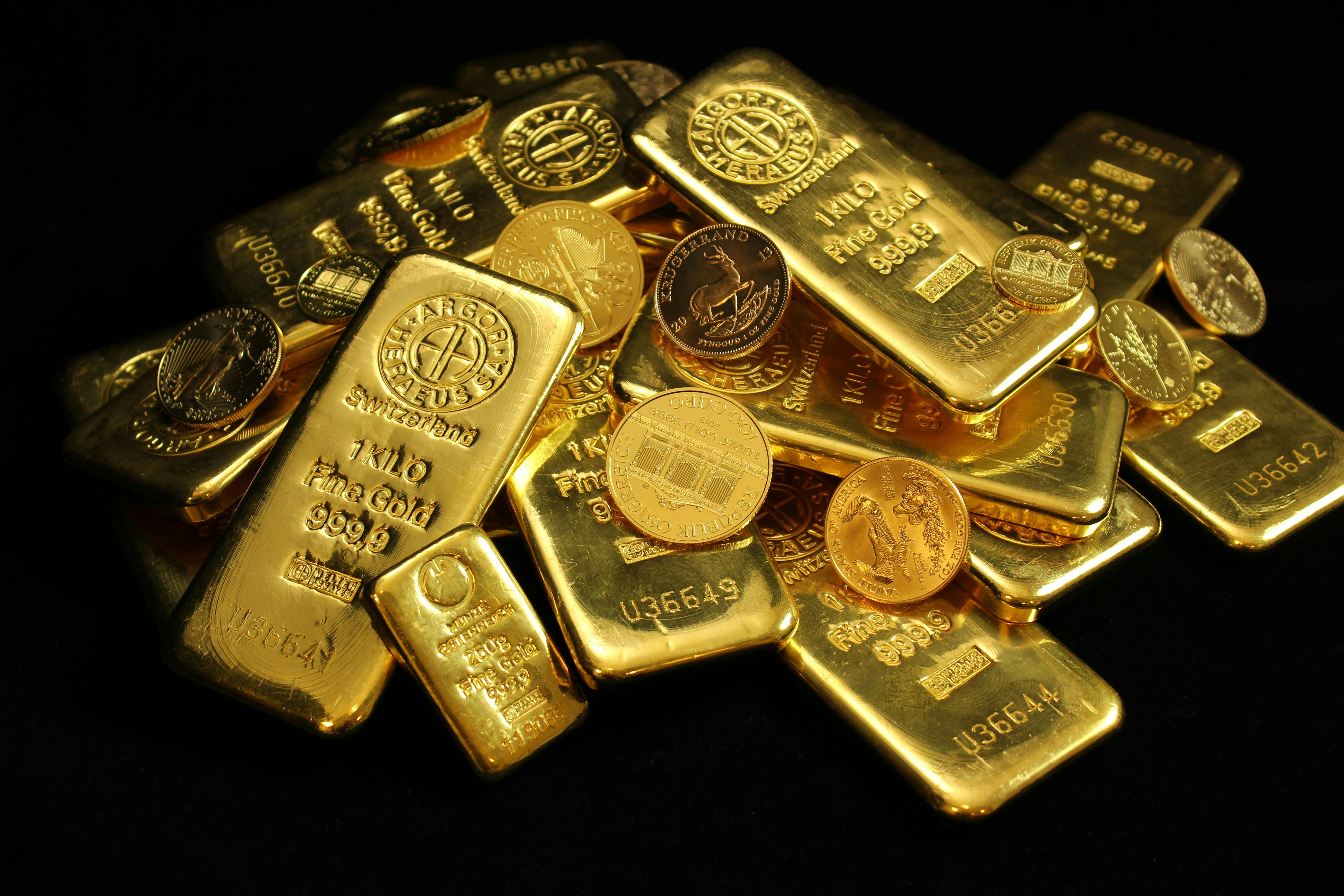
Gold and silver prices climbed to record highs on Monday while share prices across Europe fell, as investors reacted to US President Donald Trump’s threat to impose new tariffs on eight European countries linked to a dispute over Greenland.
Gold rose to an intraday high of $4,689.39 (£3,499) an ounce, while silver touched $94.08 an ounce. Both metals are widely viewed as safe-haven assets during periods of political and economic uncertainty, and prices have risen sharply over the past year.
Tariff Threat Drives Market Anxiety
On Saturday, Trump said a 10% tariff on goods imported into the US from Denmark, Norway, Sweden, France, Germany, the UK, the Netherlands and Finland would take effect on 1 February. He added the levy could increase to 25% from the summer and remain in place until an agreement over Greenland was reached. It remains unclear whether the new tariffs would be imposed in addition to existing duties.
Reports suggested the European Union is considering a €93bn (£80bn) package of tariffs on US imports in response, adding to concerns about an escalation in trade tensions.
The uncertainty pushed investors toward gold and silver, extending gains that have been building for months. Gold prices rose more than 60% last year, driven by geopolitical risks and broader economic concerns.
Other Factors Supporting Precious Metals
Analysts pointed to additional drivers behind the rally in precious metals. Expectations of further interest rate cuts, central banks adding hundreds of tonnes of gold to their reserves, and China’s announcement of restrictions on silver exports have all contributed to higher prices.
Susannah Streeter, chief investment strategist at Wealth Club, said gold’s appeal as a safe haven had strengthened amid worries about the consequences of US trade and geopolitical policies.
European Markets Fall
While precious metals advanced, European stock markets moved lower. London’s FTSE 100 closed down nearly 0.4%, while the more domestically focused FTSE 250 fell 0.9%. Financial and industrial stocks were among the biggest decliners, although shares in gold miners Fresnillo and Endeavour gained as metal prices rose.
Across continental Europe, carmakers, technology companies and luxury goods firms saw sharp losses. Germany’s Dax index dropped 1.3%, with BMW, Mercedes-Benz and Volkswagen each falling by around 2% to 3%. France’s Cac 40 declined 1.8%, with luxury groups LVMH and Hermès among the weaker performers.
European defence stocks bucked the trend, with Germany’s Rheinmetall and France’s Thales trading higher.
US markets were closed on Monday for a public holiday.
Trade And Legal Uncertainty Ahead
Danni Hewson, head of financial analysis at AJ Bell, said concerns that a hard-fought trade agreement between Europe and the US could now unravel contributed to the broad market declines.
Attention is also turning to the US Supreme Court, which is expected to rule on whether Trump exceeded his authority by imposing certain tariffs under the International Emergency Economic Powers Act. A decision could come as soon as Tuesday and may affect some of the president’s existing trade measures.
The International Monetary Fund has previously flagged trade tensions as a key risk to global economic growth. In its latest world economic outlook, published before the latest tariff threat, the IMF described the global economy as steady but warned that risks included a slowdown in the AI boom and a flare-up in trade disputes.
Featured image credits: Pexels
For more stories like it, click the +Follow button at the top of this page to follow us.