

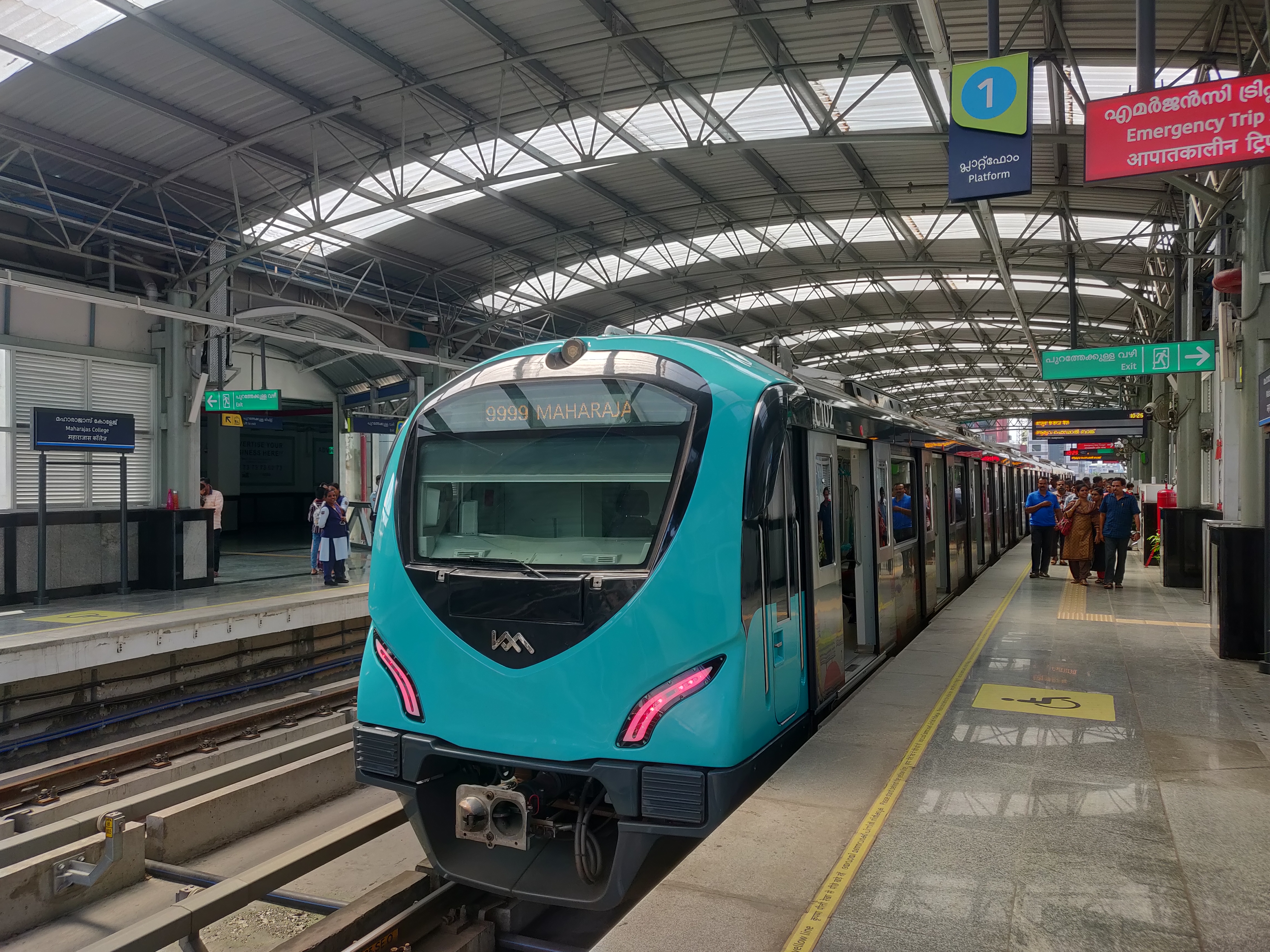
India’s rapid metro expansion is facing lower-than-expected ridership across multiple cities, with new lines such as Mumbai’s Aqua Line operating far below projections despite significant public investment.
Mumbai Aqua Line Highlights Gap Between Projections And Reality
The Aqua Line in Mumbai, a 33.5km fully underground corridor connecting business districts and airport hubs, was projected to carry about 1.5 million passengers daily. Actual usage stands at roughly one-tenth of that estimate.
The line, which opened last year, has seen limited uptake, with station activity often sparse. Ticket pricing has been cited as a factor, with fares ranging from ₹10 to ₹70, compared to cheaper suburban rail options.
National Expansion Masks Underperformance Across Cities
Under Narendra Modi’s government, India has invested more than $26 billion in metro systems since 2014. The network expanded from under 300km to over 1,000km by 2025, while daily ridership increased from about 3 million to more than 11 million.
Despite this growth, studies indicate that most metro systems operate at 25% to 35% of projected ridership levels, according to research from Indian Institute of Technology Delhi.
Additional data from Observer Research Foundation shows usage as low as 2% of projections in cities like Kanpur, and about 37% in Chennai. The Institute for Transportation and Development Policy reports similar figures, with cities such as Pune and Nagpur seeing 20% to 50% of expected ridership.
Delhi remains an exception, though experts note its higher figures may reflect counting interchanges as separate trips.
Demand Forecasting And Capacity Gaps Limit Adoption
Experts including Ashish Verma say demand projections are often overstated to justify project viability. Forecasts may rely on planned capacity, such as train frequency and coach numbers, that are not fully implemented.
In Bengaluru, for example, peak-hour train intervals can reach five minutes or more, and up to 25 minutes on newer lines. Train lengths are often shorter than global standards, reducing capacity and efficiency.
Affordability And Subsidy Reductions Affect Usage
Metro fares can represent up to 20% of income for lower-income commuters, exceeding global benchmarks of 10% to 15%, according to Aditya Rane.
Reduced subsidies have also affected ridership. In Bengaluru, a fare increase led to a 13% drop in usage, based on data compiled by Greenpeace.
Connectivity And Infrastructure Challenges Persist
Limited last-mile connectivity remains a key barrier. Experts note a shortage of feeder bus services and long transfer times between lines, such as 15 to 20 minutes at major stations like Hauz Khas in Delhi.
Fragmented management structures, where metro systems and bus networks operate independently, further complicate integration.
Urban infrastructure issues, including inadequate walkways and safety concerns, also discourage usage. Some commuters report difficulty accessing stations or securing transport after late-night travel.
Gradual Growth Expected Amid Structural Constraints
Despite these challenges, experts expect metro usage to increase gradually as urban congestion and pollution intensify. However, they indicate that significant improvements will depend on better integration of transport systems, improved accessibility, and more affordable pricing structures.
Featured image credits: Wikimedia Commons
For more stories like it, click the +Follow button at the top of this page to follow us.