

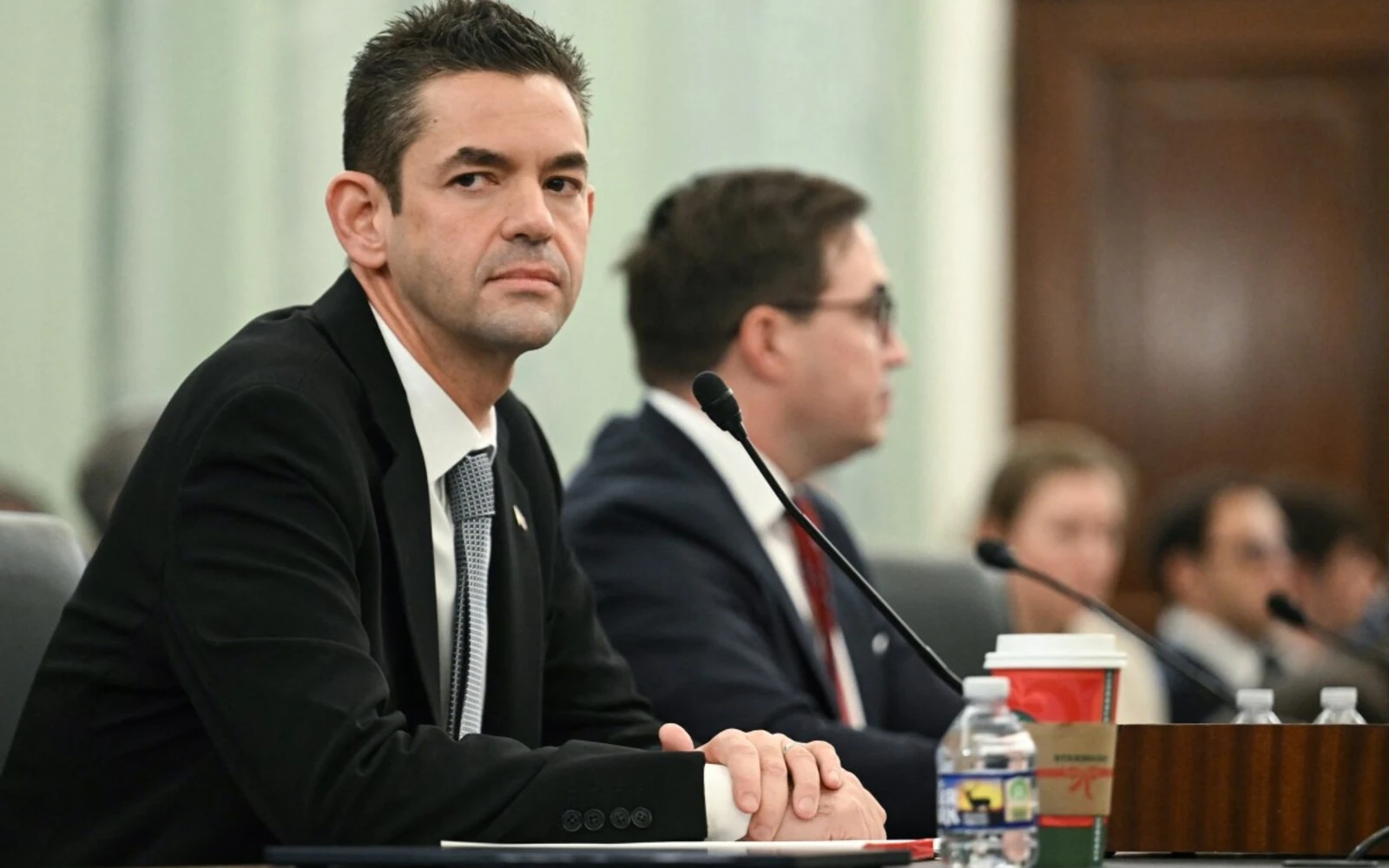
The US Senate has confirmed billionaire investor Jared Isaacman as the next administrator of Nasa, finalising a nomination process that saw President Donald Trump nominate him, withdraw the nomination, and later put his name forward again. Senators approved the appointment by a 67–30 vote, placing a private-sector entrepreneur at the head of the US space agency for the first time in decades.
An unconventional choice for Nasa leadership
Isaacman, 42, is an amateur jet pilot and the first non-professional astronaut to carry out a spacewalk. His appointment marks a break from recent tradition, as he is the first Nasa administrator in many years to come directly from outside government.
Trump first announced his intention to nominate Isaacman in December 2024. The nomination was withdrawn in May during a public dispute between Trump and Elon Musk, a close ally of Isaacman and chief executive of SpaceX. Musk, one of Trump’s largest political donors, had maintained a regular presence at the White House before their disagreement over government spending led to a rupture.
At the time, Trump said he had ordered a “thorough review of prior associations” before pulling the nomination. In November, he reversed course and renominated Isaacman.
Strategic focus on the Moon and competition with China
Isaacman’s leadership is expected to be judged largely on whether Nasa can return humans to the Moon ahead of China. Trump has stated that he wants the US to establish a permanent lunar base, aimed at enabling resource extraction and supporting future missions to Mars.
During a confirmation hearing earlier this month, Isaacman said he supported Trump’s push to mine the Moon, describing the current moment as critical in a competitive global environment. He told senators that delays or mistakes could have long-term consequences, including shifts in global power.
Countries are increasingly focused on exploiting the lunar surface, a context Isaacman referenced when urging faster action.
Private sector ties and potential tensions
Isaacman has argued that increased private sector involvement is necessary for the US to compete in space. He has promoted greater commercial competition as part of Nasa’s future direction.
That stance could place him at odds with Musk. Last week, Isaacman publicly welcomed Nasa’s decision to award a major contract to Blue Origin, the space company owned by Amazon founder Jeff Bezos and a competitor to SpaceX.
Isaacman has also said Nasa should deepen partnerships with universities and academic institutions, describing the agency as a potential “force multiplier for science”. He has indicated a willingness to pursue unconventional funding options if needed, including using his own resources to support scientific programmes.
Background and next steps
According to Forbes, Isaacman has an estimated net worth of $1.2bn (£894m), largely derived from his payment-processing business and the sale of a company that trained pilots and operated a private fleet of military aircraft.
The Nasa administrator role will be his first position in politics. He succeeds Sean Duffy, the US transportation secretary, who has served as interim Nasa chief since July.
Featured image credits: Free Malaysia Today
For more stories like it, click the +Follow button at the top of this page to follow us.