

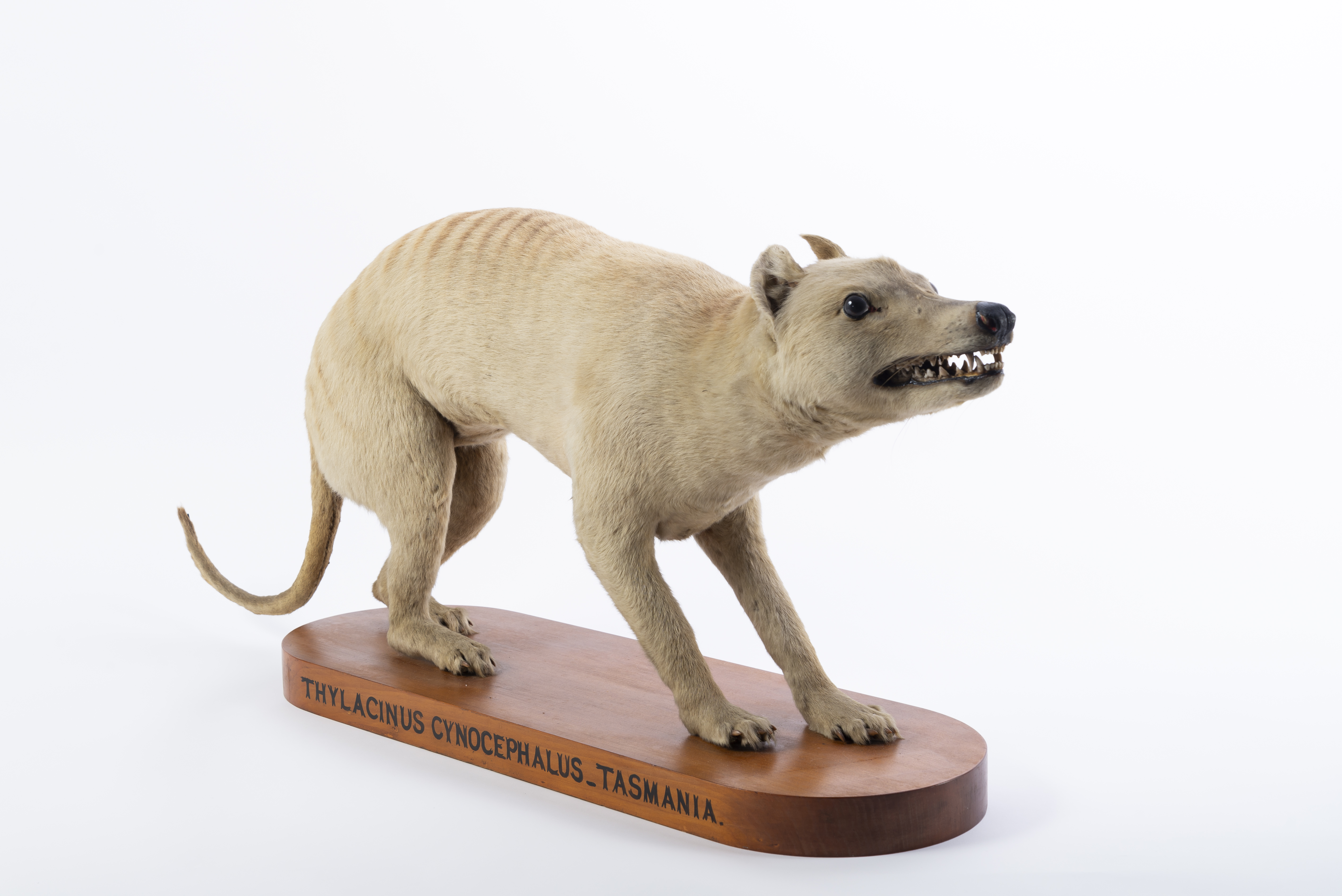
A mounted animal head originally mistaken for an antique fox has sold for more than £60,000 after being identified as a likely thylacine, or Tasmanian tiger. The specimen had previously been bought for just £50 at an antiques market before its unusual teeth revealed that it could belong to the extinct marsupial.
The head was sold by Auctioneum in Bristol after attracting strong competition between bidders. Collector James Cranfield, who bought the specimen, later said he paid £62,600 and described it as a rare find for natural history collectors.
Teeth Helped Reveal the Animal’s Identity
The specimen had been catalogued as a fox and was fitted with novelty googly eyes, which contributed to its unusual appearance. Cranfield, a trained zoologist and taxidermy collector, said he became suspicious after examining its teeth more closely.
Thylacines have eight upper incisors between their canine teeth, while foxes and dogs have six. Cranfield said the head also lacked the distinctive carnassial tooth expected in a canid, providing further evidence that it belonged to a marsupial rather than a fox.
The specimen still contains at least part of its skull, according to Cranfield. He plans to have it examined using X-rays, CT scans, and potentially DNA testing so specialists can formally confirm its identification.
Rare Thylacine Material Remains in Private Collections
The thylacine was a carnivorous marsupial native to Australia and New Guinea, with the last known individual dying at Hobart Zoo in 1936. Surviving skins, skulls, bones, and taxidermy examples are now uncommon and are primarily held by museums, scientific institutions, and some private collectors.
Kathryn Medlock, senior zoology curator at the Tasmanian Museum and Art Gallery, told ABC News that thylacine material is rare but occasionally emerges from private homes, farms, and longstanding collections. She said several specimens are known to remain in private hands.
The specimen’s provenance remains unclear. Cranfield has suggested it may date to around 1900 and could possibly have originated as a bounty specimen, although that has not been established.
Cranfield said he intends to preserve the mounted head and make it available to museums, researchers, and other specialists where appropriate. He also plans to replace the googly eyes while otherwise keeping alterations to the historic specimen to a minimum.
Featured image credits: Wikimedia Commons
For more stories like it, click the +Follow button at the top of this page to follow us.