

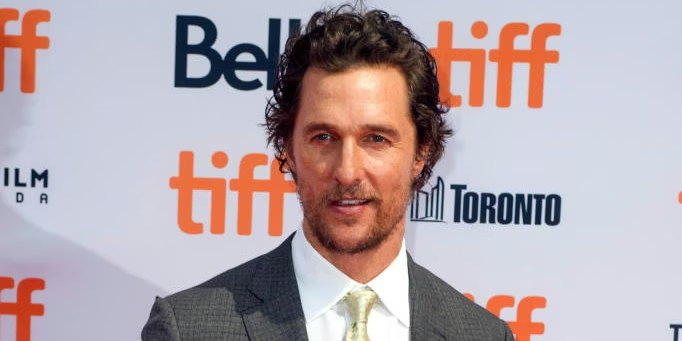
Oscar-winning actor Matthew McConaughey has trademarked elements of his voice and image in an effort to prevent unauthorised use by artificial intelligence platforms, marking what lawyers and academics describe as a first-of-its-kind legal approach in the entertainment industry. The move is intended to give McConaughey greater control over how his likeness is copied or replicated by AI tools.
Clips registered with the United States Patent and Trademark Office include audio from the 1993 film Dazed and Confused, featuring McConaughey’s widely recognised catchphrase “alright, alright, alright”, according to reporting by the Wall Street Journal.
A Legal Strategy Focused On Trademarks
McConaughey’s lawyers told the Wall Street Journal that there are currently no known examples of his likeness being manipulated by AI systems. They said the trademarks are intended to apply broadly, allowing action against unauthorised copies or imitations if they emerge.
Kevin Yorn, one of McConaughey’s legal representatives, told the Agence France-Presse that another aim is to secure a share of the economic value generated by AI technologies that rely on human voices and images.
McConaughey said in an email to the newspaper that he wants any use of his voice or likeness to occur only with his approval, adding that the objective is to establish clear ownership boundaries where consent and attribution are standard practice.
Several of the registered clips were filed by the commercial arm of the Just Keep Livin Foundation, a non-profit organisation founded by McConaughey and his wife, Camila.
Expert Views On AI And Celebrity Likeness
Alina Trapova, an assistant professor of copyright law at University College London, said the case appears to be the first instance of an actor using trademark law to counter AI-related risks. She said celebrities often object to unauthorised AI use for reputational reasons, but for high-profile performers it also represents lost licensing income.
Trapova said that as deepfakes and other forms of AI-generated imitation become harder to control, public figures are testing different legal tools to prevent what she described as unauthorised commercialisation.
McConaughey’s Relationship With Generative AI
McConaughey has not positioned himself as an opponent of generative AI. He has held a stake for several years in ElevenLabs, a firm that develops AI voice modelling tools. ElevenLabs has created an AI-generated audio version of McConaughey with his consent.
Dr Sandra Wachter, a professor of technology and regulation at the University of Oxford, said she expects other creatives to adopt similar strategies. She said it is easy for companies to train AI systems on existing work, while individuals face greater difficulty protecting their output in advance.
Wider Industry Concerns Over AI Imitation
Concerns about AI-generated images, audio, and video have increased across the entertainment sector. In 2024, Scarlett Johansson said she was shocked and angered after OpenAI launched a chatbot voice she said closely resembled her own. OpenAI later removed the voice but denied it was intended to imitate her.
In June 2025, Disney and Universal sued AI firm Midjourney, alleging its image generator relied on extensive unauthorised copying.
Separately, an AI video generator linked to X, owned by Elon Musk, was accused of producing sexually explicit videos of Taylor Swift without prompting. The Verge reported that the tool’s “spicy” mode generated uncensored content featuring the pop star.
Featured image credits: Heute.at
For more stories like it, click the +Follow button at the top of this page to follow us.