

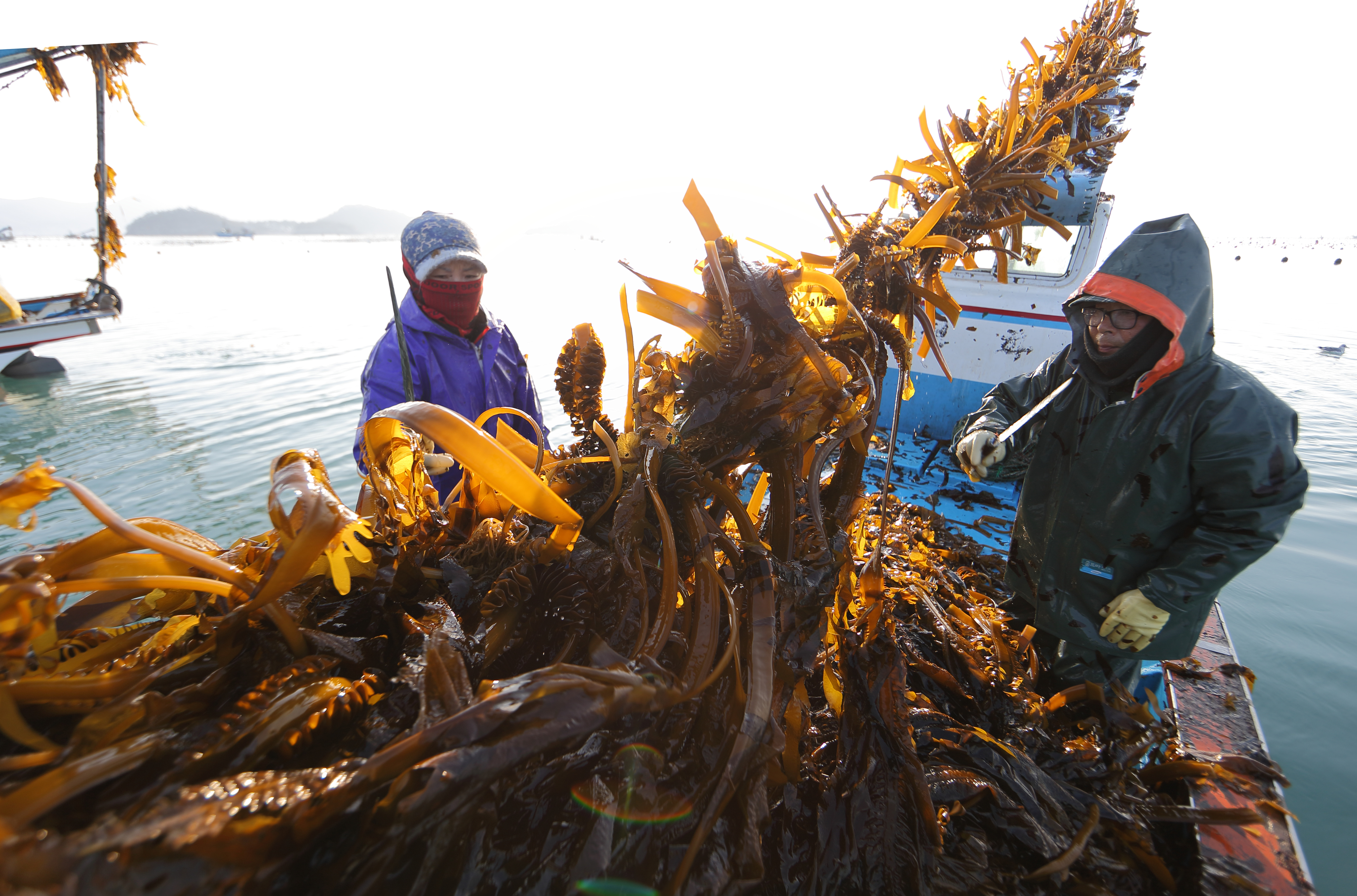
Suzie Flores left a Manhattan career to farm sugar kelp off Stonington, Connecticut, and now sells out each season while trying to build local demand and infrastructure for U.S. seaweed production. Her work highlights both kelp’s environmental benefits—water filtration and habitat—and the practical challenges of scaling a nascent industry that still imports more than 90% of its seaweed.
From office to ocean
Flores traded an academic‑publishing desk for a marina and seaweed lines after retraining in environmental science and connecting with marine biologists and nonprofit advisors.
Her first harvest left her with thousands of pounds and few buyers, so she cold‑called chefs and created demand directly.
Market traction
High‑end restaurants now prize her sugar kelp as an early local green, prized for texture and a subtle “merroir” that chefs say adds ocean character to dishes.
Flores’s farm sells out despite production losses, reflecting strong niche demand but limited overall market capacity.
Production and climate risks
Seaweed farming faces severe weather risks: storms, ice and strong currents damaged lines this winter, and Flores estimates losses of 40–50% on top of typical advised losses.
Farmers plan conservatively for harsher winters as they scale operations.
Supply‑chain and infrastructure gaps
The U.S. imports over 90% of its seaweed, mostly from Asia; North American production remains a small fraction of global supply.
Key bottlenecks are processing, distribution and consistent demand—areas that must grow alongside farms to make operations viable at scale.
Environmental and coastal benefits
Sugar kelp removes nitrogen pollution and provides habitat, with mussels and fish colonising farm lines and seabirds following.
Flores and advocates argue kelp farming can diversify coastal economies where lobster and other fisheries have declined.
Community and workforce model
Flores envisions many small family farms using existing fishing boats and gear, rather than single large firms, mirroring oyster aquaculture’s gradual expansion.
She also teaches seaweed units in schools and culinary programmes to build consumer familiarity and future seafood pathways.
Business reality
Despite selling out, Flores says building a market took years of outreach, and scale remains constrained by infrastructure and production variability.
Her approach balances ecological goals with livelihood creation for coastal towns facing economic transitions.
Featured image credits: Wikimedia Commons
For more stories like it, click the +Follow button at the top of this page to follow us.