

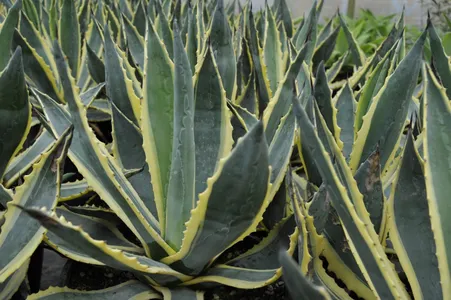
Wild agave growing across India’s Deccan Plateau is becoming a source of income for farmers and a raw material for the country’s small but growing agave-based drinks industry.
Masapalli Venkatesh once viewed Agave americana as a stubborn weed used to keep animals away from crops on his 10-acre farm in Kandukur. After traders approached him in 2010, he began coordinating farmers and villagers across a 100km area to supply larger volumes to processors.
Harvesting Requires Precise Timing
The most valuable part of an agave plant is its heart, known as the piña because it resembles a large pineapple. Skilled workers remove the spiky leaves before harvesting it.
Timing is critical because an agave plant sends its stored sugar into a flowering stalk when it begins to bloom. Once that happens, the piña loses the sugar required for processing.
The harvested hearts must reach a pressure cooker within 24 hours. Longer delays can cause their sugars to rot or ferment unpredictably, affecting the consistency and flavour of the resulting product.
Transport remains difficult because wild agave grows across scattered areas of Karnataka, Maharashtra, Rajasthan, and Andhra Pradesh. Producers rely on local aggregators to locate plants, negotiate access, and organise harvesting.
Demand Supports A Small Domestic Industry
Rakshay Dhariwal, founder of Maya Pistola Agavepura, estimated that India’s agave-based drinks market is growing by 31%. Vikram Achanta, co-founder of 30 Best Bars India, said local consumers have become more willing to try unfamiliar products.
India’s market remains small compared with its established whisky industry. However, producers are beginning to develop products using wild plants from the Deccan Plateau.
Desmond Nazareth’s company, Agave India, released India’s first locally made agave-based product in 2011 after years of research. The company operates the country’s only plant dedicated to processing agave hearts, according to the source article.
Wild Plants Create Supply Challenges
Nazareth is using satellite images to identify areas with conditions similar to places where agave already grows successfully. Choosing the correct land is important because the plants may take between nine and 13 years to mature.
Agricultural expert Miguel Braganza said India’s wild supply is unlikely to be depleted within the next five years. Agave plants reproduce through underground runners, which allow new plants to grow around the parent.
Wild crops are less consistent than cultivated varieties, however. Sree Harsha Vadlamudi, co-founder of Loca Loka, said differences between individual plants can cause sugar yields and production volumes to fluctuate.
Mexico developed more consistent crops through selective breeding and large commercial farms. Some Mexican producers also use drones and AI systems to monitor plant health, detect disease, and estimate the best harvesting time.
India does not yet have comparable infrastructure. Nazareth said the Deccan Plateau has millions of acres that could support agave cultivation, but building a larger industry would require long-term planning and patience.
Featured image credits: PictureThis
For more stories like it, click the +Follow button at the top of this page to follow us.