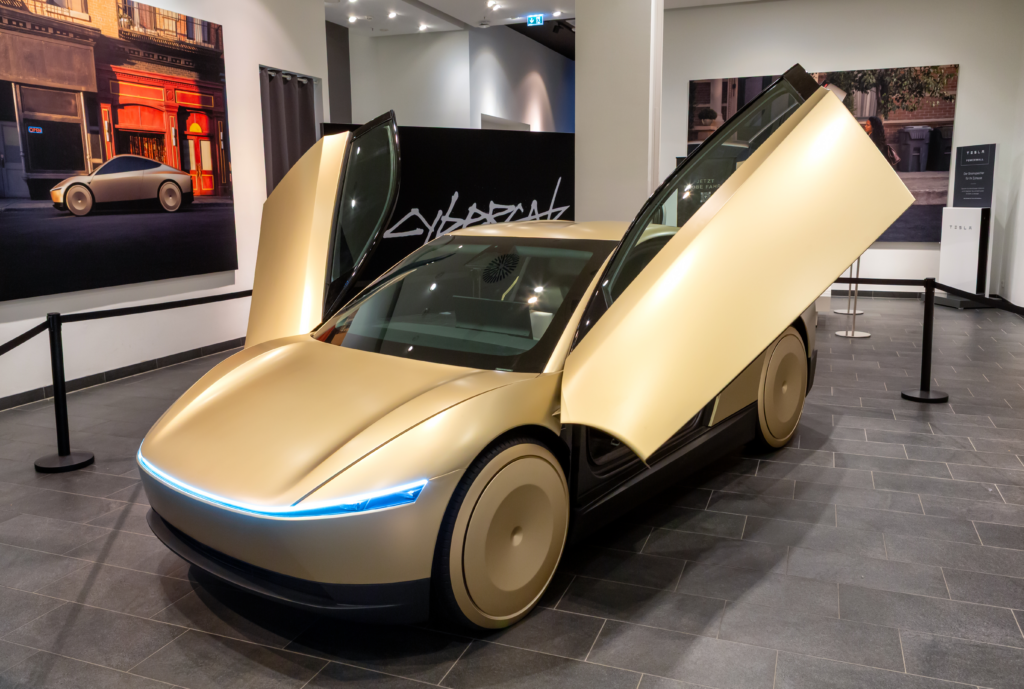
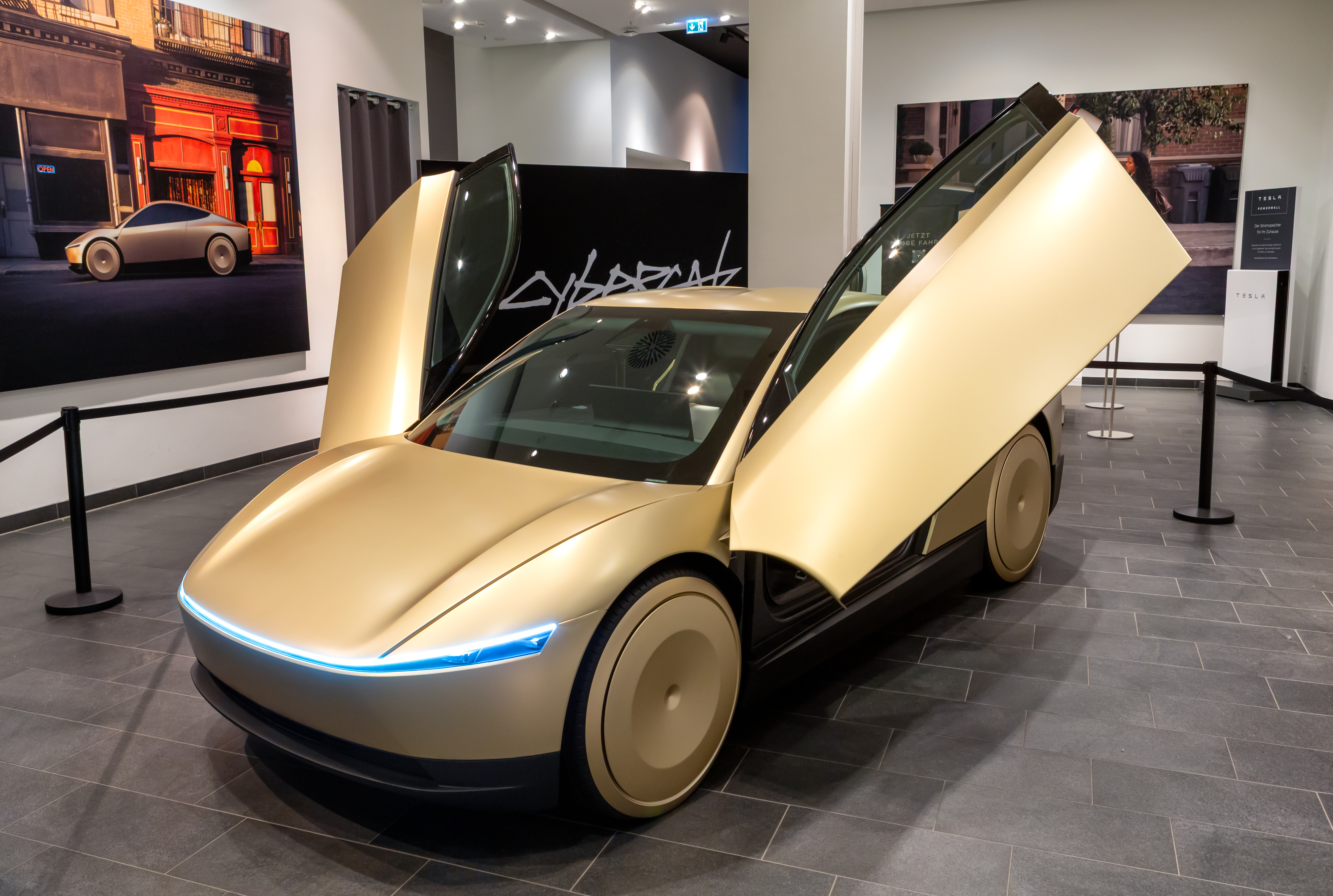
Tesla has begun testing a production version of its two-seat Cybercab on public roads in Austin, Texas. The vehicle has no steering wheel or pedals, although a safety monitor was seated in the right passenger seat during the test.
The test comes nearly two years after Tesla first presented the Cybercab as a purpose-built autonomous vehicle. The company plans to use it for rides booked through the Tesla Robotaxi app, which currently provides trips with Model Y vehicles in Austin, Dallas and Houston.
Tesla began operating its limited Austin robotaxi service with Model Y SUVs in June 2025. It has gradually introduced vehicles without an in-car safety monitor, although some cars in the fleet continue to operate with human supervision.
Federal Proposal Could Remove a Regulatory Barrier
The Cybercab’s lack of manual controls has presented a regulatory obstacle because existing federal safety standards include requirements for brake pedals. Manufacturers can currently seek exemptions for vehicles designed without conventional controls.
The National Highway Traffic Safety Administration recently proposed removing requirements for hand-operated or foot-operated brakes in vehicles intended to be driven only by automated systems. Such vehicles would still need to meet the same stopping-distance and braking-performance standards through alternative testing procedures.
The proposal remains open for public comment. Tesla has not publicly applied for an exemption that would allow large-scale deployment of Cybercabs under the current rules.
Tesla Takes a Camera-Only Approach
Tesla plans to rely mainly on cameras and its autonomous driving software to operate the Cybercab. Waymo uses cameras alongside lidar and radar, while obtaining vehicles through partnerships with manufacturers including Jaguar and Zeekr.
Elon Musk and other Tesla executives have argued that designing both the vehicle and its software could give the company greater control over production and operating costs. However, Tesla has not yet deployed a fully autonomous service at national scale.
Tesla’s Austin fleet has also experienced minor collisions, including at least two incidents in which remote operators were controlling vehicles at low speeds. The company has said remote assistance may be used to move a vehicle away from an obstacle or recover it after an incident.
Waymo has faced separate operational problems as its service has grown. The company recalled nearly 3,900 robotaxis after vehicles entered closed highway construction areas and previously recalled software linked to driving into flooded roads.
Tesla has also tested Cybercab prototypes with steering wheels and pedals in several U.S. cities. The gold-colored production design will make its autonomous vehicles more visually distinct than the lightly modified Model Y SUVs currently used in its robotaxi service.
Featured image credits: Wikimedia Commons
For more stories like it, click the +Follow button at the top of this page to follow us.