

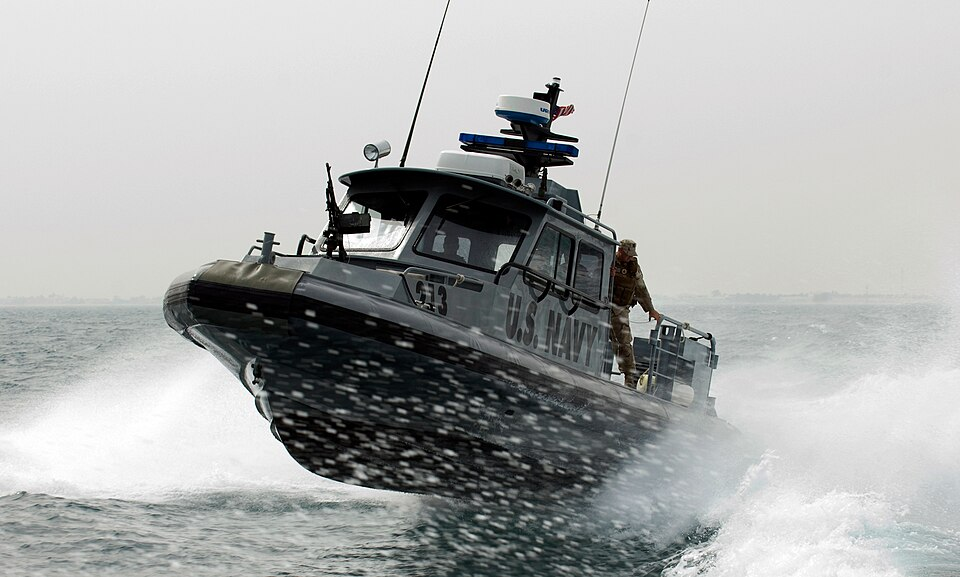
The U.S. Navy is giving startups and investors a clearer view of the technologies it expects to buy over the next several years, as it tries to rely more heavily on commercially developed products instead of funding every technology from its earliest stages. Navy chief technology officer Justin Fanelli has released an updated set of priorities covering applied AI, quantum technology, advanced networking, electromagnetic spectrum operations and digital engineering.
Fanelli said the Navy spends roughly $150 billion annually across all purchasing, although only a portion goes toward emerging technology companies. The service now buys primarily from companies around Series D through Series F and increasingly expects private investors to fund the earlier seed-to-Series-B development that the government historically supported.
Navy Wants Investors to See Demand Earlier
The change places more responsibility on the Navy to communicate what it will eventually need. Fanelli said investors responded positively to an earlier technology-priorities document because it gave them more confidence that companies developing certain technologies could eventually find customers inside the service.
Applied AI is one of the five updated priorities, covering machine learning and agentic systems for areas including sensor fusion, targeting support, autonomous behavior and cyber operations. Quantum information science focuses on practical uses such as navigation, secure communications and cryptography rather than simply acquiring quantum computers.
Advanced networking covers technologies that can move information securely when connections are unreliable or disrupted. Electromagnetic spectrum operations includes adaptive systems that can detect and manage spectrum conditions, while digital engineering and interoperability covers open APIs, model-based systems engineering and zero-trust architectures intended to make Navy systems easier to connect.
The priorities are not funding commitments and can change as operational requirements shift. Instead, Fanelli described them as a demand signal that startups and investors can use when deciding where to put development capital today.
Commercial Technology Is Already Replacing Older Systems
Recent Navy purchases show how the approach can work. The service this month awarded Boeing a $562 million contract for initial production of the autonomous MQ-25 Stingray refueling aircraft, which is designed to extend the operational range of carrier-based fighters.
The Navy has also purchased edge-computing systems from Armada and uses Gecko Robotics for inspection work previously performed manually. Domino Data Lab operates its machine-learning pipeline, while software from Applied Intuition was paired with commercial cameras to replace a delayed shipboard camera project, cutting roughly four years from the planned deployment timeline and expanding the system to additional ships.
Fanelli said the Navy is also experimenting with forms of co-investment, although direct equity stakes remain rare. More commonly, private investors fund a company’s early development and the Navy becomes a customer once the technology is mature enough to deploy.
One continuing obstacle is budget structure. Fanelli has said promising technology often fails to survive inside the Navy not because it does not work, but because long planning cycles mean a new system usually needs to replace something already receiving funding before it can become a lasting enterprise service.
Featured image credits: Wikimedia Commons
For more stories like it, click the +Follow button at the top of this page to follow us.