

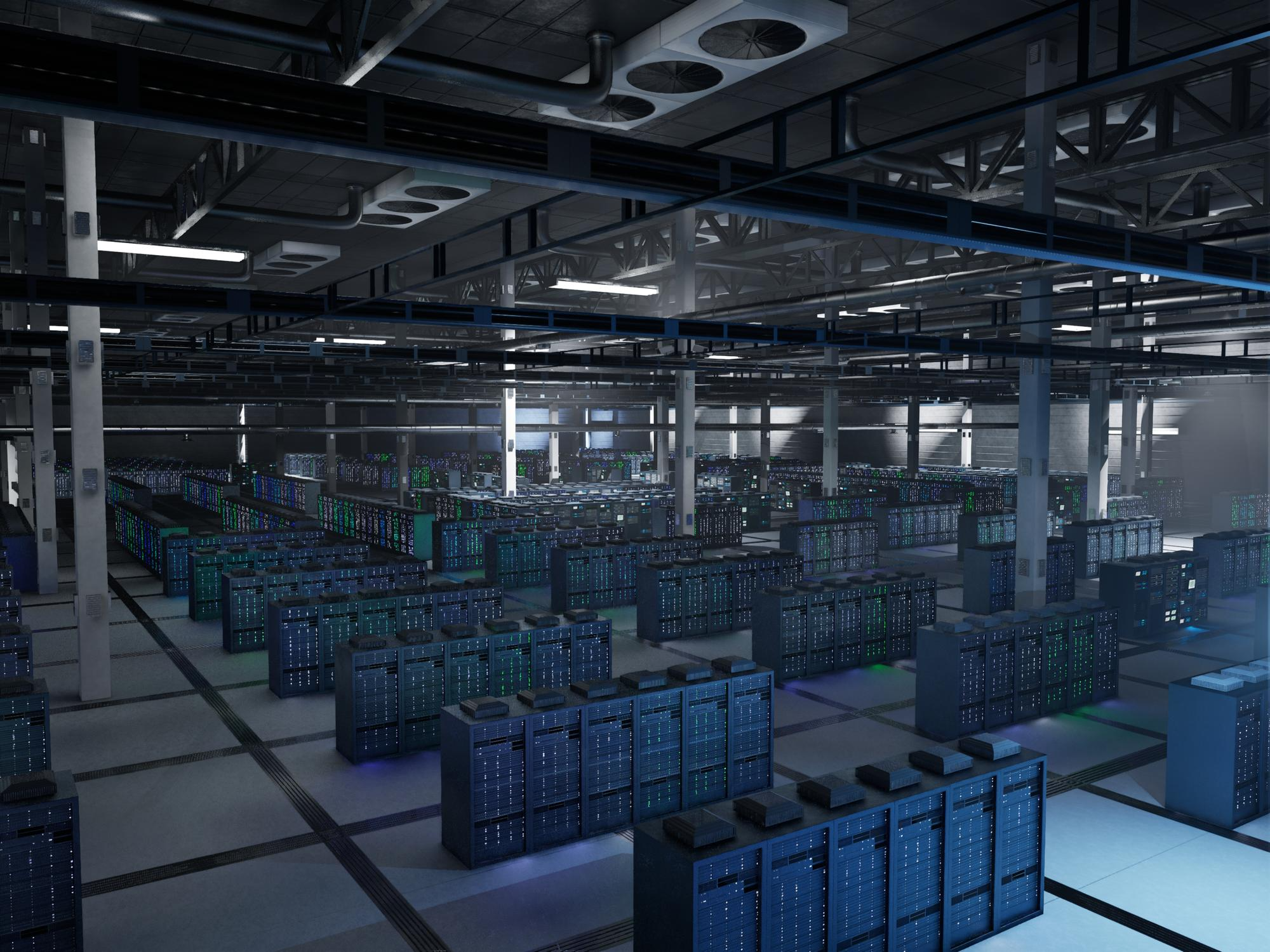
US data centres could consume about 20% of the country’s electricity by 2035, compared with 5.9% today, according to a new forecast from BloombergNEF. Rapid development of artificial intelligence infrastructure is expected to push total data-centre capacity close to 200 gigawatts over the next decade.
Nearly half of that capacity could support AI model training and inference. The United States is expected to remain the main location for such systems, hosting 64% of global AI chips when measured by power demand in 2033.
Power Forecast Rises by 83%
BloombergNEF now expects US data-centre power capacity to reach about 194 gigawatts by 2035. That estimate is 83% higher than the consultancy’s December forecast of 106 gigawatts, reflecting the number and scale of projects entering development.
Its projections have increased repeatedly as technology companies commit more money to AI servers and computing facilities. An earlier BloombergNEF analysis had already raised the 2035 forecast by 36%, from 78 gigawatts to 106 gigawatts.
Other organisations have also revised their expectations. The Electric Power Research Institute has more than doubled its 2024 estimate, while S&P Global increased its forecast by more than one-third between October and April.
Existing Grids Face Higher Demand
Many new facilities are expected to connect to grids that are already struggling to add generation and transmission capacity. Data centres could consume 34% of electricity within the PJM Interconnection, which serves areas from Virginia to Illinois, while facilities in Texas could require 22% of ERCOT’s generating capacity.
PJM’s latest long-term forecast projects that its summer peak demand will rise by about 65.7 gigawatts between 2026 and 2036. The grid operator attributes much of the increase to data centres and other large electricity users.
PJM previously suspended applications from new power generators for four years while it processed a large connection backlog. It reopened the queue in April, but supply continues to grow more slowly than projected demand.
Data Centres Raise Capacity Costs
Data centres accounted for about 40% of the $16.4 billion in charges from PJM’s latest capacity auction. Around $6.2 billion was associated with facilities that had not yet been built but could begin operating during the 2027-2028 delivery year.
Wholesale capacity prices have risen sharply as utilities compete to secure enough future generation. PJM’s system monitor estimated that data-centre demand increased supply costs by more than 60%, while recent periods of grid congestion pushed short-term electricity prices above $300 per megawatt-hour.
Under an aggressive global AI adoption scenario, data centres could create 1,935 terawatt-hours of additional annual electricity demand by 2033. That amount is close to India’s current yearly electricity consumption.
Featured image credits: Magnific.com
For more stories like it, click the +Follow button at the top of this page to follow us.