

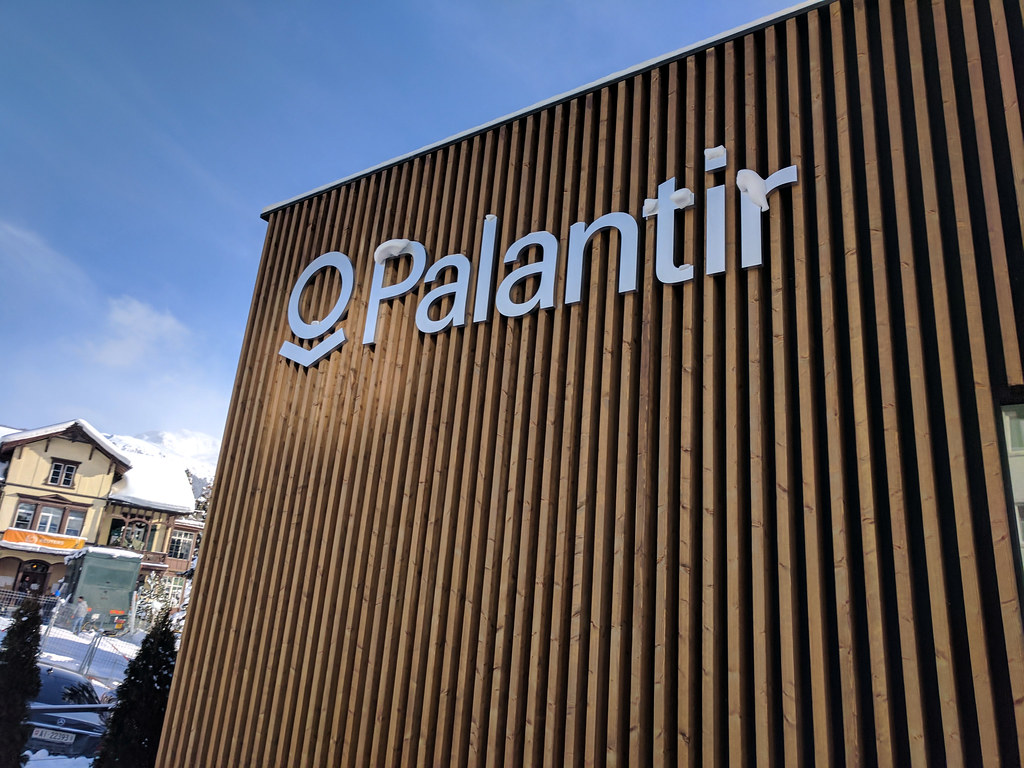
Palantir chief executive Alex Karp has warned companies that major AI model developers could eventually use customer data, prompts and business knowledge to compete with them. He argued that enterprises should retain control of the software, data and context surrounding their AI systems instead of depending entirely on a single model provider.
Karp made the comments as Palantir reported record second-quarter results driven by demand for its AI software. Revenue reached $1.94 billion, up 93% from the same period a year earlier, while adjusted income from operations exceeded $1.1 billion.
Karp Accuses AI Labs of Seeking Greater Control
In Palantir’s second-quarter shareholder letter, Karp wrote that some companies building large language models intended, either knowingly or otherwise, to capture the “means of production” of their business partners. He described Palantir’s own position using what he called Marxist “overtones and undertones.”
During the company’s earnings call, Karp expanded on the argument and said enterprises risk paying AI providers to absorb their intellectual property, expertise and operational knowledge. His comments did not identify specific companies, although the discussion referred broadly to leading model developers such as OpenAI and Anthropic.
Karp also questioned whether businesses should rely on companies that provide both foundational models and the surrounding applications, orchestration and agent systems. He argued that such arrangements could leave customers dependent on a provider that may later enter their industries.
Palantir Promotes Model-Agnostic Software
Palantir sells AI and data-analysis platforms to governments and commercial organisations. Its systems allow customers to use different AI models while keeping control of their information, prompts, business rules and application context.
The company describes this surrounding information as the operational layer that determines how AI performs inside an organisation. Palantir’s software connects models with company data and workflows while applying security, access and governance controls.
Microsoft chief executive Satya Nadella has also encouraged enterprises to use several models rather than becoming dependent on one provider. Supporters of this approach argue that companies can reduce costs, replace underperforming models and retain greater control over their AI applications.
AI Demand Drives Record Financial Results
Palantir’s US commercial revenue increased 149% from a year earlier, while US government revenue rose 90%. Total US revenue reached approximately $1.57 billion, representing annual growth of 115%.
Karp wrote that the company generated more adjusted operating income during the quarter than its total revenue in the corresponding period a year earlier. Palantir also raised its full-year revenue forecast to between $8.15 billion and $8.16 billion.
The results indicate that the growth of frontier AI models has increased demand for Palantir’s software rather than reducing it. Enterprises and government agencies are using its platforms to connect multiple models with existing data, operations and security systems.
Featured image credits: Cory Doctorow via Flickr
For more stories like it, click the +Follow button at the top of this page to follow us.