

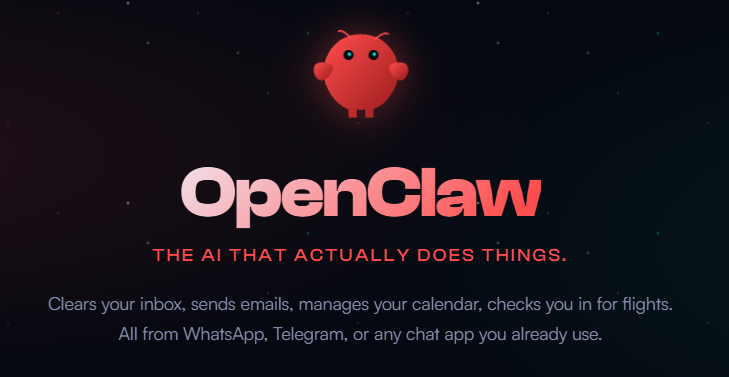
The viral personal AI assistant formerly known as Clawdbot has adopted a new name, OpenClaw, after a brief rebrand as Moltbot and following earlier legal pressure related to naming conflicts, as its creator moves to formalise the project’s identity amid rapid growth.
From Clawdbot To OpenClaw
The project’s creator, Peter Steinberger, told TechCrunch that the latest name change was not prompted by Anthropic, which had previously raised concerns over the original Clawdbot name due to its similarity to Anthropic’s Claude model. Anthropic declined to comment on the OpenClaw rebrand.
Steinberger said he proactively researched trademarks for the new name and also sought confirmation from OpenAI to avoid potential conflicts. He described the name as the project’s “final form,” referencing lobster molting, a theme that had also inspired the short-lived Moltbot name. Steinberger acknowledged on X that Moltbot “never grew” on him, a view echoed by parts of the community.
Rapid Growth And Community Involvement
The name changes reflect the project’s early stage, even as its adoption has accelerated. OpenClaw has surpassed 100,000 stars on GitHub within two months, according to Steinberger. He said the new name is intended to recognise the project’s expanding contributor base, noting that it has grown beyond what he can manage alone.
The OpenClaw ecosystem has already produced community-led spin-offs, including Moltbook, a platform where AI assistants interact with one another. Steinberger said he recently added multiple maintainers from the open source community to help manage development.
Attention From Developers And Researchers
The project has attracted attention from prominent figures in the technology sector. Andrej Karpathy, formerly Tesla’s AI director, described the phenomenon as one of the most striking recent developments in applied AI, highlighting how user-created assistants were organising and communicating on AI-focused platforms.
British programmer Simon Willison called Moltbook “the most interesting place on the internet right now” in a recent blog post. He noted that AI agents on the platform exchange information on topics such as remote Android automation and webcam analysis. According to Willison, the system relies on downloadable skill files that instruct OpenClaw assistants how to interact with forums known as “Submolts,” while periodically checking for updates.
Security Risks And Technical Limits
Willison also cautioned that OpenClaw’s design introduces security risks, particularly its approach of fetching and following instructions from the internet. Steinberger has echoed these concerns, repeatedly warning users that the project is not yet suitable for general use.
OpenClaw aims to provide users with a locally run AI assistant that operates through existing chat applications. However, Steinberger has said it should only be used in controlled environments until security protections improve. He thanked external security contributors for helping to strengthen the system and said recent releases already include safeguards.
Certain risks remain unresolved, including prompt injection, where malicious inputs can cause AI systems to perform unintended actions. Steinberger said this remains an industry-wide challenge and directed users to published security best practices.
Warnings From Maintainers
The project’s maintainers have reinforced these warnings. In a message shared on Discord, a maintainer known as Shadow said users without command-line experience should not attempt to run OpenClaw, describing it as unsafe for the general public at its current stage.
These constraints position OpenClaw primarily as a tool for experienced developers and early adopters, rather than users drawn by the idea of a fully autonomous personal assistant.
Funding And Future Development
To support continued development, OpenClaw has begun accepting sponsorships, with monthly tiers ranging from $5 to $500. Steinberger said he does not personally keep these funds and is exploring ways to compensate maintainers, potentially on a full-time basis.
The sponsor list includes figures such as Dave Morin, founder of Path, and Ben Tossell, who sold Makerpad to Zapier in 2021. Tossell told TechCrunch that backing open source AI tools is important to ensure broader access to emerging technologies.
Featured image credits: OpenClaw
For more stories like it, click the +Follow button at the top of this page to follow us.