

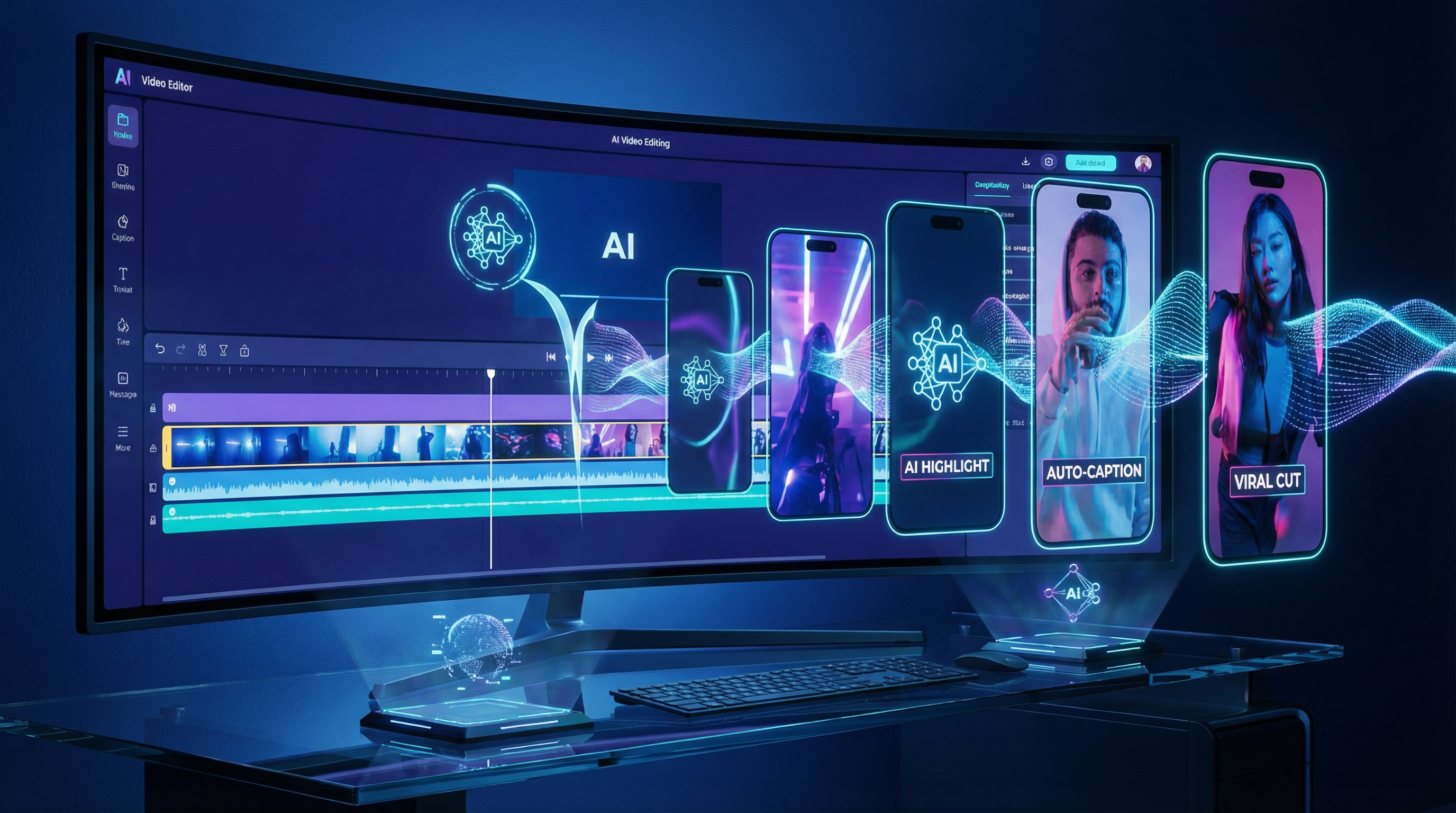
AI video-generation startup Luma on Thursday introduced Luma Agents, a platform designed to automate creative production across text, images, video, and audio for advertising, marketing, and design teams.
The company said the system is built on its Unified Intelligence family of models and aims to handle end-to-end creative workflows rather than requiring users to manage separate AI tools for each stage of production.
Luma Agents are currently available through an API, with broader access planned in stages to maintain system reliability as usage expands.
Unified Intelligence Model Powers Multimodal Creative Tasks
The platform is powered by Luma’s Uni-1 model, the first release in the company’s Unified Intelligence model family.
According to Luma chief executive officer and co-founder Amit Jain, the model is trained across multiple types of data including audio, video, images, language, and spatial reasoning.
Jain said the system combines reasoning with visual generation capabilities.
“The Uni-1 model can think in language and imagine and render in pixels or images … we call it ‘intelligence in pixels,’” Jain said in an interview with TechCrunch.
He added that future versions of the system will expand output capabilities to include additional audio and video generation features.
System Coordinates Multiple AI Models
Luma Agents can also work alongside other AI models when generating creative content.
The platform can coordinate with Luma’s own Ray 3.14 model as well as external systems including Google’s Veo 3 and Nano Banana Pro, ByteDance’s Seedream, and voice models from ElevenLabs.
The company said the agents can plan, generate, and refine creative assets across multiple formats during a single workflow.
Jain said the goal is to replace the current process where creative teams rely on separate tools for each task.
“Our customers aren’t buying the tool; they’re redoing how business is done,” he said.
Luma has already begun deploying the platform with several clients.
Early users include advertising networks Publicis Groupe and Serviceplan, as well as brands including Adidas, Mazda, and Saudi artificial intelligence company Humain.
Persistent Context Across Creative Projects
According to Jain, one of the system’s core features is the ability to maintain context across creative assets, collaborators, and multiple iterations of a project.
The agents can also evaluate their own outputs and refine results through an iterative feedback process.
Jain said this process resembles the approach used by coding agents that repeatedly review and correct their outputs until the final result meets requirements.
“You need that ability to evaluate your work, fix it, and do that loop until the solution is good and accurate,” he said.
Addressing Limitations Of Current AI Workflows
Jain said many current creative AI tools require users to switch between different models and repeatedly adjust prompts to generate results.
Instead, Luma Agents generate multiple variations of creative outputs automatically.
Users can then guide the direction of the project through conversation rather than manually prompting each version.
“Here are 100 models. Learn how to prompt them,” Jain said, describing the current approach to AI creative tools.
“With Unified Intelligence, because these models understand in addition to being able to generate, we are able to build a system that is able to do this sort of end-to-end work,” he added.
Examples Of Automated Creative Production
During a demonstration of the platform, Jain showed how a short campaign brief and an image of a product could generate multiple advertising concepts.
In one example, a 200-word description and a photo of a lipstick product were used to generate different advertising scenarios, including variations in location, models, and color themes.
In another example, the system transformed a brand’s year-long advertising campaign valued at $15 million into multiple localized advertisements for different markets.
According to Jain, the process took about 40 hours and cost less than $20,000 while meeting the company’s internal quality checks.
Featured image credits: Google AI
For more stories like it, click the +Follow button at the top of this page to follow us.