

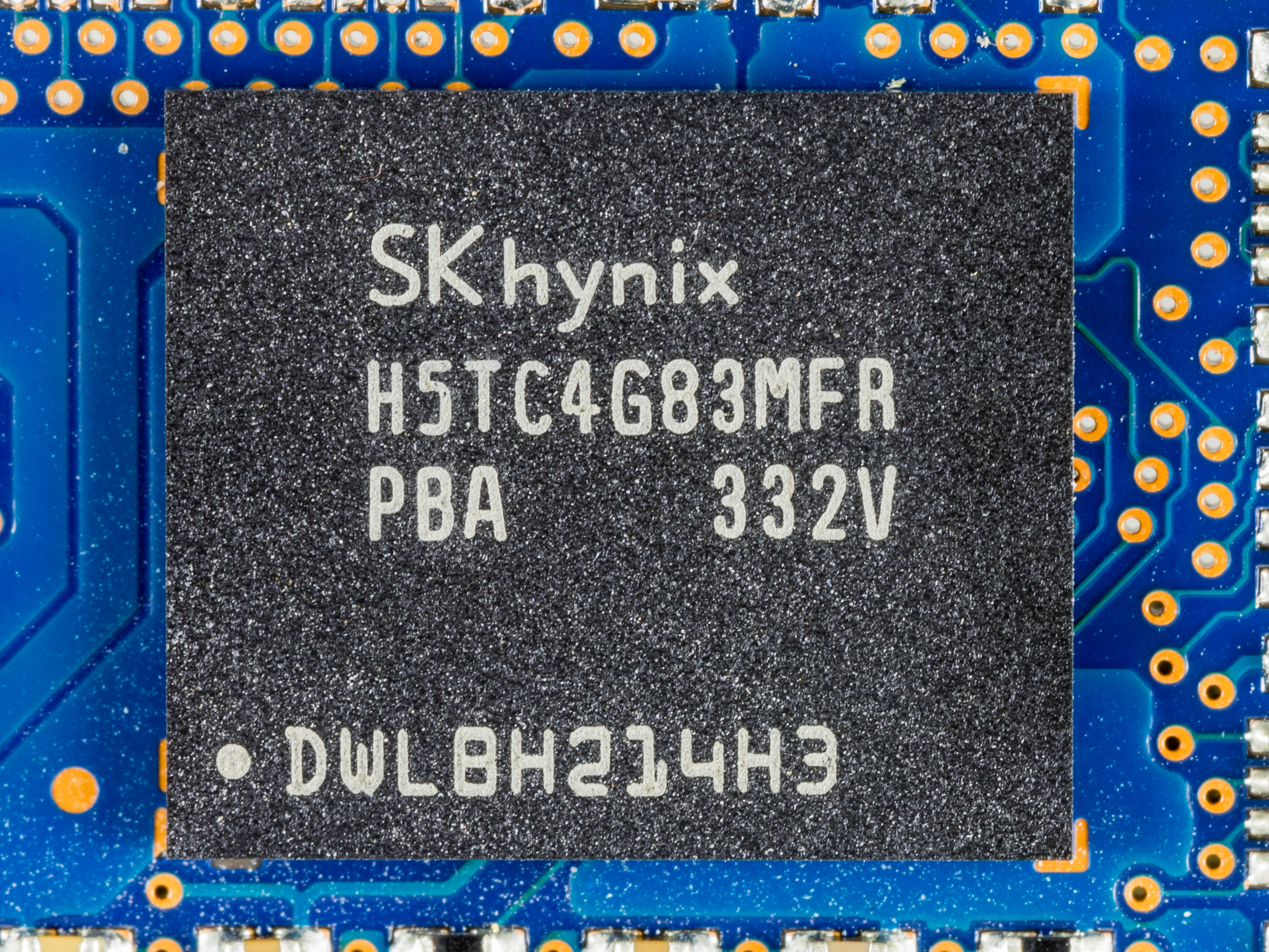
SK hynix has confidentially filed for a U.S. listing that could raise between $10 billion and $14 billion, as the company seeks to address a valuation gap and secure funding for large-scale AI-related investments.
The company submitted a Form F-1 this week, targeting a listing in the second half of 2026. Despite already being listed on the KOSPI, the move is aimed at improving how global investors price its role in the AI semiconductor supply chain.
Valuation Gap And Market Position
SK hynix plays a central role in producing high-bandwidth memory (HBM), a key component used in AI systems developed by companies such as Nvidia. However, its shares have historically traded at lower valuation multiples compared with U.S.-listed semiconductor peers.
With a market capitalisation of around $440 billion, analysts suggest the gap may be influenced partly by its primary listing in South Korea rather than underlying business performance. A Seoul-based semiconductor analyst said a U.S. listing could help align its valuation more closely with competitors such as Micron.
Structural constraints also shape the offering. SK Square, the largest shareholder, held 20.07% as of December 2025 and must maintain at least a 20% stake under Korean regulations. Issuing approximately 2% in new shares would allow SK hynix to raise the targeted amount while preserving this threshold.
Cross Listing Precedents And Industry Impact
Examples from the sector suggest cross-listings can influence valuation. TSMC has at times seen its U.S.-listed shares trade at a premium to its domestic listing, particularly during periods of strong AI demand.
SK hynix’s filing has also prompted reactions within South Korea’s technology sector. Investors have called on Samsung Electronics to consider a similar listing. According to Bloomberg, shareholder Artisan Partners said a U.S. listing could improve Samsung’s valuation and broaden access for U.S. investors through American depositary receipts.
Funding AI Driven Expansion
The planned listing is viewed as part of a broader strategy to fund increased capital expenditure tied to AI demand. At a shareholder meeting on March 25, chief executive Noh-Jung Kwak said financial capacity will be essential for sustaining growth, with the company targeting approximately $75 billion in net cash for long-term investment.
Demand for memory has increased sharply alongside AI development, while supply constraints have contributed to rising costs. The situation has been described as “RAMmageddon,” reflecting shortages affecting both AI infrastructure and consumer markets.
In response, SK hynix is preparing large-scale investments. The company plans to spend around $400 billion by 2050 on a semiconductor cluster in Yongin, South Korea. Additional projects include new facilities in South Korea and Indiana, with investments of about $25 billion and $3.3 billion respectively.
It has also agreed to acquire advanced extreme ultraviolet lithography systems from ASML in a deal valued at $7.9 billion, aimed at expanding HBM production capacity.
Broader Industry Developments
Efforts to address memory constraints are also emerging from other technology firms. Google recently introduced a memory compression approach called TurboQuant, designed to improve AI efficiency by reducing memory usage.
The combination of rising demand, limited supply, and ongoing investment signals continued pressure on the memory market, with industry participants increasing both production capacity and technological efficiency to meet future requirements.
Featured image credits: Wikimedia Commons
For more stories like it, click the +Follow button at the top of this page to follow us.