

A surge in fuel prices linked to the war involving Iran has driven increased global demand for electric vehicles, with Chinese manufacturers expanding orders and activity across international markets while remaining largely absent from the United States.
BYD Expands Amid Global Demand Shift
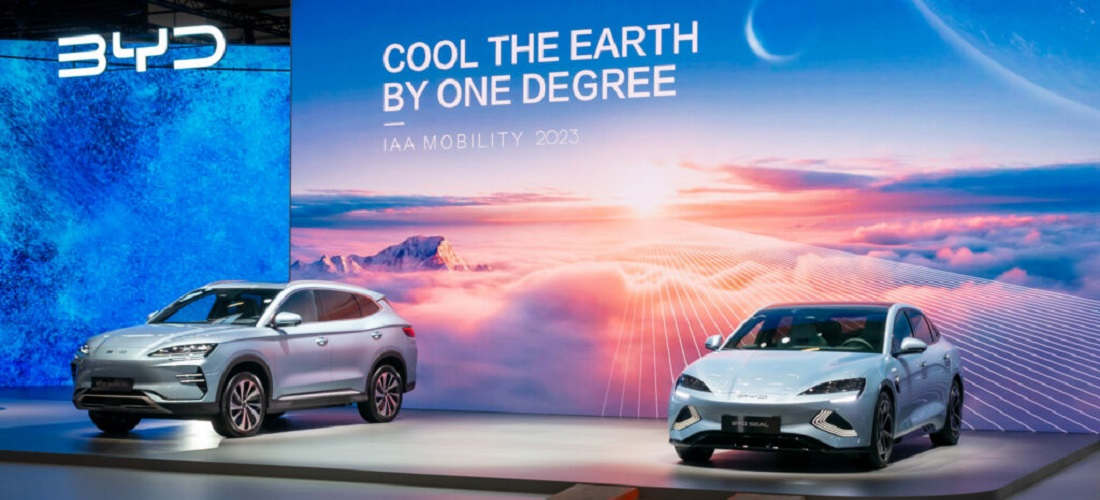
BYD, which surpassed Tesla as the world’s largest EV seller last year, is central to this shift. Speaking at the Beijing Auto Show, executive vice president Stella Li said the company is experiencing demand that exceeds its production capacity.
Li stated that BYD’s operations are not dependent on the U.S. market, with growth focused instead on regions such as Brazil, the United Kingdom, and Europe. She added that higher fuel costs are prompting consumers to consider EVs due to daily savings on energy expenses.
Charging Technology And Adoption Factors
BYD is promoting its “flash charging” technology, which allows vehicles to gain hundreds of kilometers of range within minutes. Li said the technology addresses concerns around charging speed, a factor that has influenced adoption decisions among potential EV buyers.
Industry Presence At Beijing Auto Show
The Beijing Auto Show featured more than 1,400 vehicles from both domestic and international manufacturers, reflecting the scale of China’s automotive sector. Chinese companies held a prominent position at the event, presenting developments across electric mobility and related technologies.
Geopolitical And Regulatory Constraints
Chinese EV manufacturers continue to face tariffs and regulatory scrutiny in key markets, particularly in the United States. U.S. officials have raised concerns about government subsidies as well as data protection and national security issues tied to Chinese vehicles.
Despite these barriers, Li said BYD is gaining recognition in markets such as the United Kingdom. Chinese firms are also shifting focus from price-based competition toward advancements in batteries, charging systems, and software integration.
Broader Technology Integration And Ecosystem
Li described BYD as operating beyond automotive manufacturing, noting its involvement in smartphone components, battery storage, solar panels, buses, and trucks. This integrated approach positions the company across multiple sectors linked to energy and mobility.
Developments From Other Chinese Automakers
XPeng introduced a six-seater electric SUV at the event. Chief executive He Xiaopeng said the company plans to introduce humanoid robots within the year and aims to begin production of flying cars by 2027.
Foreign Automakers Adjust Strategies
Established global manufacturers including Volkswagen, Toyota, and Ford are encountering increased competition in China’s EV market. Some have entered partnerships with local firms, such as BMW working with CATL, Audi integrating systems from Huawei, and Volkswagen collaborating with XPeng on EV development.
Domestic Competition And Market Pressures
China’s domestic EV market remains highly competitive, with numerous manufacturers engaged in price reductions and rapid product development cycles. BYD has reported declining domestic sales for seven consecutive months, while its European sales rose 156% in the first quarter of the year.
Li said ongoing competitive pressure is likely to lead to consolidation within the industry, referencing historical patterns seen in the rise of Japanese and South Korean automakers.
Featured image credits: DatamarNews
For more stories like it, click the +Follow button at the top of this page to follow us.