

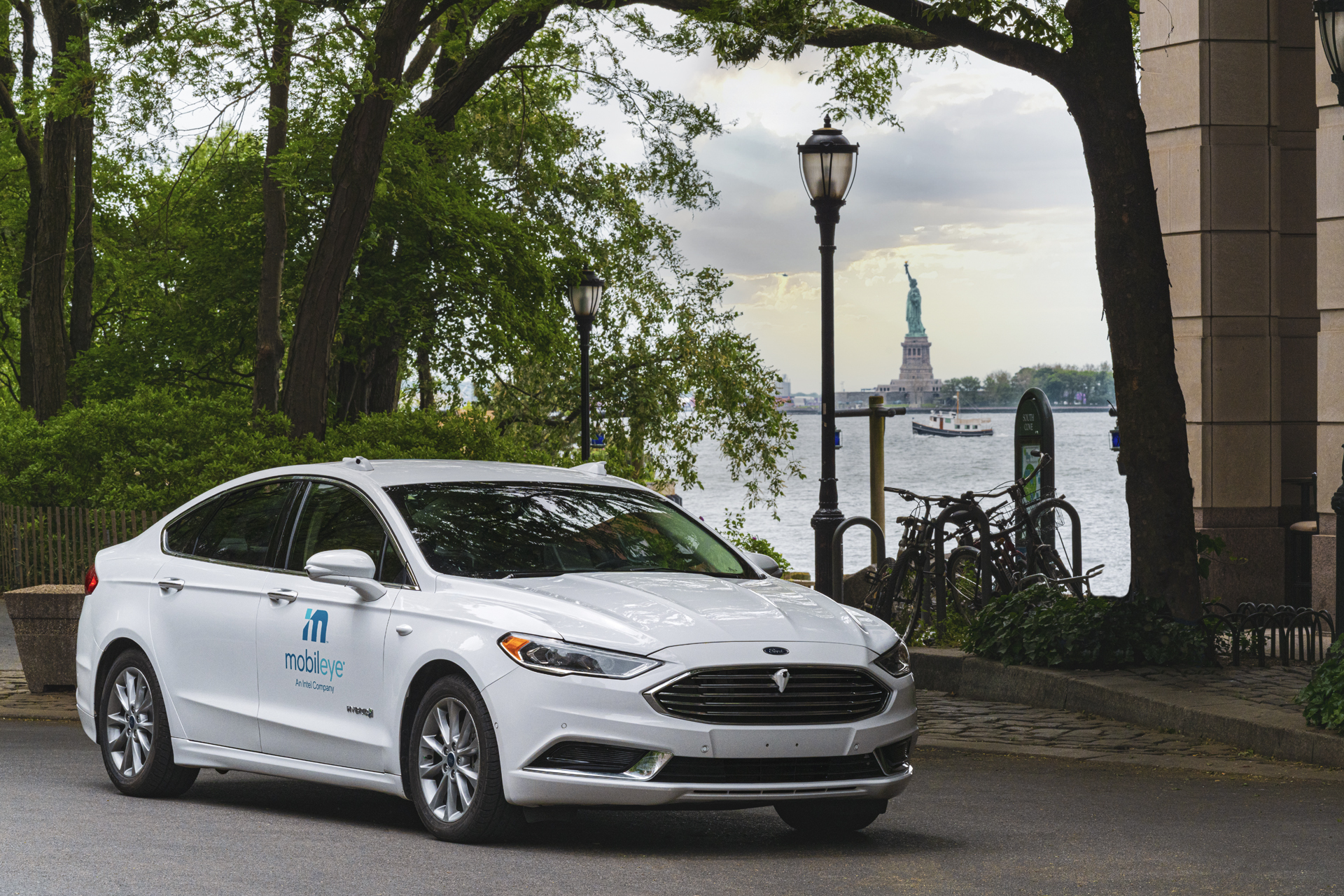
Mobileye plans to launch its own robotaxi service in a major US city in 2027, expanding from an autonomous driving technology supplier into a direct ride-hailing operator. The company expects to deploy an initial fleet of about 100 fully driverless vehicles throughout the year.
Mobileye has not identified the launch city or the vehicle model it will use. If the initial operation succeeds, it plans to expand the service to approximately 17,000 vehicles over the following five years.
Mobileye Will Own and Manage the Service
The publicly traded Intel subsidiary will establish a new business unit to own and operate the robotaxi service. It will combine its Mobileye Drive self-driving system with the digital infrastructure and passenger services of Moovit, the transit and journey-planning platform it owns.
Mobileye will manage the fleet and customer service but does not plan to manufacture the vehicles. Instead, it will work with autonomous vehicle-ready manufacturers and fleet integration partners, according to the company’s official announcement.
The company did not identify its vehicle partners. However, an illustration included with the announcement appeared to show a modified Ora iQ electric crossover from Chinese automaker Great Wall Motors.
“The robotaxi revolution has only just begun, and its potential for transforming how we travel around the world continues to increase,” Mobileye founder and CEO Amnon Shashua said.
Service Will Operate Alongside Supplier Partnerships
Mobileye built its business by supplying automakers with computer vision chips, advanced driver-assistance systems, and autonomous driving software. Its technology has been installed in more than 150 million vehicles, while its Mobileye Drive system supports driverless taxis, public transportation, ride-pooling, and delivery vehicles.
The company also supplies autonomous driving technology to Volkswagen and its mobility subsidiary MOIA. Running its own fleet may place Mobileye in competition with some customers that use its technology for their autonomous services.
Shashua said the new service would not replace those relationships. Mobileye intends to continue supplying automakers and mobility operators while using its fleet to gather operational experience and demonstrate its technology.
“This initiative is not a replacement for our existing partnerships; it is an extension of them,” Shashua said. “Operating our own service allows us to accelerate adoption, gain direct operational experience, and showcase the full potential of autonomous mobility.”
The plan follows years of autonomous vehicle testing by Mobileye in cities including Jerusalem, Munich, and New York. Shashua previously said operating robotaxis would provide a path toward fully autonomous vehicles that individual consumers could eventually purchase.
Featured image credits: Wikimedia Commons
For more stories like it, click the +Follow button at the top of this page to follow us.