

TikTok has reached an agreement that will allow the short-video app to continue operating in the United States, ending years of uncertainty over its future in the country.
The announcement follows a prolonged standoff between Washington and Beijing that began during President Donald Trump’s first term, when he attempted to ban the app over national security concerns tied to its Chinese ownership.
Years Of Pressure Over Ownership And Data
Under legislation passed in 2024, TikTok was set to be banned in the U.S. in January 2025 unless its parent company, ByteDance, sold its American operations to U.S. investors. President Trump repeatedly delayed enforcement of the law, keeping the app online while negotiations continued.
At the heart of the dispute was TikTok’s content recommendation algorithm, widely regarded as the key driver of the platform’s popularity. U.S. lawmakers had raised concerns that ByteDance could be compelled by Beijing to hand over American user data, claims that both TikTok and ByteDance have consistently denied.
The push to force a sale gained momentum under former President Joe Biden, who signed the sell-or-ban law in 2024. ByteDance challenged the move in court, triggering a legal battle that briefly resulted in TikTok going offline for U.S. users for roughly half a day in January last year. Service was restored after Trump, then president-elect, pledged to reverse the ban.
New Structure And Algorithm Changes
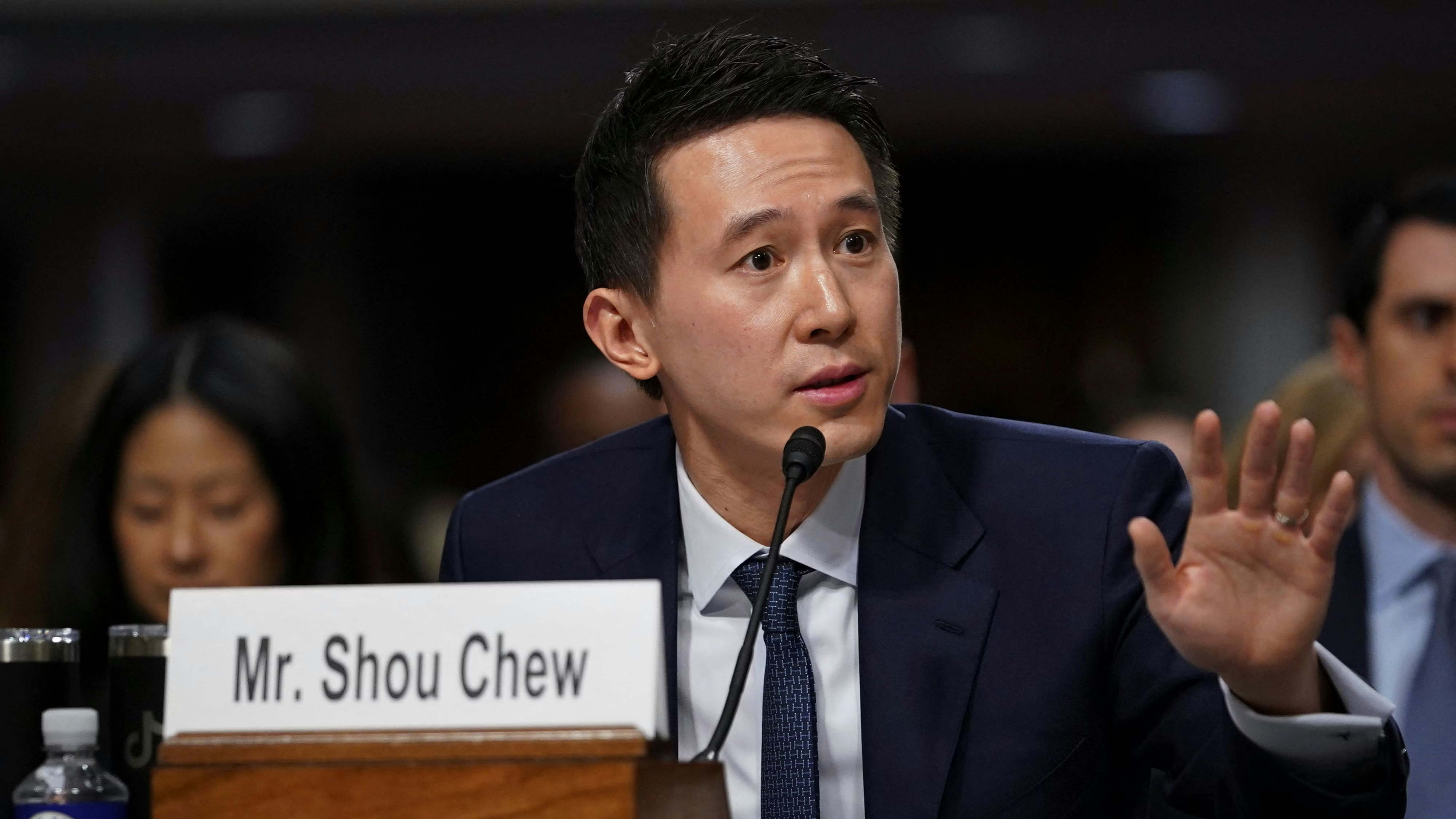
TikTok first signaled a breakthrough last September, when Trump announced that he had reached an understanding with China to keep the app running in the U.S. Binding agreements with American and global investors were signed in December, according to a memo from TikTok chief executive Shou Zi Chew.
Under the finalized arrangement, a new entity called TikTok USDS Joint Venture LLC will oversee U.S. operations. The joint venture will be responsible for securing user data, apps, and algorithms through enhanced privacy and cybersecurity measures.
The recommendation algorithm, previously controlled by ByteDance, has been licensed to the U.S. business and will be retrained exclusively on American user data. TikTok said the algorithm will be secured within Oracle’s U.S. cloud infrastructure to meet domestic regulatory standards.
Experts say the shift is likely to change how the app functions, though the exact impact on TikTok’s roughly 200 million American users remains unclear.
Ownership And Governance Details
TikTok USDS will operate as an independent company governed by a seven-member board, with a majority of American directors. Adam Presser, formerly of WarnerMedia, has been appointed chief executive of the joint venture.
Three managing investors will each hold a 15% stake in the U.S. business: Oracle, the cloud computing firm chaired by Trump ally Larry Ellison; Silver Lake, a U.S. technology investment firm; and MGX, an Abu Dhabi-based investor focused on AI and technology.
ByteDance will retain a 19.9% ownership stake. The remaining 35.1% will be held by a group of investors that includes the family office of Michael Dell and Vastmere Strategic Investments, an affiliate of Susquehanna International Group. Susquehanna co-founder Jeff Yass is a known Trump ally, and its managing director Mark Dooley will sit on the board.
The board will also include TikTok global chief executive Shou Zi Chew, alongside representatives from Oracle, Silver Lake, and MGX.
What This Means For Users
TikTok’s algorithm has long been described as the platform’s “secret sauce,” with rivals like Instagram Reels and YouTube Shorts struggling to replicate its effectiveness. ByteDance had initially resisted any move to separate the algorithm, a position backed by the Chinese government.
That stance softened last year when China’s top cybersecurity regulator signaled that licensing the algorithm to a U.S. entity could be allowed. Under the new deal, the algorithm will rely solely on U.S. data and operate independently from TikTok’s global systems.
Analysts say the U.S. version of TikTok could eventually feel different from the global app, potentially becoming lighter or slower as it adjusts to a separate data pool. Whether those changes will noticeably affect content recommendations remains to be seen.
President Trump welcomed the outcome, writing on social media that he was “so happy to have helped in saving TikTok.”
Featured image credits: Instagram
For more stories like it, click the +Follow button at the top of this page to follow us.