

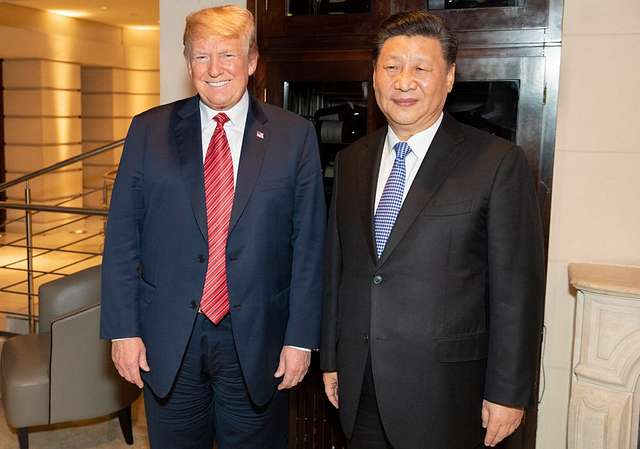
US President Donald Trump concluded a two-day summit in Beijing saying the United States and China had reached “fantastic trade deals,” though few concrete details about new agreements or commitments have been publicly confirmed by either side.
Trump arrived in Beijing on Wednesday for talks with Chinese President Xi Jinping alongside a delegation of American business leaders representing industries including agriculture, aviation, electric vehicles, and artificial intelligence chips.
Trade discussions dominated much of the summit agenda despite ongoing geopolitical tensions tied to the Iran conflict and wider US-China strategic competition.
The visit featured extensive ceremonial events, including an honour guard, state banquet, and access to the leadership compound used by China’s Communist Party officials.
Trump later described the talks as “very successful,” while Xi called the summit “historic and landmark.”
China’s Foreign Minister Wang Yi confirmed Friday that Xi is expected to visit the White House in the autumn following Trump’s invitation for a second summit in September.
Trump Announces Boeing And Agriculture Commitments
Although no joint trade package was formally announced, Trump told reporters aboard Air Force One that China had agreed to purchase 200 Boeing aircraft, with a possible additional commitment for another 750 planes.
Boeing later confirmed the agreement.
If completed, the order would represent Boeing’s first major deal in China in nearly a decade after years of reduced access to the Chinese aviation market amid trade disputes between Beijing and Washington.
Trump also said China would purchase “billions of dollars” worth of American soybeans, adding that US farmers would benefit from the agreements reached during the summit.
Chinese officials, however, did not publicly confirm either the aircraft purchases or agricultural commitments.
When asked about Trump’s comments regarding new trade deals, Chinese foreign ministry spokesperson Guo Jiakun avoided directly confirming any agreements.
“The essence of China-US economic and trade relations is mutual benefit and win-win co-operation,” Guo said.
He added that both sides should implement the “important consensus” reached during the summit and work toward greater stability in bilateral trade and the global economy.
Tariff Questions Remain Unresolved
Uncertainty also remains surrounding the tariff truce reached in October.
Under that agreement, the United States paused planned tariff increases on Chinese imports while China eased restrictions on exports of rare earth materials critical to manufacturing industries.
The temporary truce is currently due to expire in November.
Trump told reporters that tariffs were not discussed during his meetings with Xi.
The White House later said both governments agreed to establish a “Board of Trade” intended to manage economic relations without reopening formal tariff negotiations.
US Treasury Secretary Scott Bessent, who has led trade negotiations for Washington, said in a CNBC interview that he expected future progress involving mechanisms supporting bilateral investment.
US officials nevertheless cautioned that additional negotiations would still be required before any announcements become operational.
AI And Semiconductor Access Draw Attention
One of the closely watched moments of the visit occurred when Tesla CEO Elon Musk and Nvidia CEO Jensen Huang emerged prominently alongside Trump during the Beijing arrival ceremony and state banquet.
Musk exited Air Force One ahead of several senior US officials, including Pete Hegseth, Marco Rubio, and Jamieson Greer.
Huang’s participation drew particular attention because he had not originally been expected to join the delegation.
His appearance fueled speculation that AI infrastructure and semiconductor access became a larger part of the summit discussions than previously understood.
The issue carries significant importance for both companies.
Tesla relies heavily on its Shanghai manufacturing operations and Chinese consumer market, while Nvidia has sought renewed access to China for sales of advanced AI chips currently restricted under US export controls.
The United States has imposed semiconductor export controls aimed at limiting China’s access to advanced AI capabilities.
Greer later said export controls were not a major focus during summit discussions.
China has continued criticizing US restrictions on advanced technology access, arguing that such measures limit its industrial development.
Trump said AI discussions included possible co-operation on AI “guardrails.”
“We talked about possibly working together for guardrails,” Trump told reporters.
When asked what kind of safeguards were discussed, Trump replied: “Standard guardrails that we talk about all the time.”
Agriculture And Market Access Discussions Continue
Agriculture remained another important topic during the summit following the economic impact of previous tariff disputes on American farmers.
US Trade Representative Jamieson Greer said agreements involving Chinese purchases of American agricultural products had been finalized.
China’s foreign ministry did not confirm new agricultural purchase agreements but said both sides agreed to maintain stable trade relations and expand co-operation based on “equality, mutual respect and mutual benefit.”
The White House also said discussions included improving Chinese market access for American companies and increasing Chinese investment into US industries.
China remains one of the largest overseas markets for many US companies, though foreign businesses frequently cite regulatory complexity, geopolitical tensions, and administrative barriers as challenges.
Xi nevertheless delivered a positive message to American executives during the summit.
According to Chinese state news agency Xinhua, Xi said China’s “doors will open wider” and American businesses would have “broader prospects” in the Chinese market.
Xi also called for expanded co-operation in sectors including trade, agriculture, healthcare, tourism, and law enforcement.
Taiwan And Iran Added Strategic Pressure To Talks
Taiwan also emerged during discussions between the two leaders.
According to China’s official readout of the summit, Xi described Taiwan as the “most important issue” in US-China relations and warned that mishandling the issue could lead to conflict between the two countries.
China claims Taiwan as its territory, while the United States maintains longstanding economic and security ties with Taipei.
The issue has increasingly intersected with semiconductor policy because Taiwan plays a central role in global chip manufacturing.
The war involving Iran and disruptions around the Strait of Hormuz also formed part of the summit agenda.
Trump said he sought China’s help in encouraging stability around the strategic shipping route, which is critical to global energy supplies.
“[Xi would] like to see the Hormuz Strait open,” Trump told Fox News. “If I can be of any help whatsoever, I would like to help.”
China’s foreign ministry later called for “a comprehensive and lasting ceasefire” while also urging shipping routes to reopen.
Chinese statements suggested Middle East issues were discussed during the summit, though details remained limited.
The conflict carries economic implications for China as well because disruptions to oil supplies and shipping routes have increased import costs and global price pressures.
Discussions between both governments are expected to continue ahead of Xi’s planned White House visit later this year as negotiators seek broader agreements that were not finalized during the Beijing summit.
Featured image credits: PICRYL
For more stories like it, click the +Follow button at the top of this page to follow us.