

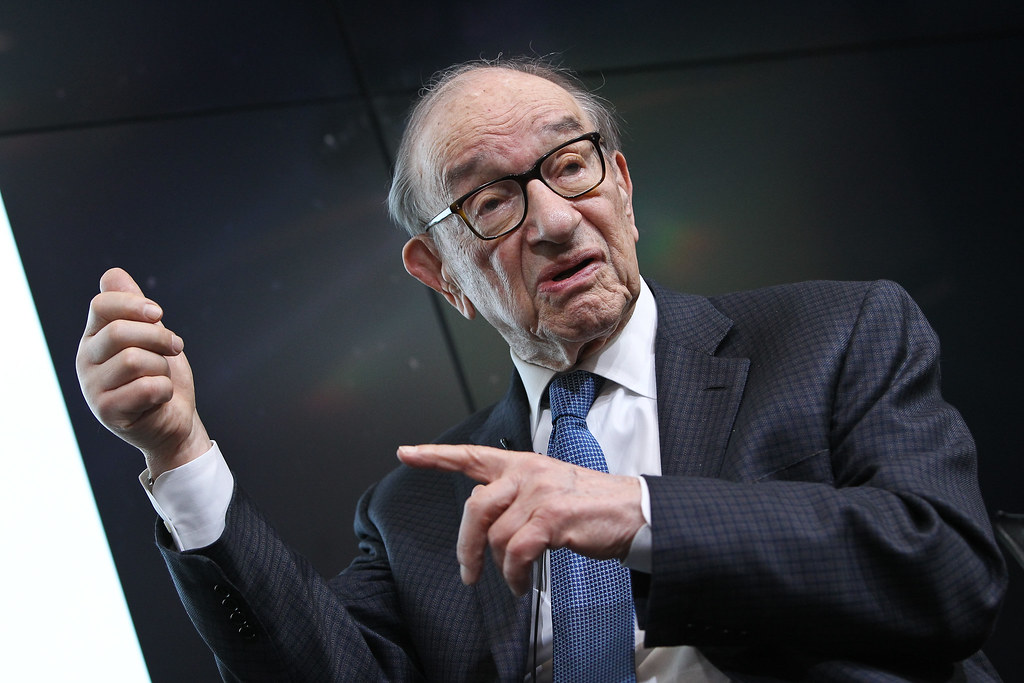
Alan Greenspan, who led the US Federal Reserve for nearly two decades and became one of the world’s most influential economic policymakers, has died at the age of 100.
His wife, NBC News correspondent Andrea Mitchell, said Greenspan died at their home on June 22 from complications related to Parkinson’s disease. She described him as a major figure who shaped the US economy while remaining willing to acknowledge his mistakes.
Nearly Two Decades Leading the Federal Reserve
Greenspan served as Federal Reserve chair from August 1987 until January 2006. Appointed by President Ronald Reagan, he was later reappointed under George H.W. Bush, Bill Clinton, and George W. Bush.
He took office shortly before the October 1987 stock market crash and moved quickly to reassure markets and provide liquidity to financial institutions. His tenure later covered the Asian financial crisis, the collapse of the dot-com bubble, and the economic disruption following the September 11 attacks.
Greenspan gained widespread recognition during the long US expansion of the 1990s, when economic growth remained strong while inflation stayed relatively contained. His carefully worded public remarks were closely followed by investors, companies, and governments.
The Fed said his analytical approach helped strengthen the central bank’s credibility and left a lasting influence on monetary policy and economics.
Legacy Reassessed After the Financial Crisis
Greenspan’s reputation weakened after the 2008 global financial crisis. Critics argued that low interest rates, limited oversight of financial institutions, and confidence in market self-regulation contributed to the housing bubble and risky mortgage lending.
Testifying before Congress in October 2008, Greenspan acknowledged finding a flaw in his belief that financial institutions would protect themselves from excessive risk. The admission became an important part of the debate over his economic legacy.
Supporters continued to credit him with guiding the economy through repeated crises, while critics said his policies encouraged the financial imbalances that became apparent shortly after he left office.
From Jazz Musician to Economic Adviser
Born in New York City on March 6, 1926, Greenspan initially studied music and played clarinet and saxophone professionally. He later studied economics at New York University and established an economic consulting firm.
He served as chair of the Council of Economic Advisers under President Gerald Ford and advised several Republican administrations before joining the Fed. His full career is documented by Federal Reserve History.
Greenspan received the Presidential Medal of Freedom and an honorary knighthood from Queen Elizabeth II. He remained active as an economic consultant, author, and commentator long after leaving the central bank.
Featured image credits: Paul Morigi via Flickr
For more stories like it, click the +Follow button at the top of this page to follow us.