

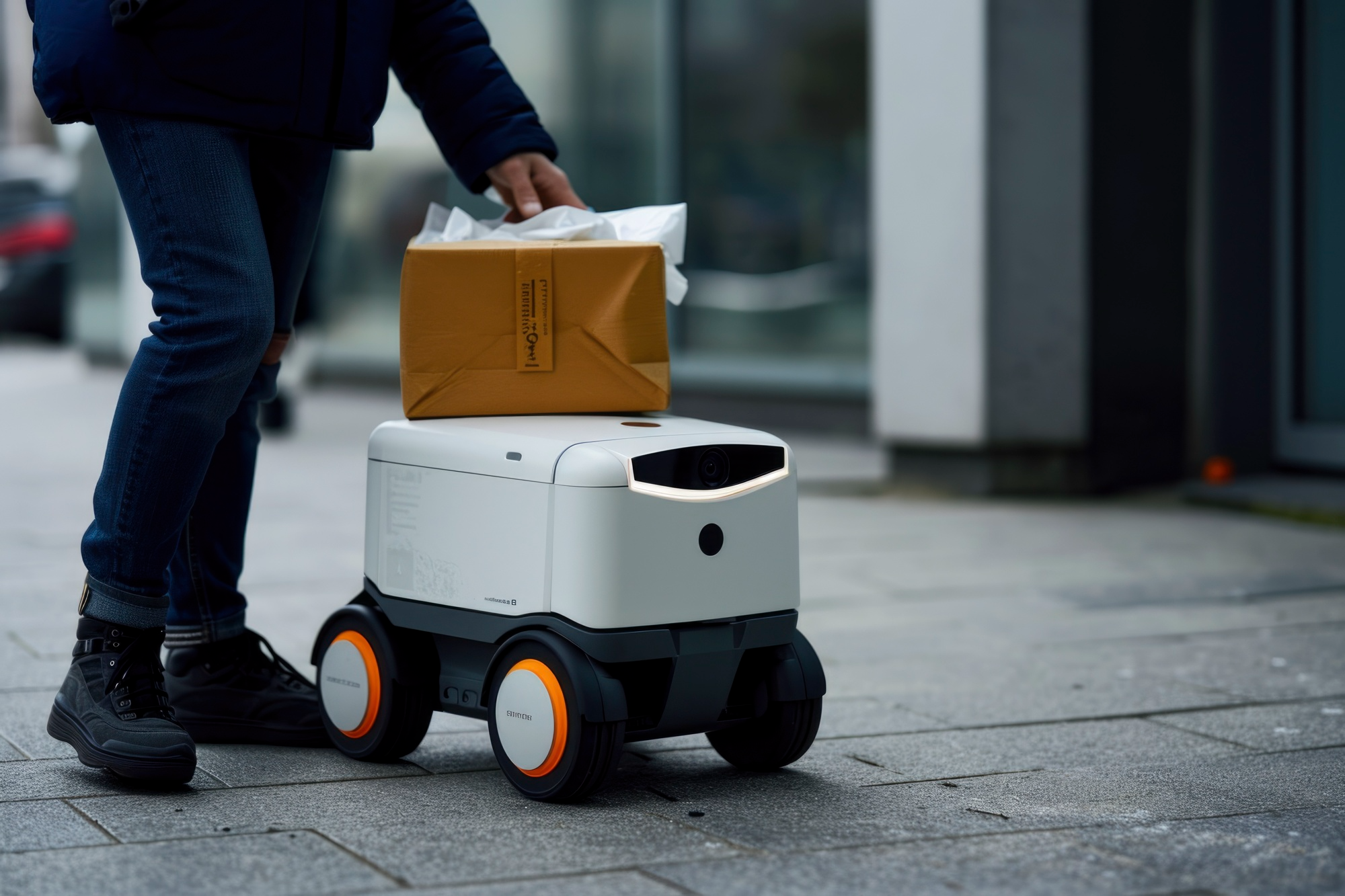
Autonomous delivery robots are expanding across cities in the United States, Europe, and Asia, but residents, local officials, and worker groups are calling for tighter controls over how the machines use public sidewalks.
The compact vehicles use cameras, sensors, and GPS to transport food and groceries without a human courier. Operators say they can reduce road traffic and emissions, but critics argue that they obstruct pedestrians, create accessibility problems, and may displace delivery workers.
Chicago Residents Call for a Citywide Pause
Chicago resident John Robertson initially found the robots impressive but changed his view after his family had to move aside for one on a sidewalk. He has since started a petition asking the city to suspend the machines until safety testing is completed and operating rules are established.
The petition has attracted about 4,400 signatures. Robertson said residents have reported robots blocking walkways, behaving unpredictably near crossings, and forcing pedestrians toward the street.
Chicago has already prohibited the machines from operating in two small areas. Delivery robots continue to operate elsewhere under the city’s pilot programme, which has faced greater scrutiny following reports of collisions with street infrastructure and pedestrians.
Robertson wants rules that place responsibility on operators and ensure sidewalks remain primarily available to people. His concerns are shared by disability advocates who say people using wheelchairs or mobility aids may find it difficult to move around stalled or poorly positioned machines.
Glendale Considers Stricter Operating Rules
Officials in Glendale, California, are also considering restrictions after robots began appearing without clear coordination with the city. Councillor Ardy Kassakhian said authorities initially lacked basic information about which companies were deploying them.
The city is examining insurance requirements, accessibility standards, permit fees, and limits in areas with heavy pedestrian traffic. Kassakhian said robots had obstructed narrow sidewalks and described seeing an elderly pedestrian caught in a stand-off with one.
Other cities have already imposed restrictions. Toronto prohibited autonomous delivery robots from sidewalks and cycle lanes in 2021, while San Francisco limits testing to selected areas with lower pedestrian traffic.
Companies Defend Safety Record
Starship Technologies said its robots are programmed to move cautiously and have operated in UK communities since 2018. The company argues that unfamiliarity contributes to negative perceptions of the technology.
Resistance in the UK has included vandalism against robots used for Uber Eats deliveries in Sheffield. The Independent Workers Union of Great Britain has also warned that widespread adoption could reduce income opportunities for human couriers.
Research firm Transforma Insights expects the number of autonomous urban delivery robots worldwide to reach 2.1 million by 2034. Their expansion is likely to leave cities balancing potential convenience against pedestrian access, safety, employment, and commercial use of public space.
Featured image credits: Magnific.com
For more stories like it, click the +Follow button at the top of this page to follow us.