

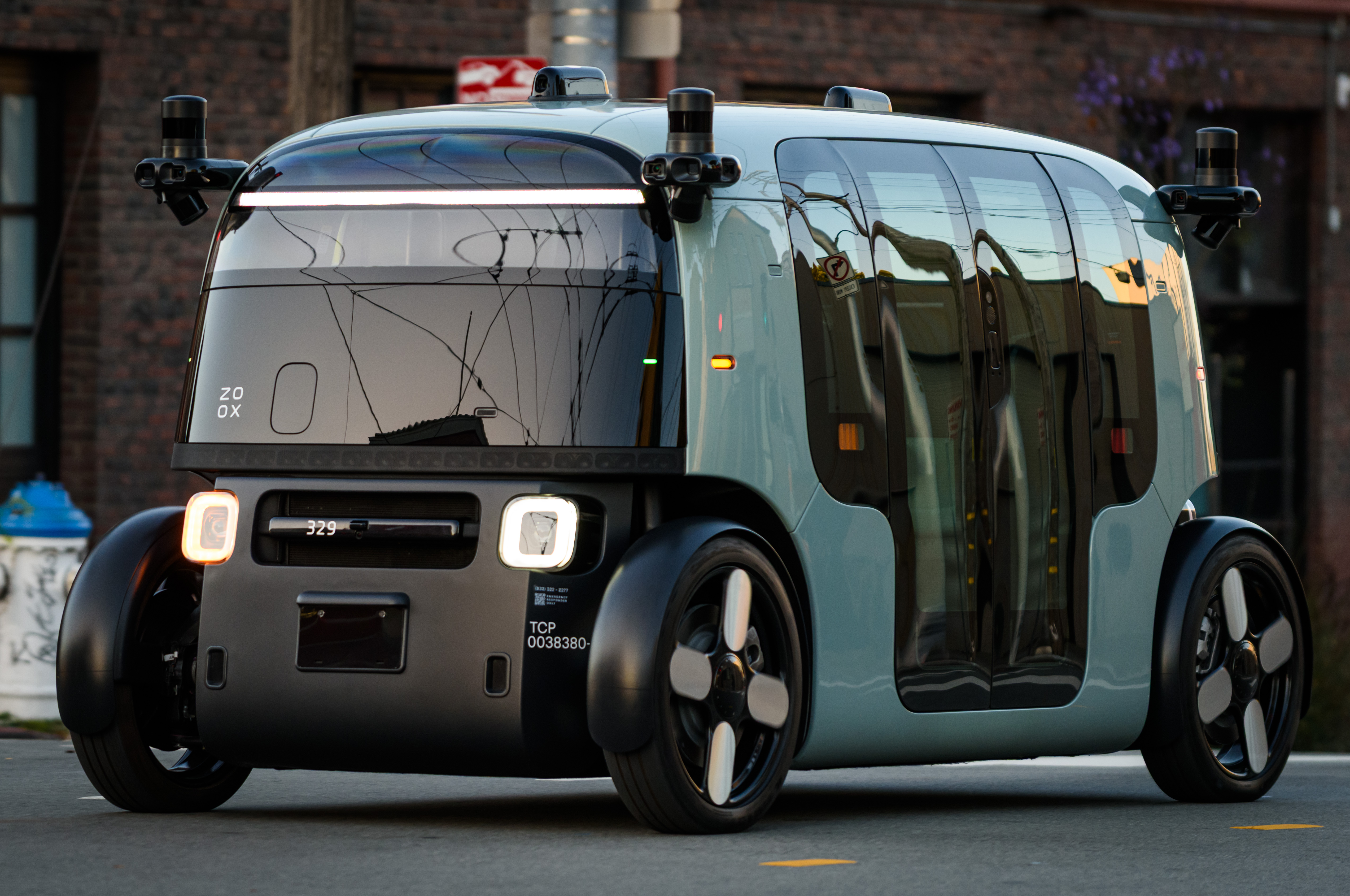
Amazon-owned Zoox has updated its purpose-built robotaxi with redesigned seating, improved storage features, and new communication systems as it prepares to increase production and pursue paid passenger services.
The vehicle retains its defining features, including the absence of a steering wheel and pedals, four inward-facing seats, bidirectional driving, and four-wheel steering. It can travel at speeds of up to 75 miles per hour.
Interior Changes Respond to Rider Feedback
Zoox added more padding and ergonomic curves to the seats and headrests. The cabin now uses aloe-green seating with stone-grey flooring and trim, replacing the darker materials found in earlier vehicles.
The company said the lighter interior creates a calmer environment and makes personal belongings, including smartphones and keys, easier to spot. Other changes include larger cupholders, a brighter touchscreen, and fluting on the wireless charging pad to prevent phones from sliding.
Zoox retained the moonroof and star-like ceiling lights. The vehicle also continues to use 40 cameras, lidar units, radar sensors, and infrared sensors to observe its surroundings and support autonomous operation.
The company said it wanted the interior to remain simple rather than filling the cabin with features that continuously demand passengers’ attention. Riders can still adjust music and temperature through the vehicle’s touchscreen.
External Updates Improve Communication
The refreshed robotaxi moves its bidirectional reflectors to make the vehicle’s direction of travel clearer to other road users. Because the vehicle can travel equally well in either direction, conventional front and rear visual cues do not apply.
Zoox also added a speaker, microphone, and two-way audio system near the doors. These features are intended to improve communication among passengers, Zoox support staff, pedestrians, and emergency responders.
The changes were developed partly from feedback collected through Zoox’s free passenger services. Its current ride programme operates in Las Vegas and selected areas of San Francisco, while the company is testing vehicles in Austin and Miami.
Production Depends on Federal Approval
Zoox opened a 220,000-square-foot production facility in Hayward, California, in 2025. The company says the site could eventually build more than 10,000 robotaxis annually, with near-term production capable of reaching approximately 100 vehicles per week.
The company still needs regulatory approval before charging passengers. In August 2025, the National Highway Traffic Safety Administration granted Zoox an exemption allowing it to demonstrate the vehicles on public roads.
NHTSA later sought public comments on a separate exemption covering commercial deployment. Zoox said it plans to introduce paid rides after receiving the necessary federal and state approvals.
Featured image credits: Wikimedia Commons
For more stories like it, click the +Follow button at the top of this page to follow us.