

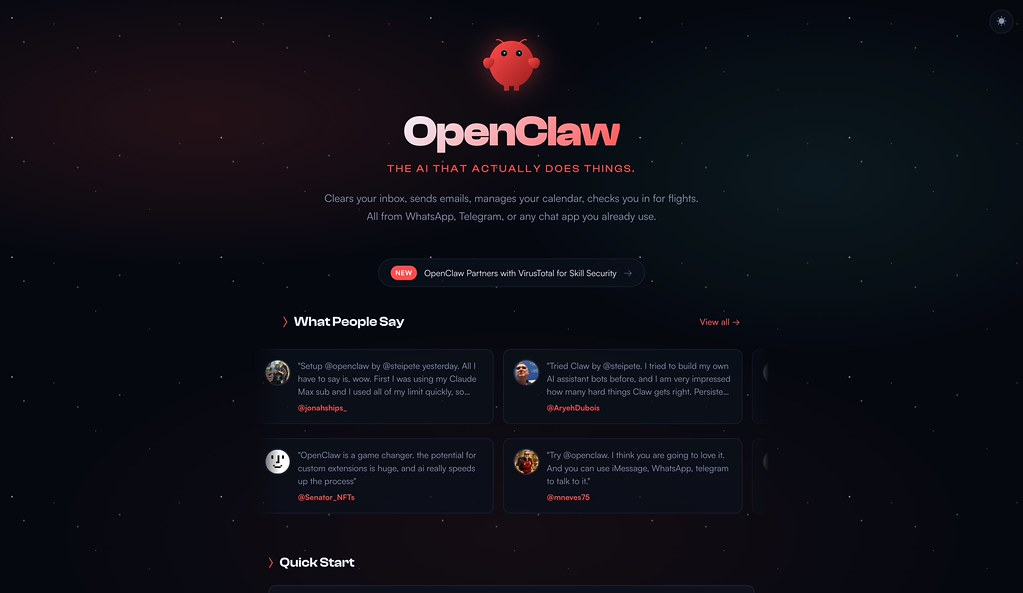
An open-source AI assistant known as OpenClaw has gained rapid traction in China, with users and companies adopting customised versions at scale, even as authorities raise concerns over security and usage risks.
Developed by Peter Steinberger, OpenClaw has become widely known among Chinese users as “lobster.” Its open-source structure allows developers to adapt the system to local needs and integrate it with domestic AI models, a key advantage in a market where tools such as ChatGPT and Claude are not accessible.
Rapid Adoption Among Users And Businesses
Users across China have been experimenting with customised versions of OpenClaw for a range of tasks. One IT engineer, Wang, said his adapted system could automate product listings for online marketplaces, completing up to 200 listings in minutes compared with a dozen manually.
Chinese technology companies have also released applications based on OpenClaw, while individuals have used the tool for activities such as stock analysis, content creation, and workflow automation.
Interest has extended beyond developers. Companies including Tencent and Baidu have attracted large crowds offering customised versions of the assistant. Public figures such as Li Dan and Fu Sheng have discussed their use of the tool, contributing to its visibility.
Government Support And Industry Strategy
China’s adoption of OpenClaw aligns with broader national efforts to integrate artificial intelligence across sectors. Analysts said government signals have encouraged companies to adopt AI technologies, supported by subsidies, incentives, and policy direction.
Cities such as Wuxi have offered financial incentives of up to five million yuan for AI-related applications. The push reflects the country’s “AI Plus” strategy, which promotes the use of AI in industries ranging from manufacturing to healthcare.
The surge follows earlier momentum from platforms like DeepSeek, which demonstrated strong domestic capabilities in open-source AI development.
Competition And Market Dynamics
China’s AI sector has seen intense competition, with more than 100 models launched since 2023 in what local media describe as a “Hundred Model War.” Only a smaller group of models remains competitive, according to analysts.
While Chinese platforms still trail some Western counterparts in performance, experts said the gap is narrowing, increasing pressure on companies to adopt and experiment with AI tools.
Security Concerns And Policy Response
Authorities have also raised concerns about risks associated with OpenClaw. Beijing’s cybersecurity regulators warned about improper installation and potential vulnerabilities, leading some government agencies to restrict or ban its use among staff.
This shift reflects a pattern where rapid adoption is followed by regulatory tightening as risks emerge.
Impact On Employment And Workforce Trends
The spread of AI tools has intensified concerns about job displacement. Analysts linked the rise of OpenClaw to broader labour market pressures, including youth unemployment exceeding 16%.
Some companies are increasingly prioritising candidates with experience using AI tools, while government incentives encourage the formation of “one-person companies” supported by automation.
Users such as Wang described both the efficiency gains and uncertainty introduced by AI adoption, with some viewing it as an opportunity to build independent businesses, while others express concern over long-term employment stability.
Featured image credits: Flickr
For more stories like it, click the +Follow button at the top of this page to follow us.