

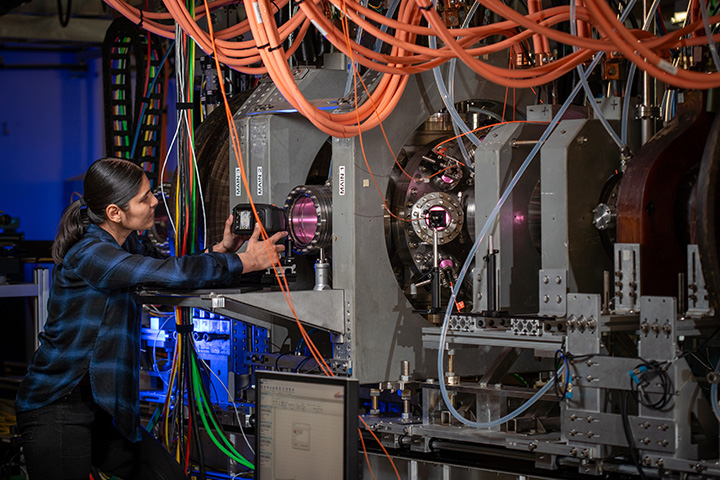
Fusion power is shifting from a long-standing scientific aspiration to a rapidly advancing technology attracting billions in private investment. Once dismissed as perpetually “a decade away,” the field is gaining momentum as startups pursue commercially viable reactors capable of generating nearly limitless clean energy by replicating the nuclear reactions that power the sun.
The surge of interest has been fueled by advances in high-performance computing, artificial intelligence, and high-temperature superconducting magnets, enabling more precise reactor designs, simulations, and control systems. A major milestone came in late 2022 when a U.S. Department of Energy laboratory achieved scientific breakeven, producing more energy from a controlled fusion reaction than was delivered to the fuel pellet by lasers. While commercial breakeven remains distant, the experiment validated the underlying science and accelerated investor confidence.
Commonwealth Fusion Systems Leads Private Investment
Commonwealth Fusion Systems (CFS) has emerged as one of the best-funded fusion startups, raising nearly $3 billion, including an $863 million round closed in August. The company is constructing Sparc in Massachusetts, a tokamak reactor designed to demonstrate commercially relevant power generation. CFS expects Sparc to become operational in late 2026 or early 2027.
The company plans to build Arc, a commercial facility near Richmond, Virginia, later this decade. The plant is projected to generate 400 megawatts of electricity, with Google agreeing to purchase half its output. Investors in CFS include Breakthrough Energy Ventures, The Engine, and Bill Gates.
Diverse Reactor Designs Advance Fusion Innovation
Several startups are pursuing alternative reactor technologies:
TAE Technologies uses a field-reversed configuration that stabilizes plasma with particle beams. In December 2025, TAE announced plans to merge with Trump Media & Technology Group in a deal valuing the combined entity at $6 billion.
Helion aims to generate electricity by 2028 using a field-reversed configuration that converts fusion energy directly into electrical current. Its first customer is Microsoft. The company has raised over $1 billion from investors including Sam Altman, Reid Hoffman, BlackRock, and KKR.
Pacific Fusion raised $900 million in a Series A round to pursue inertial confinement using electromagnetic pulses rather than lasers. The startup is led by Eric Lander, former head of the Human Genome Project.
General Fusion is developing magnetized target fusion, compressing plasma with liquid metal and mechanical pistons. The company has raised more than $600 million and plans to go public through a special purpose acquisition company.
Tokamak Energy, based in Oxfordshire, United Kingdom, is advancing compact spherical tokamak designs using high-temperature superconducting magnets.
Zap Energy employs a sheared-flow stabilized Z-pinch design, using electric currents to generate magnetic confinement. The company has raised $327 million.
Type One Energy is developing a stellarator reactor capable of producing 350 megawatts of electricity at a site owned by the Tennessee Valley Authority.
Proxima Fusion is also advancing stellarator technology, raising more than €185 million.
Emerging Players Expand The Fusion Ecosystem
Additional startups are supporting the broader fusion landscape:
Shine Technologies focuses on neutron testing, medical isotopes, and nuclear waste recycling as interim revenue streams while developing fusion capabilities.
Inertia Enterprises, led by scientists involved in the National Ignition Facility’s breakthrough, has raised $450 million to pursue laser-driven inertial confinement fusion.
Kyoto Fusioneering is developing critical balance-of-plant systems, including heat extraction and plasma-heating technologies, securing $191 million in investment.
Marvel Fusion is collaborating with Colorado State University to build a demonstration facility expected to be operational by 2027.
First Light Fusion uses a projectile-based inertial confinement approach and is pivoting to supply core technologies to industry partners.
Xcimer is designing a high-powered laser system based on the principles demonstrated at the National Ignition Facility, targeting a 10-megajoule laser setup.
Private Investment Signals Growing Confidence
Across the sector, billions of dollars have flowed into fusion research as investors pursue long-term solutions to global energy demand. Advances in computing power, AI-driven modeling, and superconducting magnet technology continue to accelerate progress toward commercial viability.
With demonstration reactors expected to come online later this decade, the fusion industry is entering a critical phase in its transition from experimental science to a potential cornerstone of future energy infrastructure.
Featured image credits: Jacobs School of Engineering, UC San Diego
For more stories like it, click the +Follow button at the top of this page to follow us.