

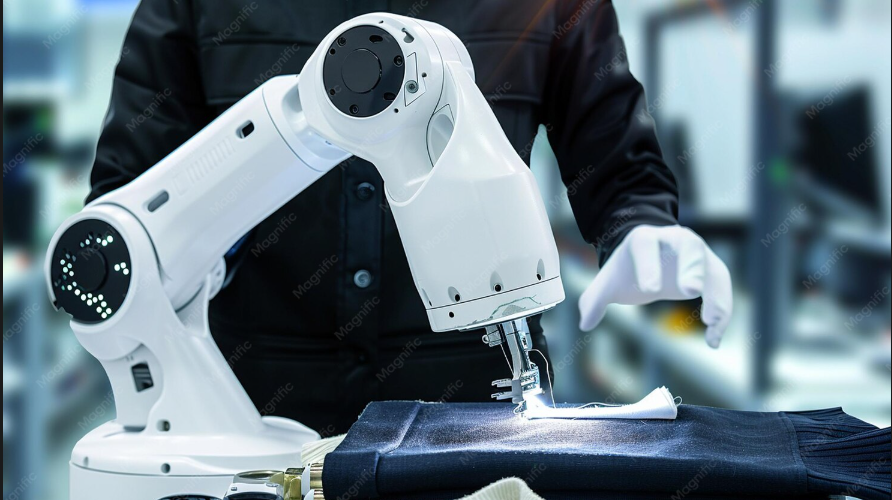
The global garment industry relies almost entirely on manual labor due to the persistent structural difficulties associated with maintaining fabric alignment under robotic motion. Although specialized automation serves sectors like automotive cargo and medical surgery, manipulating flexible textiles with a traditional needle and thread has historically caused mechanical breakdowns. Multiple technology startups in the United States and Europe are currently deploying distinct robotic interventions, such as chemical adhesive bonding and computer-vision-guided stitching, to re-shore production lines and lower the environmental costs associated with apparel manufacturing.
Adhesive Fabric Bonding Methodologies
California-based robotics enterprise CreateMe is bypassing traditional stitching mechanisms entirely by utilizing a proprietary thermoset chemical adhesive to fuse fabric components. Chief Executive Officer Cam Myers stated that the automated system applies the adhesive material, aligns the secondary fabric layer, and stamps the components together inside custom molds that match human body contours. The company currently manufactures women’s underwear using this seamless method, with plans to expand production to t-shirts in the near term followed by full mass production next year. The specific thermoset adhesive prevents garment disintegration during standard domestic laundry and ironing cycles due to high thermal resistance.
Stitching Automation And Competitive Pressures
Alternative garment-automation firms maintain that manual sewing methods will continue to dictate apparel production because certain styles, such as denim jeans, rely on visible structural stitching. Georgia-based firm Softwear Automation, led by Chief Executive Officer Palaniswamy Rajan, plans to introduce a third-generation sewing robot designed to produce t-shirts at a cost parity matching foreign manufacturing hubs. Concurrently, German company Robotextile constructs automated pneumatic gripper tools that deploy controlled air streams to flutter, lift, and vacuum-clamp individual sheets of fabric into place. Competition for market share among these automation firms remains high, causing several manufacturers to withhold specific technical data regarding their internal machine operations.
Environmental Impact Assessments And Supply Realities
Academic research led by Gerald Feichtinger at the Technical University of Leoben in Austria indicates that localized, on-demand automated manufacturing significantly decreases industrial overproduction and transportation emissions. The published study, conducted in collaboration with Austrian robotic sewing startup Silana, concluded that manufacturing a t-shirt via automated systems within Europe or the United States drops associated greenhouse gas emissions by approximately 45%. The textile industry generates 92 million tonnes of waste annually, which frequently results in the bulk incineration of unsold merchandise. Re-shoring full textile operations faces hurdles because subsequent supply components, including yarn production and chemical fabric dyeing, are less adaptable to localized migration, prompting analysts like Michael Fraede of Robotextile to estimate a ten-year timeline before widespread industrial re-shoring materializes.
Featured image credits: Magnific.com
For more stories like it, click the +Follow button at the top of this page to follow us.