

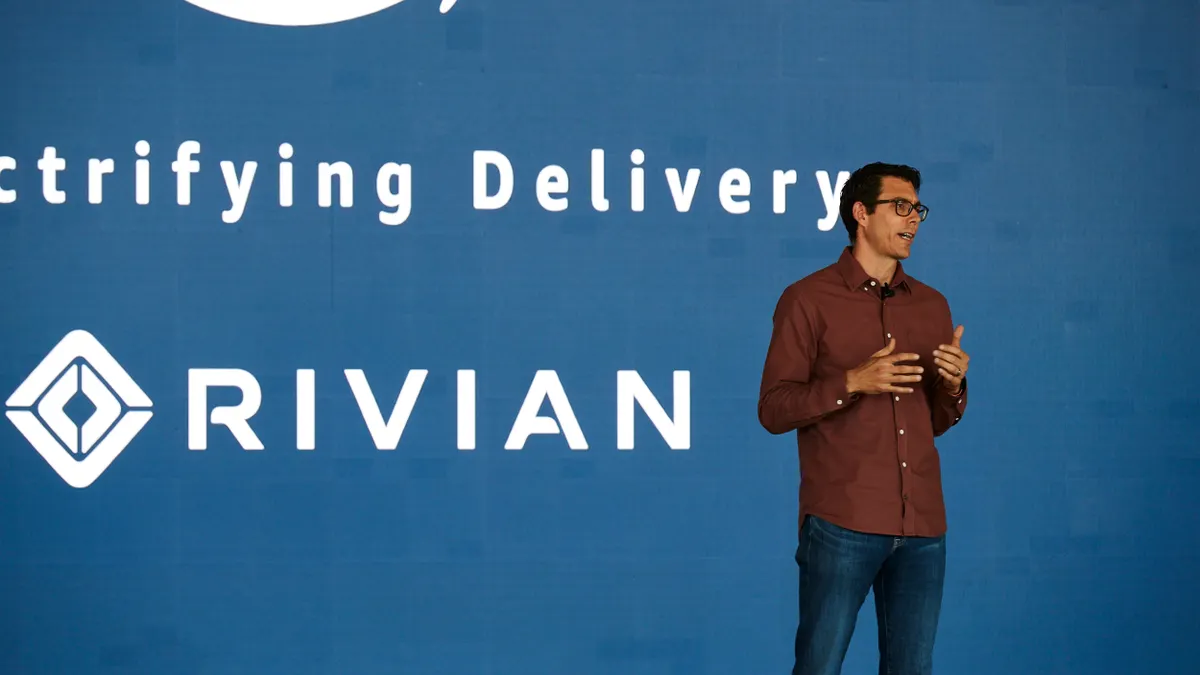
RJ Scaringe, best known for building electric vehicle maker Rivian, has launched a new robotics startup called Mind Robotics.
The company recently raised a $500 million Series A funding round co-led by venture firms Accel and Andreessen Horowitz. Since its founding in November 2025, the startup has raised about $615 million and is now valued at roughly $2 billion.
Mind Robotics is Scaringe’s third active company, alongside Rivian and micromobility startup Also.
Robotics Vision Came From Rivian Manufacturing Plans
Scaringe said the idea for Mind Robotics emerged while planning the future manufacturing strategy for Rivian’s upcoming electric SUV, the Rivian R2.
The R2 is expected to be significantly cheaper to produce than Rivian’s flagship R1 vehicles and is scheduled to launch soon with a starting price of $57,990.
As Rivian planned for higher production volumes, Scaringe began studying the future of factory automation.
“If we’re going to have to build four or five plants over the next decade,” he said, “that means we’re going to spend many billions of dollars in capital expenditures.”
Rather than relying solely on traditional industrial robots, Scaringe concluded that future factories will require robots capable of performing human-like tasks.
Focus On Industrial Robotics Rather Than Home Robots
Many robotics startups today are focused on domestic tasks such as cleaning, cooking, or folding laundry.
Scaringe believes the bigger opportunity lies in industrial manufacturing environments, where robots can perform specialized tasks at scale.
Factories provide a more controlled environment for robotics deployment. Unlike homes, factories do not require robots to navigate unpredictable situations like stairs, pets, or moving furniture.
This allows developers to focus on efficiency, reliability, and task-specific performance.
The Hands Are The Key
Mind Robotics is taking a different approach to robot design compared with companies building humanoid robots.
According to Scaringe, most robotics developers focus heavily on human-like movement and complex biomechanical structures.
Instead, he believes the most important component is the robot’s hands.
“The work happens with the hands,” he said. “Everything else is just about getting the hands to the right place.”
Different manufacturing tasks require different levels of dexterity. For example, gripping a steel pipe requires a very different mechanism than inserting small fasteners into machinery.
Because of this, Scaringe expects Mind Robotics to develop multiple specialized hand designs rather than one universal robotic system.
Less Focus On Human-Like Bodies
Scaringe also questioned the current industry trend toward humanoid robots with athletic, human-like bodies.
He argues that copying human biomechanics may actually introduce unnecessary complexity for factory environments.
Instead, the company is exploring designs optimized specifically for industrial work while still fitting into existing manufacturing infrastructure built around human workers.
A Design Philosophy That Feels Approachable
Scaringe said the company also wants its robots to appear approachable rather than intimidating.
He criticized the common design aesthetic of robotics prototypes that resemble muscular humanoid machines inspired by science fiction.
Mind Robotics is exploring a design language that balances capability with a friendly appearance, similar to Rivian’s approach to vehicle design.
“If you asked someone what a 1,000-horsepower truck would look like,” Scaringe said, “they probably wouldn’t imagine a Rivian.”
The same philosophy may shape the company’s robotics designs as it works to bring industrial robots with advanced AI capabilities into future manufacturing plants.
Featured image credits: WardsAuto
For more stories like it, click the +Follow button at the top of this page to follow us.