

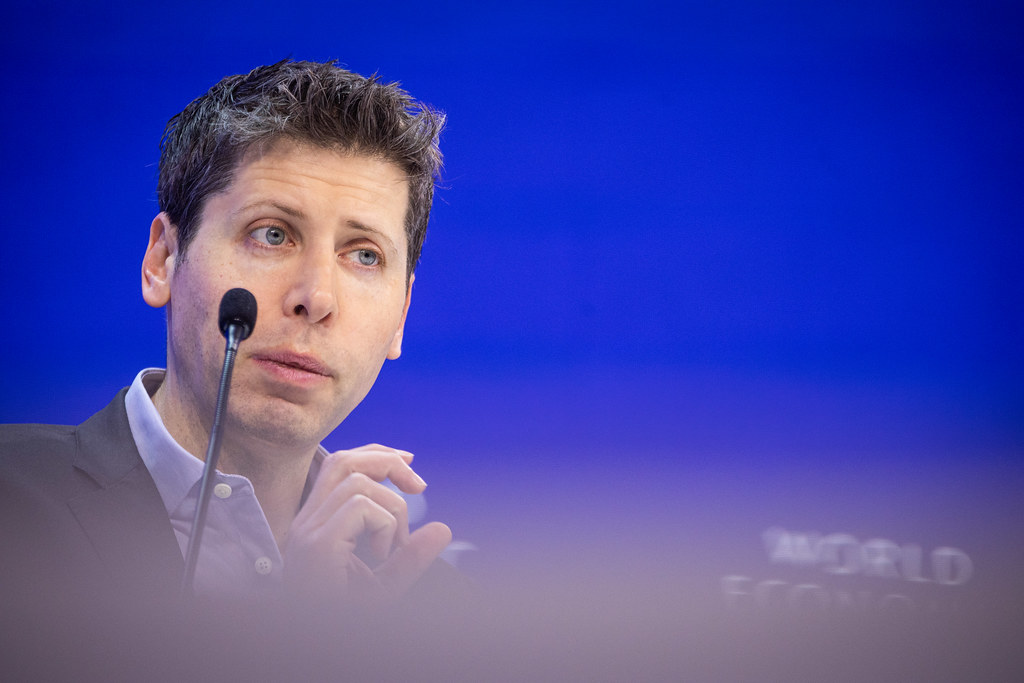
Sam Altman testified in court on Tuesday in defense of OpenAI as part of a lawsuit brought by former co-founder Elon Musk challenging the company’s corporate structure and its transition into a commercial AI business. During testimony, Altman rejected claims that OpenAI’s founders had improperly transformed a nonprofit organization into a profit-focused company and described disagreements with Musk over governance, leadership, and AI safety during OpenAI’s early years.
Musk’s legal team questioned Altman about allegations that OpenAI’s founders had “stole a charity” by creating a for-profit subsidiary built around the company’s AI technology.
“It feels difficult to even wrap my head around that framing,” Altman said after pausing before answering. “We created one of the largest charities in the world. This foundation is doing incredible work and will do much more.”
The lawsuit centers in part on whether OpenAI abandoned its original safety-focused mission as its commercial influence and valuation expanded.
Questions Around OpenAI’s Nonprofit Structure
Musk’s attorneys argued that OpenAI’s nonprofit foundation, which reportedly now holds assets valued at roughly $200 billion, operated for years without full-time employees.
Bret Taylor testified that the issue was tied to difficulties converting OpenAI equity into usable cash resources. Taylor said that process was completed through OpenAI’s restructuring in 2025.
The legal challenge also focuses on whether OpenAI’s commercial partnerships and fundraising efforts conflicted with the company’s original nonprofit mission.
OpenAI’s lawyers responded by arguing that Musk remained informed about the company’s funding discussions and was invited to participate in investment opportunities that are now being criticized in the lawsuit.
Altman Describes Early Clashes With Musk
Altman testified that disagreements between OpenAI’s founders intensified in 2017 during discussions about how to secure enough funding to support increasingly expensive AI development work.
According to Altman, some of Musk’s proposed approaches to AI safety caused concern among OpenAI leadership.
Altman described what he called a “particularly hair-raising moment” during discussions about a hypothetical OpenAI for-profit structure controlled by Musk.
In Altman’s account, Musk was asked what would happen if he died while maintaining control over such an entity.
“Maybe OpenAI should pass to my children,” Musk allegedly replied, according to Altman’s testimony.
Altman said the conversation reinforced concerns about concentrating control of advanced AI systems under one individual.
He testified that OpenAI’s leadership wanted to avoid placing advanced AI technology under the control of a single person and said his experience leading Y Combinator had shown him that founders who retained control rarely gave it up voluntarily.
Criticism Of Musk’s Management Approach
Altman also criticized Musk’s management style during testimony, arguing that approaches successful in manufacturing and engineering environments did not work effectively in AI research settings.
“I don’t think Mr. Musk understood how to run a good research lab,” Altman said.
He testified that Musk had demoralized key researchers inside OpenAI by requiring leadership to rank employees and reduce staff.
“He had at one point required Greg and Ilya to make a list of the researchers and list out their accomplishments and stack rank them and take a chainsaw through a bunch,” Altman testified. “That did huge damage for a long time to the culture of the organization.”
Altman said he viewed himself as protecting the “sweat equity” of fellow co-founders Greg Brockman and Ilya Sutskever, who were primarily responsible for running OpenAI while Altman and Musk held responsibilities outside the company.
Following unresolved disagreements, Musk eventually departed OpenAI’s board and later launched competing AI initiatives at Tesla and his AI startup xAI.
Despite the separation, Altman testified that he continued communicating with Musk, providing updates on OpenAI’s progress while also seeking funding and advice.
Altman also recalled a 2018 meeting involving a potential Microsoft investment into OpenAI.
“Unlike a lot of meetings with Mr. Musk, this was a good vibes meeting,” Altman testified, adding that Musk spent much of the discussion showing memes on his phone.
Featured image credits: Benedikt von Loebell via Flickr
For more stories like it, click the +Follow button at the top of this page to follow us.