

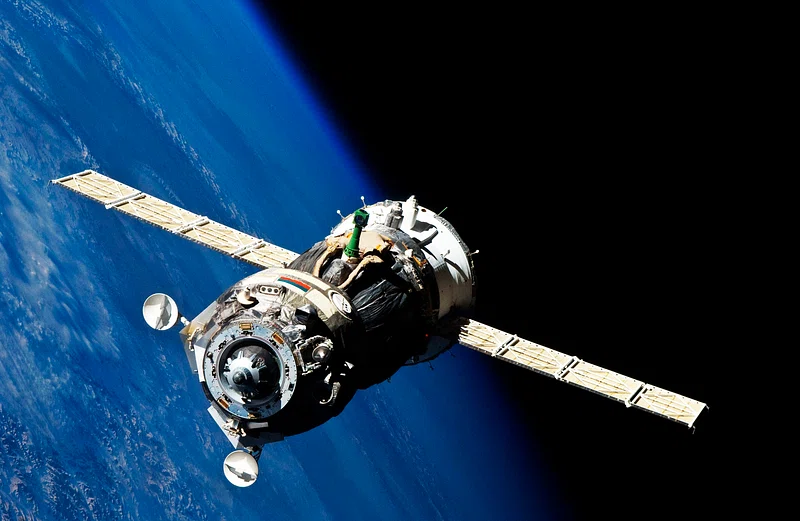
True Anomaly and Rocket Lab have completed the first operational phase of Victus Haze, a U.S. Space Force mission designed to test rapid satellite launch, tracking and close-range inspection. The exercise involved True Anomaly’s Jackal spacecraft locating and photographing Rocket Lab’s newly launched Puma satellite in orbit.
Victus Haze is intended to demonstrate how the U.S. military could quickly investigate an unfamiliar spacecraft after it enters orbit. The Space Force said the multi-vehicle mission uses commercially developed systems to respond to urgent threats on operationally relevant timelines.
Jackal Located Puma From 2,000 Kilometres Away
Rocket Lab launched Puma aboard an Electron rocket from New Zealand on June 19, 2026. The company completed the launch 16 hours and 42 minutes after receiving its official notice, setting a new response-time record for the Space Force.
True Anomaly’s Jackal spacecraft was already in orbit but did not know Puma’s destination beforehand. Using onboard sensors, it located and identified the target from roughly 2,000 kilometres away before approaching it.
Jackal then flew around Puma and captured images from different angles before returning to its original orbit. The exact distance between the two spacecraft remains classified.
True Anomaly said in its official mission announcement that Jackal demonstrated the ability to acquire, approach and assess a responsively launched spacecraft within hours of its arrival.
Further Exercises Could Increase in Difficulty
Spacecraft in low Earth orbit can travel at speeds approaching 17,500 miles per hour, making coordinated proximity operations technically difficult. Previous commercial servicing and debris-removal demonstrations have generally used longer preparation and execution periods.
True Anomaly CEO Even Rogers described the exercise as one of the most complicated rendezvous and proximity operations conducted between two uncrewed spacecraft. He said the U.S. needs more systems capable of identifying newly deployed satellites and assessing their capabilities.
Rocket Lab and True Anomaly are expected to conduct additional exercises under the program. Future scenarios could involve Puma attempting to avoid Jackal or performing inspection manoeuvres of its own.
Rocket Lab was selected to build, launch and operate Puma using its Pioneer spacecraft platform, while True Anomaly supplied the Jackal autonomous vehicle. The companies’ original Victus Haze agreement called for both systems to demonstrate dynamic space operations and satellite-characterisation capabilities.
True Anomaly plans to use the completed mission as evidence when competing for further Space Force work, including contracts involving manoeuvrable surveillance and space-domain awareness.
Featured image credits: rawpixel.com / NASA (Source)
For more stories like it, click the +Follow button at the top of this page to follow us.