

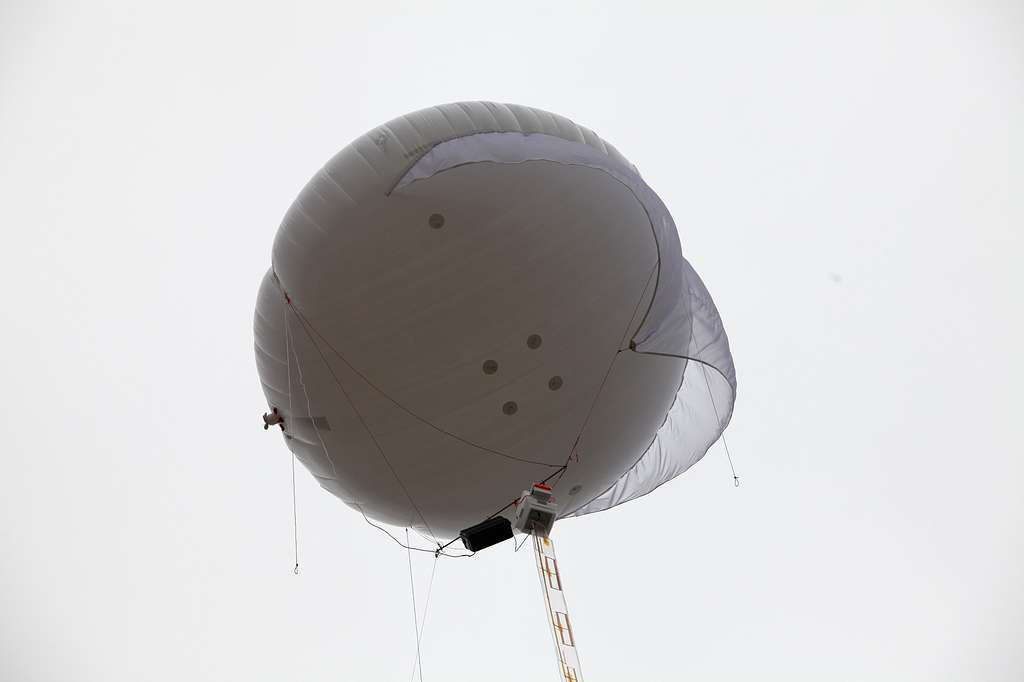
The US Air Force has awarded WindBorne Systems a contract worth up to $49 million to purchase atmospheric data collected by its global fleet of autonomous weather balloons. The California-based startup currently operates approximately 700 balloons worldwide, gathering weather measurements for government agencies, commercial customers, and its own artificial intelligence forecasting system.
According to the US government’s contract announcement, the agreement has a maximum value of $48.7 million and covers weather data used for military forecasting and operational planning. However, the Air Force has committed only $1.7 million so far, with additional purchases depending on its requirements.
How WindBorne’s Weather Balloon Contract Works
The agreement allows the Air Force to request atmospheric measurements from specific regions during selected periods rather than purchasing a fixed amount of data upfront. It represents WindBorne’s largest contract to date and was awarded without competitive bidding.
WindBorne co-founder and chief technology officer Andrey Sushko told TechCrunch that the contract could support expansion of the company’s balloon network and further research into hardware improvements. He said government officials determined that WindBorne was the only provider capable of meeting their global data collection requirements.
Founded in 2015 and headquartered in Redwood City, WindBorne has previously worked with the National Weather Service, US Air Force, and Navy. The company also raised $37 million in Series B funding in August 2026 to support its expansion.
AI Weather Forecasting and Balloon Technology
WindBorne uses atmospheric measurements from its balloons to train and operate WeatherMesh 6, its latest AI-powered weather forecasting model. The company claims its model produces more accurate forecasts than the traditional physics-based system operated by the European Centre for Medium-Range Weather Forecasts (ECMWF).
Traditional weather models use supercomputers to calculate atmospheric conditions through mathematical equations. AI models instead learn patterns from historical weather data and observations to generate predictions, with both approaches continuing to support meteorological forecasting.
WindBorne’s balloons collect measurements while traveling through different atmospheric conditions, with their routes controlled by adjusting altitude. The system releases air or drops sand ballast to enter wind currents that carry the balloons toward selected locations.
In August 2026, the company announced that one of its balloons had entered the eye of Typhoon Dolphin, becoming the first unpowered flight system to collect measurements there. Sushko said the operation relied on accurate wind forecasts, AI-assisted navigation, and a sufficiently large balloon network.
WindBorne’s approach combines direct atmospheric observations with machine learning, allowing its forecasting models to use measurements collected by its own equipment. Meanwhile, other organizations, including Google DeepMind and government weather agencies, are developing AI forecasting systems for applications such as hurricane prediction.
Featured image credits: PICRYL
For more stories like it, click the +Follow button at the top of this page to follow us.