

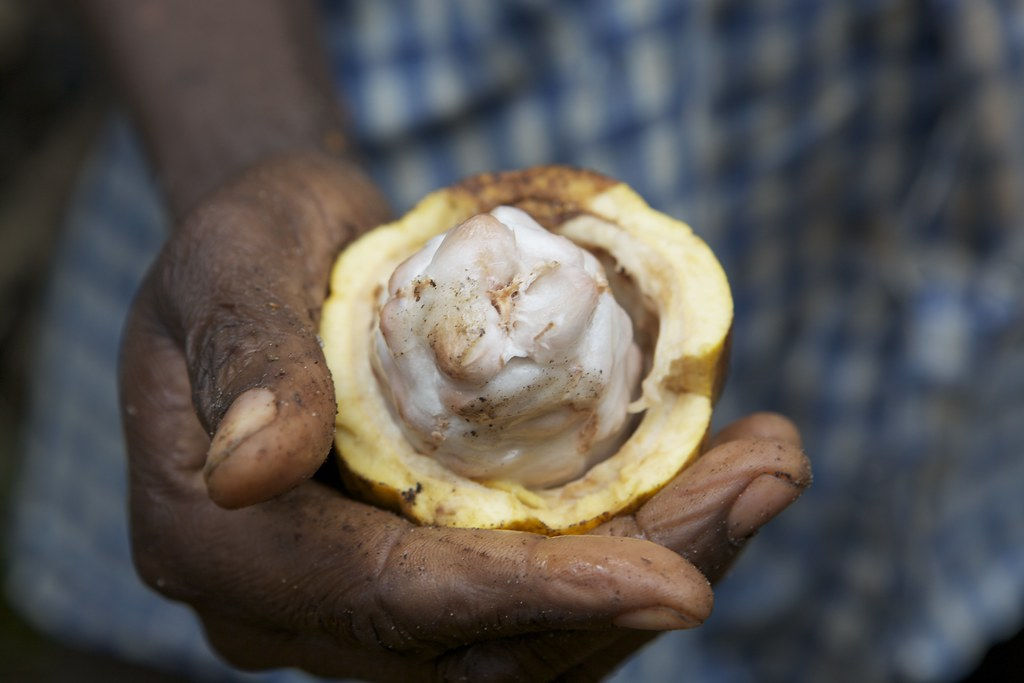
Chocolate prices have increased worldwide over the past year, yet many cocoa farmers in West Africa say they have not benefited from the higher costs. Instead, farmers in Ghana and Ivory Coast report months-long payment delays and unsold harvests after global cocoa prices dropped sharply following a previous surge.
Payment Delays Affect Hundreds Of Thousands Of Farmers
In Ghana, cocoa farmer Akosua Frimpong said the financial strain had severe personal consequences. The 52-year-old farmer told the BBC that when her husband Malik Boahen became ill earlier this year, she could not afford medical treatment.
“My husband fell sick, and I couldn’t get money to take him to the hospital. So he died at home,” she said.
Frimpong lives in the village of Suhenso in western Ghana, where mourners gathered at her home following Boahen’s death in February. According to Frimpong, the family could not pay for hospital care after expected income from cocoa sales failed to arrive.
The delays are linked to the system used by Ghana Cocoa Board, commonly known as Cocobod. The government body licenses companies to purchase cocoa beans from farmers and sell them on the international market at a fixed price set in advance.
However, many buyers have struggled to sell Ghana’s cocoa this year, leaving farmers waiting for payment. Cocobod has purchased much of the unsold cocoa to prevent a collapse of the industry, but many farmers say they have still not received their money.
Frimpong said the income she expected from cocoa sales remains unavailable. “I’m a widow now and I don’t have anyone to support me,” she said.
The payment delays are believed to affect around 800,000 cocoa farmers in Ghana. The disruption has also affected hundreds of thousands of other rural livelihoods linked to the cocoa supply chain.
Price Guarantees Clash With Falling Global Market
The financial problems emerged after cocoa prices surged globally in 2024 before falling sharply. Ghana and Ivory Coast together produce much of the world’s cocoa, but their government regulators set farmer prices up to a year in advance.
In October, Cocobod guaranteed farmers nearly $5,300 (£3,900) per tonne of cocoa. Since then, international cocoa prices have dropped well below that level. As a result, Ghana’s cocoa is currently about 40% more expensive than buyers are willing to pay.
Several factors contributed to the price decline. A strong global harvest increased supply, while demand weakened. During the period of higher cocoa prices, chocolate manufacturers reduced cocoa content and produced smaller chocolate bars to control costs.
Although the lower cocoa prices could eventually lead to cheaper chocolate products, the mismatch between guaranteed prices and global market rates has created financial strain across the cocoa industry in Ghana and Ivory Coast.
Cocobod Debt And Government Response
The price gap has increased Cocobod’s financial obligations. The organisation’s debt has reached about $3bn.
In February, Cocobod executives responded by reducing their salaries. Executive management accepted a 20% pay cut, while senior staff took a 10% reduction.
Cocobod spokesperson Jerome Sam acknowledged delays in payments to farmers but said the board has begun processing payments.
Cocoa plays a significant role in Ghana’s economy. The sector accounts for roughly 7% of the country’s gross domestic product and provides about 15% of Ghana’s foreign exchange earnings.
The government has announced several measures aimed at strengthening the industry. These include plans to process more cocoa within Ghana rather than exporting raw beans for manufacturing abroad.
To address the immediate financial gap, Cocobod has reduced the guaranteed price paid to farmers to about $3,500 per tonne. The new rate remains above current international market prices.
Some farmers say the new level remains insufficient.
Rising Costs And Farmer Concerns
Robert Addae, a cocoa farmer with 14 years of experience, said the reduced price will make it difficult for farmers to maintain their farms.
“The prices of farm inputs and implements remain the same, the cost of labour has not reduced, so the cut in cocoa prices will adversely affect us,” he said.
Maintaining a cocoa farm in Ghana costs about $1,000 per acre on average. Farmers worry that lower prices could prevent them from recovering their investment.
Nana Obodie Boateng Bonsu, president of the Concerned Cocoa Farmers Association, said he understands the financial pressure on Cocobod but believes the salary cuts should directly benefit farmers.
“If they were reducing their salaries to add up to our cocoa prices, that would have been brilliant,” he said.
Similar Crisis Emerging In Ivory Coast
Neighbouring Ivory Coast has faced similar problems.
In the western town of Bangolo, cocoa sacks have accumulated in warehouses as co-operatives struggle to find exporters willing to buy them.
The country’s regulatory body, Coffee and Cocoa Council, also set a guaranteed price last year that is now far above the international market rate.
Ivory Coast’s agriculture minister Bruno Kone announced on Wednesday that the government would reduce the price paid to farmers by half in an effort to encourage buyers to return to the market.
Before the announcement, Bangolo cocoa co-operative member Bahily Bakouli Issiaca inspected large quantities of beans stored in his warehouse.
“More than 800 cocoa farmers give their beans to us to sell, but this year it has been very difficult to sell them,” he said.
“Lorries full of cocoa sacks have been parked here for almost 21 days now.”
Farmers in the region report similar financial difficulties.
Sella Aga Josiane, a cocoa farmer outside Bangolo, said she harvested her crop and sent it to her village but has not found a buyer.
“I don’t know how I’ll feed my 10 children or support their education,” she said, adding that some of her children were sent home from school because she could not pay their fees.
If market conditions continue, Ivory Coast could have about 200,000 tonnes of cocoa waiting for buyers by the end of March.
Ba Siba Fabrice, a cocoa farmer near Bangolo who began farming in 2012, said the current situation is the most difficult period he has experienced.
“Today, there is no peace between me and my family because there is no more money,” he said.
“When there is no money in a household, there is no peace. We live through cocoa.”
Featured image credits: Flickr
For more stories like it, click the +Follow button at the top of this page to follow us.