

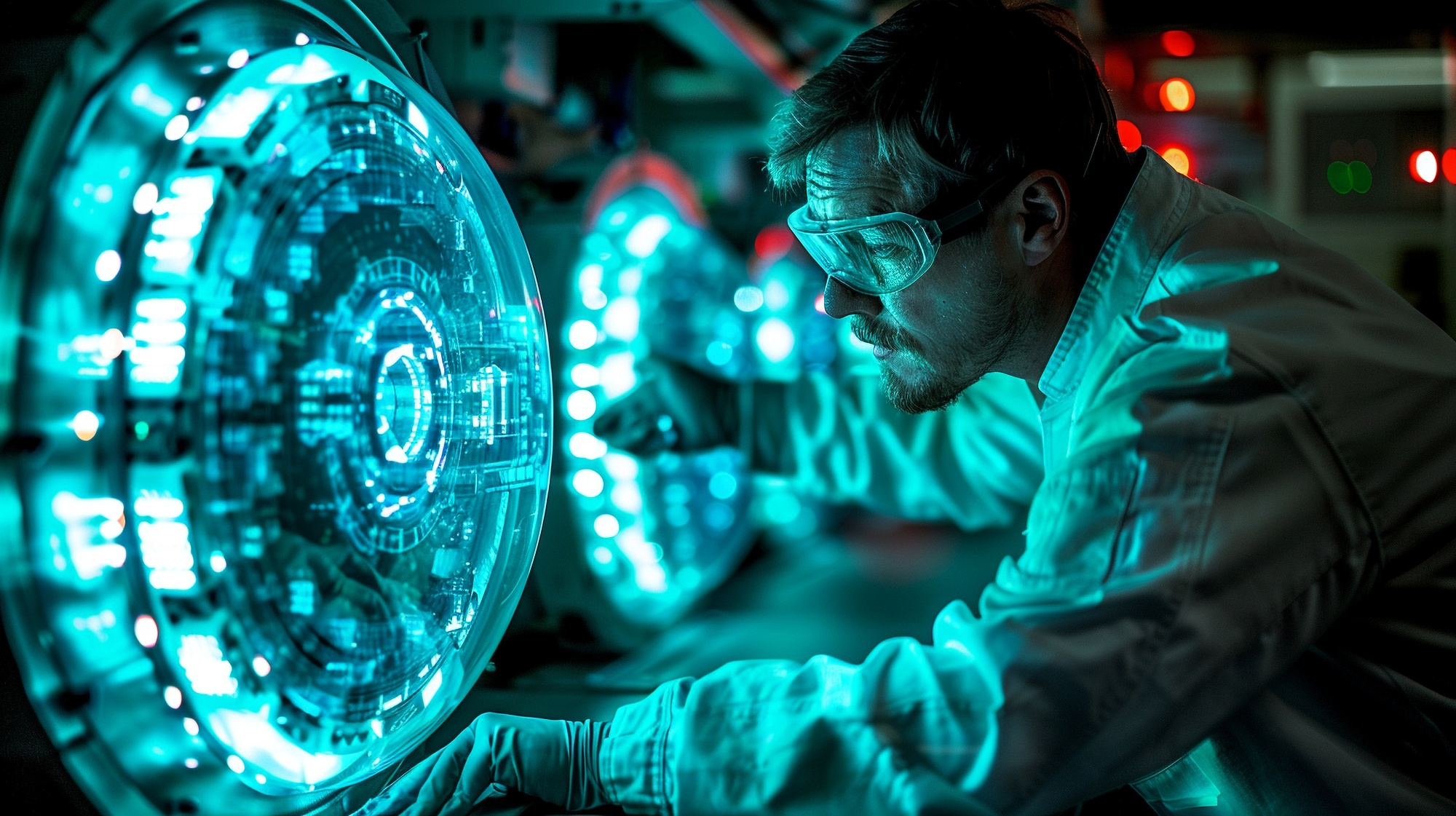
Thea Energy has received a $20 million award from the US Department of Energy to establish domestic production lines for modular high-temperature superconducting magnets. The components will support the company’s stellarator-based fusion reactors and could also be supplied to other fusion developers.
The funding comes through the Advanced Research Projects Agency-Energy’s SCALEUP programme, which supports promising energy technologies as they move from technical demonstrations towards commercial manufacturing.
Grant Targets a Major Fusion Manufacturing Cost
Magnetic-confinement reactors use powerful magnetic fields to hold and compress extremely hot plasma while atomic nuclei fuse and release energy. High-temperature superconducting magnets can generate strong fields efficiently, but their materials and manufacturing processes remain expensive.
Thea plans to use the award to create what it describes as the first US production line for modular HTS magnets. Increasing production capacity could reduce costs and address a supply constraint affecting several proposed fusion reactor designs.
The company’s reactor is based on a stellarator, a magnetic-confinement design that uses a twisted plasma shape to support stable, continuous operation. Conventional stellarators often require highly complex magnets that are difficult and costly to manufacture.
Planar Magnets Simplify the Stellarator
Thea’s fusion technology replaces many of those individually shaped coils with a smaller range of planar magnet designs. Its proposed system uses 12 larger magnets based on four templates, supported by more than 300 identical smaller magnets positioned around the reactor.
Software controls the smaller coils to fine-tune the magnetic field, similar to how individual pixels form an image on a display. The company says this arrangement allows less restrictive construction tolerances while preserving the field shapes needed to confine plasma.
Thea has already built and tested a nine-coil HTS array known as Canis. A research paper said the system produced several magnetic-field shapes relevant to stellarators and maintained closed-loop field control within 1% of its predicted performance.
Funding Supports Wider Fusion Development
The federal award follows Thea’s $100 million Series B round announced in May. The financing is supporting expanded magnet manufacturing, a second facility in northern New Jersey and development of Eos, the company’s integrated stellarator demonstration system.
Thea previously raised a $20 million Series A in 2024. It plans to begin constructing its first commercial-scale Helios fusion plant before the end of the decade, although producing electricity commercially will still depend on further scientific, engineering and regulatory progress.
Featured image credits: Magnific.com
For more stories like it, click the +Follow button at the top of this page to follow us.