

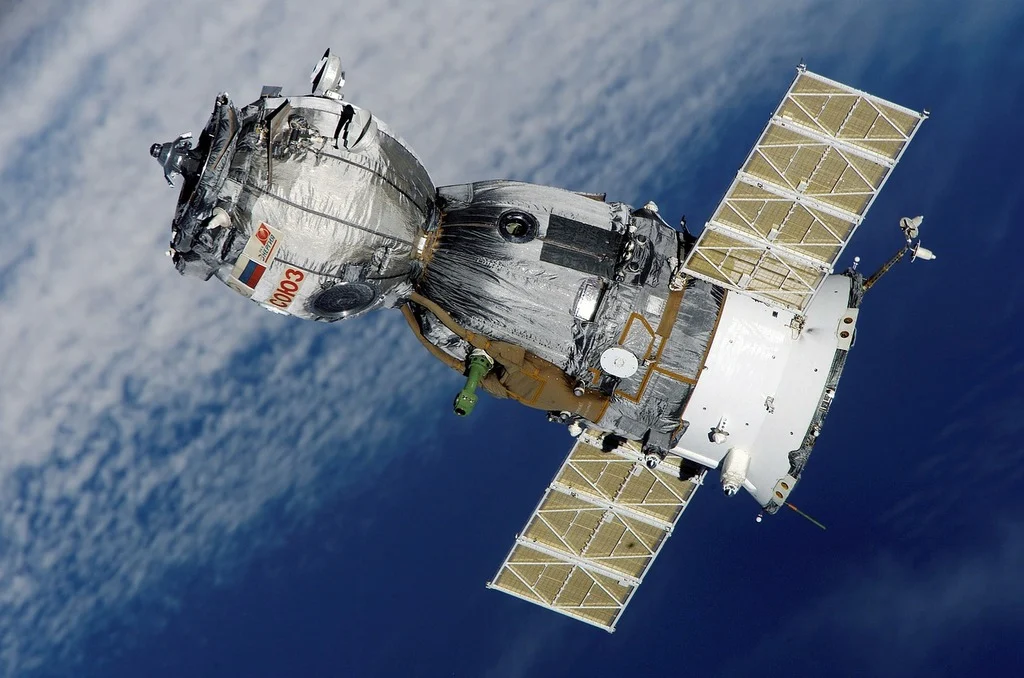
Lux Aeterna, a startup founded by a former SpaceX satellite engineer, has raised $10 million in seed funding to develop satellite structures designed to survive atmospheric reentry and return payloads to Earth intact.
The company, founded in December 2024 by SpaceX veteran Brian Taylor, aims to build spacecraft equipped with integrated heat shields that allow satellites to safely return through Earth’s atmosphere instead of burning up at the end of their operational life.
The funding round was led by Konvoy with participation from Decisive Point, Cubit Capital, Wave Function, Space Capital, Dynamo Ventures, and Channel 39. Lux Aeterna did not disclose its valuation.
Prototype Mission Planned For 2027
The funding will support the development of the company’s first spacecraft, called Delphi.
Lux Aeterna said the vehicle already has a confirmed launch slot on a SpaceX rocket scheduled for the first quarter of 2027.
The mission will test the company’s reentry technology and provide customers an opportunity to send experimental payloads into orbit.
After completing its mission, the spacecraft will return to Earth at Australia’s Koonibba Test Range through a partnership with aerospace company Southern Launch.
The flight will allow customers to retrieve materials and equipment that have been exposed to space conditions.
Challenges Of Returning Spacecraft To Earth
Returning objects from orbit requires spacecraft to pass through Earth’s atmosphere at extremely high speeds.
The process generates intense heat due to atmospheric friction, requiring specialized heat shield materials to protect the spacecraft.
These protective systems add weight, which increases the cost of launching spacecraft into orbit.
Because of those trade-offs, most satellites are designed only for one-way missions.
After completing their service life, they typically burn up during reentry or are moved to distant “graveyard” orbits to avoid interfering with operational satellites.
Vehicles designed for controlled reentry have historically been limited to spacecraft carrying astronauts or cargo.
Examples include NASA’s Space Shuttle and SpaceX’s Dragon spacecraft.
More recently, SpaceX has attempted to demonstrate reentry and landing capabilities with its Starship rocket.
Growing Interest In Reentry Technology
Several startups are also working on technologies that allow materials to be returned from orbit.
Companies including Varda Space and Inversion are developing small reentry capsules for experiments conducted in microgravity.
Varda has completed five missions so far and has successfully returned capsules to Earth on four of those flights.
Inversion is developing a vehicle called Arc, which the company plans to launch later this year.
These systems are designed to support applications such as materials research in microgravity, pharmaceutical manufacturing in space, and the testing of electronic components.
The United States military has also shown interest in reentry technology for logistics missions and for testing components used in hypersonic systems.
Lux Aeterna’s Plan For Reusable Satellites
Lux Aeterna’s approach differs from these capsule-based systems.
The company plans to design satellites that can return to Earth, be upgraded with new hardware, and then be launched again.
Taylor said current satellites typically remain in service for five to ten years before becoming obsolete or running out of fuel.
“Our ambitions are so much larger than just reentry,” he said.
Taylor described the possibility of updating satellite components regularly instead of launching entirely new spacecraft.
“If you have a payload component, whether it’s compute or a hyperspectral camera, and you want to update that technology every year, instead of having to build new satellites and keep those old ones up in space, you can bring them down and go back,” he said.
Economic And Regulatory Challenges
The concept will depend on whether reusable satellites can deliver economic benefits that exceed the costs associated with building, launching, returning, and refurbishing them.
Regulatory approval also presents challenges for spacecraft reentry.
Lux Aeterna plans to land its spacecraft in Australia because obtaining a license for reentry within the United States can be difficult.
Varda experienced similar issues when it returned the first commercial spacecraft to land on U.S. soil in 2024.
The company faced several months of delays while working with the Federal Aviation Administration to demonstrate that its returning capsule would not endanger people or property on the ground.
Later Varda missions have also landed in Australia.
Taylor said he expects regulatory processes to evolve as the reentry sector grows.
He said the Federal Aviation Administration will likely gain experience alongside companies developing reentry systems and eventually allow more frequent return missions.
“The folks that are backing us really believe that now is the time to put that major, major paradigm shift in orbital operations,” Taylor said.
“Not only reentry and bringing things back, [but] about bringing reusability to much larger sections of the satellite industry.”
Featured image credits: Collections – GetArchive
For more stories like it, click the +Follow button at the top of this page to follow us.