

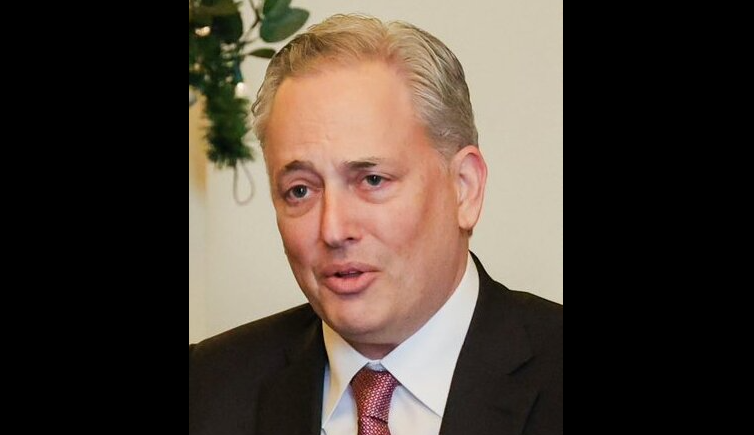
David Sacks has concluded his 130-day tenure as a special government employee serving as AI and crypto adviser to Donald Trump, transitioning to a new role as co-chair of the President’s Council of Advisors on Science and Technology.
In an interview with Bloomberg, Sacks said he will now serve alongside Michael Kratsios as co-chair of the advisory body, known as PCAST. He said the role will allow him to provide recommendations across a broader range of technology topics, including artificial intelligence.
Shift From Policy Role To Advisory Capacity
Sacks’ previous position as AI and crypto adviser gave him direct access to the administration and involvement in shaping policy. By contrast, PCAST operates as a federal advisory group that studies issues, produces reports, and submits recommendations without direct policymaking authority.
The council has existed in various forms since the administration of Franklin D. Roosevelt. Sacks described the current group as having an unusually high-profile membership drawn largely from technology industry leadership.
Council Membership And Focus Areas
The council’s initial members include executives such as Jensen Huang of Nvidia, Mark Zuckerberg of Meta, Larry Ellison of Oracle, Sergey Brin, Marc Andreessen, Lisa Su of AMD, and Michael Dell of Dell.
According to Sacks, the council will address topics including AI, advanced semiconductors, quantum computing, and nuclear energy. Initial efforts will focus on supporting the administration’s national AI framework, introduced recently to address what Sacks described as fragmented state-level regulation across the United States.
Context Around Transition And Public Comments
Sacks did not directly address the timing of his transition. Earlier in the month, he had commented on foreign policy during an episode of the “All In” podcast, where he discussed possible outcomes of the ongoing conflict involving the United States, Israel, and Iran. When asked about these remarks, Sacks said they reflected personal views and noted that he is not part of the administration’s foreign policy or national security teams.
The transition shifts Sacks further from direct policymaking influence compared with his prior role.
Historical Role Of PCAST
The impact of PCAST has varied across administrations. During the presidency of Barack Obama, the council produced 36 reports over eight years, with some leading to policy changes, including a rule from the FDA that expanded access to over-the-counter hearing aids.
Under Trump’s first administration, the council took several years to appoint members and produced fewer reports. During Joe Biden’s term, the council included more academic members and issued a smaller number of reports.
The current iteration differs in composition, with a stronger presence of industry executives from major technology companies.
Return To Private Sector Activities
Following the end of his government role, Sacks is expected to continue his work in the private sector. He remains a partner at Craft Ventures, which he co-founded.
Previous reporting by TechCrunch noted that Sacks received ethics waivers allowing him to retain financial interests in AI and cryptocurrency companies while advising on related policy areas, a structure that drew criticism from some lawmakers and ethics experts.
Featured image credits: Wikimedia Commons
For more stories like it, click the +Follow button at the top of this page to follow us.