

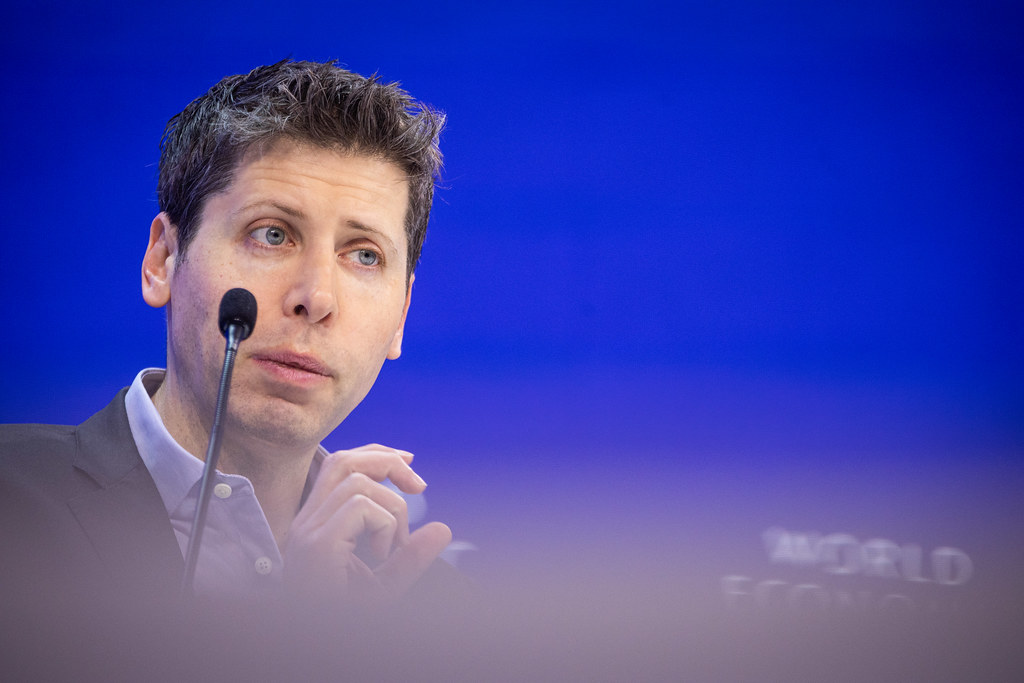
Tools for Humanity has announced a broad expansion of its World verification platform into dating apps, ticketing systems, and enterprise tools, as the company positions its “proof of human” technology for wider use across digital services.
Altman Highlights Need For Human Verification In AI Driven Environment
Sam Altman introduced the updates at an event in San Francisco, stating that increasing volumes of AI-generated content are making it harder to distinguish between human and machine interactions.
The World platform, formerly known as Worldcoin, focuses on verifying that a real person is behind online activity while preserving anonymity through cryptographic methods, including zero-knowledge proof-based authentication.
Orb Device Remains Core To High Level Verification
The system’s primary verification method uses a device called the Orb, which scans a user’s iris to generate a unique identifier known as a World ID. This identifier allows access to services while maintaining anonymity.
Users can still access the platform without verification, though the World ID enables additional features and integrations.
Tinder Integration Expands From Pilot To Global Rollout
Tinder will expand its integration of World ID beyond a pilot program previously launched in Japan. The feature will roll out globally, including in the United States.
Verified users will display a World ID badge on their profiles, indicating that they have completed the verification process.
Concert Kit Targets Ticket Scalping With Verified Access
World introduced a feature called Concert Kit, designed to help artists allocate tickets to verified individuals. The system integrates with platforms such as Ticketmaster and Eventbrite.
The company is promoting the feature through collaborations with Thirty Seconds to Mars and Bruno Mars, who plan to use the system for upcoming tours.
Enterprise Integrations Address Identity And Security Concerns
New integrations include a verification system for Zoom to address concerns about deepfake activity in business calls, and a partnership with DocuSign to verify the authenticity of document signatories.
The company is also working with Okta to develop a system that links verified users to AI agents acting on their behalf. Gareth Davies stated that the system allows websites to confirm that an agent’s activity is tied to a verified human identity.
Agent Delegation Feature Enables Verified AI Interactions
A feature described as “agent delegation” allows users to assign their World ID to an AI agent, enabling it to perform tasks online while maintaining a verified link to the user.
This capability is designed to support emerging use cases in environments where automated agents interact with digital services.
Verification Tiers Aim To Address Scalability Challenges
Tiago Sada said the company has introduced multiple verification levels to improve accessibility. The highest tier remains Orb-based iris scanning, while a mid-tier uses anonymized scans of government IDs through NFC technology.
A lower-tier option, referred to as “low friction,” relies on selfie-based verification. Daniel Shorr stated that this method processes data locally on user devices to maintain privacy, though Sada acknowledged that it has limitations compared to higher-security methods.
Expansion Efforts Include Increased Orb Deployment
To address scaling challenges, the company is expanding the availability of Orb devices in cities including New York, Los Angeles, and San Francisco. It also offers a service that brings verification devices directly to users.
World has previously incentivized adoption by distributing its associated cryptocurrency to some users and placing devices in retail locations.
Featured image credits: Flickr
For more stories like it, click the +Follow button at the top of this page to follow us.