

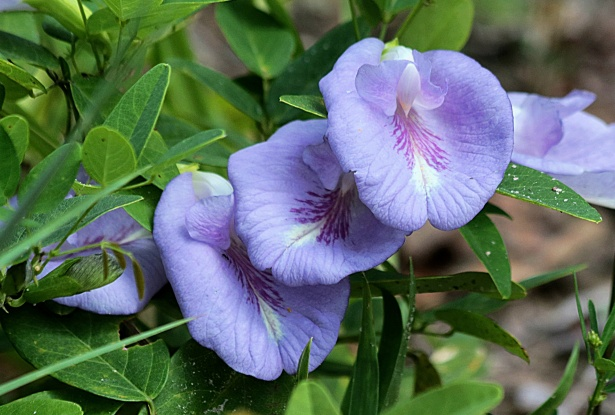
A flowering vine long treated as a backyard plant in parts of India is becoming a source of income for farmers and entrepreneurs, as rising global demand for natural colourants and ingredients draws attention to butterfly pea cultivation.
Nilam Brahma, who lives in Anthaigwlao village in Assam, said the butterfly pea flower was once just another climbing plant growing around homes. Known locally as aparajita, the plant produces a deep blue flower that can be brewed into tea or processed into dye. About two years ago, Brahma learned that women in nearby areas were earning money by selling dried flowers and decided to try it herself.
She said her first sale of dried flowers earned her about $50, an amount that surprised her and changed how she viewed her financial independence. She later applied for a small loan to invest in solar dryers, which allowed her to dry flowers more quickly, preserve colour, and meet buyers’ quality requirements. The activity has since developed into a small business.
Thailand and Indonesia have historically been the largest growers and consumers of butterfly pea flowers. Indian exporters say interest has expanded as food and beverage producers look for alternatives to synthetic dyes. Varshika Reddy, founder of THS Impex, which exports natural dyes and additives, said global demand for natural colourants is rising due to consumer preferences and tighter controls on artificial ingredients in Western markets.
In 2021, the U.S. Food and Drug Administration approved butterfly pea flower as a food additive. In contrast, the European Food Safety Authority raised safety concerns in 2022. Both the European Union and the UK classify butterfly pea as a novel food, meaning it still requires approval for widespread use.
Despite regulatory uncertainty in Europe, Indian businesses continue to see potential. Reddy said the crop is often viewed as ornamental or medicinal rather than commercial, with no formal classification or standard pricing, creating uncertainty for farmers. Her company works with clusters of farmers in Uttar Pradesh, providing contracts and agronomy support, including irrigation guidance and cultivation practices.
Entrepreneurs in India have also focused on building domestic brands. Nitesh Singh, based near Delhi, founded Blue Tea in 2018 after noticing the flower’s colour-changing properties when brewed and mixed with lemon. He said early efforts were difficult because suitable-quality flowers were hard to source locally, forcing the company to import at first.
Over the past seven years, Singh said Blue Tea has worked with farmers to improve quality and yield, expanding from five growers to about 600 nationwide. He said training and quality control remain major challenges. Harvesting is largely carried out by women, whom Singh said are skilled at plucking delicate flowers without damaging plants.
Drying is another critical step. Singh said temperature control is essential, as excessive heat can destroy colour and medicinal properties. Some drying is done by farmers, with further processing at the company’s facilities to ensure moisture levels meet standards.
Researchers are also examining potential health benefits. V Supriya, an assistant professor at the Sri Ramachandra Institute of Higher Education and Research in Chennai, said limited research has been conducted on butterfly pea, with much of the existing literature based on animal studies. She led a small human study involving pre-diabetic participants and found those who consumed butterfly pea tea showed better blood sugar control than those who did not.
In West Bengal, farmer Pushpal Biswas said he was introduced to butterfly pea cultivation through Blue Tea after struggling to sell traditional crops like rice and vegetables. He said the new crop proved easier to grow and more profitable. By adopting scientific methods, he increased production from 50kg to 80kg and expanded his leased land, raising both output and income.
Biswas said cultivation has spread to nearby villages, creating what he described as a network of growers rather than isolated farms. For participants, he said, butterfly pea has evolved from a niche plant into a shared business activity.
Featured image credits: Public Domain Pictures
For more stories like it, click the +Follow button at the top of this page to follow us.