

Snail mucin serums, once a niche concept, have become a mainstream skincare product worldwide, illustrating how South Korea’s beauty industry has scaled viral trends into a global manufacturing and export engine.
A TikTok challenge promoting the elasticity of a snail mucin serum helped propel the South Korean brand CosRX onto the global stage. The product’s popularity pushed the small label into international markets, and the company is now owned by Amorepacific, South Korea’s largest cosmetics group. The viral spread of the serum highlights the pace at which K-beauty products move from local launches to global routines.
A Domestic Industry With Global Reach
K-beauty has grown into one of South Korea’s largest consumer industries, supported by a domestic market valued at about $13 billion in 2024. Sales of some products are forecast to grow at double-digit rates. International demand has expanded alongside the wider Korean Wave, which also drove global interest in K-pop and Korean dramas.
K-beauty brands now occupy dedicated sections in retailers such as Sephora, Boots, and Walmart. In the first half of 2025, South Korea overtook France to become the world’s second-largest exporter of beauty products, trailing only the United States.
Social Media And Product Innovation
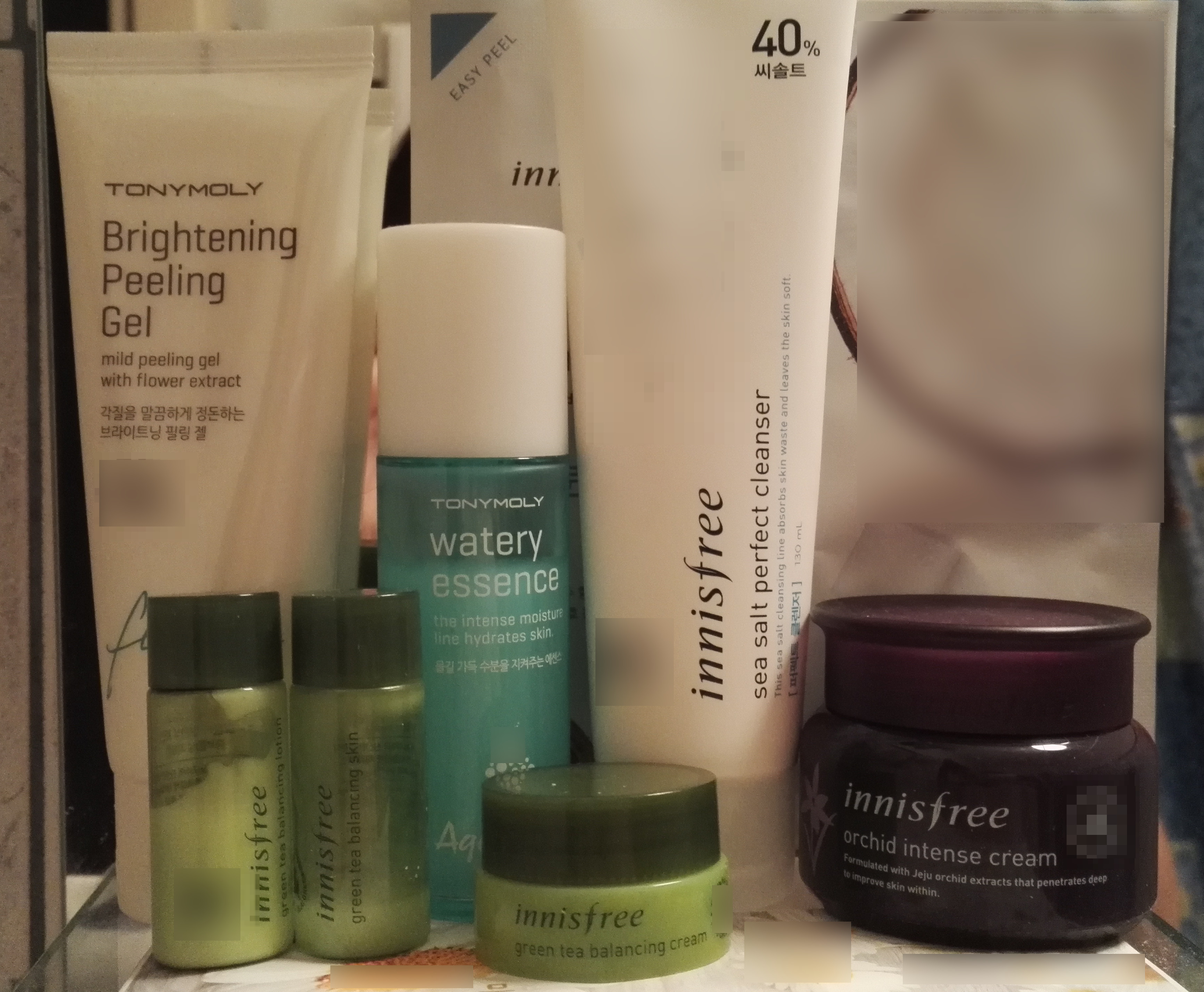
Social platforms play a central role in that expansion. Searches for Korean skincare on TikTok, Instagram, and YouTube produce extensive influencer content focused on ingredients, unboxings, and routine demonstrations built around concepts like glass skin, sheet masks, and snail mucin.
Liah Yoo, a beauty influencer and founder of the US-based K-beauty brand Krave Beauty, said consumers face a saturated and highly competitive market, with constant exposure to new products and brands. Industry observers attribute K-beauty’s momentum to rapid formulation cycles, with new products appearing every few months to match emerging online trends.
Once-niche concepts such as ten-step skincare routines, overnight sleeping masks, and unconventional ingredients like salmon sperm have become common in markets from Europe to North America.
Concerns Over Beauty Ideals
As the industry expands, concerns are growing about the social effects of constant exposure to skincare content. Experts warn that heavy engagement with beauty trends can contribute to anxiety and excessive spending, especially among younger audiences.
Amorepacific chief executive Kim Seung-hwan said brands are aware of the risks associated with overuse of social media and must balance promotion with responsibility as they scale internationally.
Global Firms And Competitive Pressure
Western multinationals are increasingly entering the space. L’Oréal acquired a South Korean conglomerate including the brand Dr.G in late 2024, citing rising demand for effective and affordable K-beauty products. Other global companies have begun incorporating ingredients commonly associated with Korean brands, such as centella asiatica and rice water, into their own product lines.
South Korea’s beauty sector remains dominated by large conglomerates, or chaebols. Amorepacific controls roughly half of the domestic market and manages a portfolio ranging from premium and mass-market brands to environmentally focused labels and independent lines. The company said its acquisition of CosRX allowed it to learn faster approaches to formulation and consumer response.
In 2024, Amorepacific reported sales of about $6.2 billion, while LG Household & Health Care recorded $4.1 billion. Industry scale is reflected in exports, which rose 15% in the first half of 2025 to a record $5.5 billion, driven largely by demand from the US and Europe.
Manufacturing Speed And Industry Risks
South Korea’s estimated 30,000 beauty brands rely on a dense network of original development manufacturers that manage research, formulation, and production. Cosmax, one of the largest, supplies around 4,500 brands through factories across Asia and the US and accounted for more than a quarter of South Korea’s $10 billion cosmetics exports in 2024.
This system allows products to reach shelves within six months, compared with one to three years for many Western brands. Automation supports that speed, as seen in Amorepacific facilities where limited staff oversee fully automated production lines.
However, competition has contributed to thin margins and frequent business failures. Government data shows more than 8,800 cosmetics brands have closed in recent years. Yoo said while infrastructure enables rapid brand creation, long-term success depends on identity and differentiation.
Shifting Markets And Trade Pressures
China is no longer the largest overseas buyer of Korean beauty products as domestic Chinese brands gain ground. Amorepacific said its North America business surpassed China for the first time in 80 years, with expected growth also coming from Japan, Europe, India, and the Middle East.
The US remains South Korea’s largest export destination for beauty products, but President Donald Trump’s 15% tariffs on Korean imports have introduced uncertainty. Retailer Olive Young imposed a 15% customs duty on US orders, while Amorepacific said any price increases would depend on discussions with partners such as Sephora and Walmart.
In December, the South Korean government designated K-beauty a strategic national asset, pledging support for manufacturing and exports as the sector continues to expand.
Featured image credits: Wikimedia Commons
For more stories like it, click the +Follow button at the top of this page to follow us.