

Blue Origin still plans to launch its New Glenn rocket before the end of 2026, even though investigators have not determined what caused the vehicle to explode during a ground test on May 28. Chief executive Dave Limp said early analysis points to the aft section of the rocket’s first stage.
The company is reviewing data from several camera angles and onboard sensors to identify and correct the cause. No one was injured when the rocket exploded during an integrated vehicle hot-fire test at Launch Complex 36 in Cape Canaveral, Florida.
New Glenn had been preparing for its fourth flight after launching for the first time in January 2025. The explosion destroyed the test vehicle and damaged Blue Origin’s only operational launch site for the heavy-lift rocket.
Blue Origin Changes Its Launchpad Design
In an official update, Limp said the explosion destroyed a lightning tower, the transporter-erector and its hydraulic cylinders. The transporter-erector was used to move New Glenn to the pad and raise it into a vertical position.
The tank farm, water tower, vehicle integration facility and access tower remained in good condition. Blue Origin has completed debris removal and hardware recovery, while reconstruction work has started.
Rather than rebuilding the same setup, the company will use a crane to raise New Glenn vertically and place it on a refurbished launch table. The rocket’s first and second stages will be joined horizontally before the assembled vehicle is transported to the pad.
Limp said the revised process could support a faster return to flight and create a common operating system across two future launchpads. Blue Origin had been targeting as many as 12 New Glenn launches in 2026 before the explosion.
New Glenn Supports Blue Origin’s Lunar Plans
Returning New Glenn to service is important to Blue Origin’s work with NASA and its commercial satellite customers. The rocket is expected to launch the company’s Blue Moon lunar landers, which are being developed for missions connected to NASA’s Artemis program.
NASA selected Blue Origin to develop a crewed lunar landing system for Artemis V under a $3.4 billion contract. The company is also preparing an uncrewed Blue Moon Mark 1 lander that will carry NASA science and technology payloads to the Moon’s south polar region.
Limp said Blue Origin continues to manufacture rockets while its investigation and launchpad repairs proceed. The company has not announced a specific date for New Glenn’s next flight.
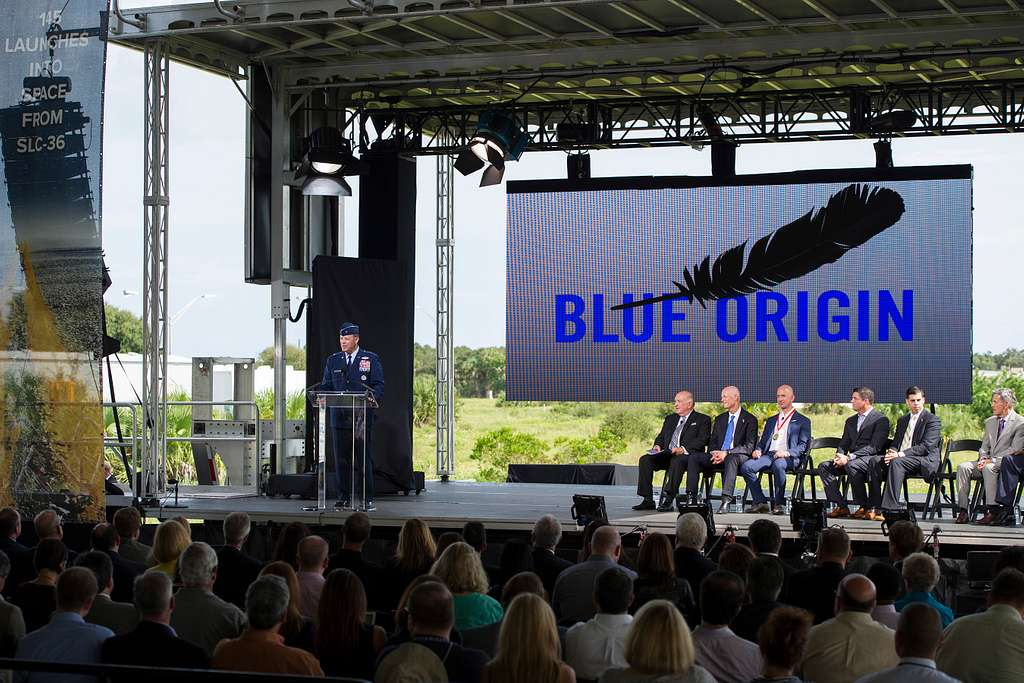
Featured image credits: Defense Visual Information Distribution Service via Picryl.com
For more stories like it, click the +Follow button at the top of this page to follow us.